
Local peptide sourcing means buying research-grade compounds from an Australian-stocked supplier rather than an overseas warehouse, and the fastest route for most laboratories is a domestic vendor such as Aupeptidelabs, which lists purity above the baseline credibility threshold for research peptides, issues a certificate of analysis (COA) per batch, and dispatches within one business day. Before placing an order, confirm three things in under a minute:
- COA availability — can the supplier produce a batch-specific HPLC/MS report on request, not just a generic specification sheet?
- Dispatch cutoff — what time does same-business-day dispatch actually require, and does that align with your experiment timeline?
- Labelling compliance — does the product carry clear "research use only" wording with no therapeutic or human-use claims?
If a supplier can't answer all three cleanly, treat that as a reason to look elsewhere. Requesting a COA directly from technical support before checkout is the single most useful habit a procurement officer can build.
Regulatory essentials for peptide procurement in Australia
Research-grade and pharmaceutical-grade peptides are not interchangeable categories, and confusing the two creates real compliance exposure. Research-grade peptides are manufactured and labelled for in-vitro laboratory use, sold without prescription, and fall outside the therapeutic goods framework administered by the Therapeutic Goods Administration (TGA). Pharmaceutical-grade peptides intended for human or veterinary administration sit under a different regime entirely, requiring a prescription and dispensing through a licensed compounding pharmacy.
The distinction matters because using a research-grade compound for any therapeutic purpose breaches both safety guidance and regulatory boundaries, a point echoed in independent commentary on peptides in Australia. Compounding pharmacies operate under pharmacy board oversight and TGA-linked sterility standards; research suppliers operate under a "research use only" designation that assumes no human contact at all.
Statistic callout: A COA showing HPLC purity near or above the accepted research standard is treated as the baseline credibility threshold across the research peptide trade — a supplier that can't produce this on request is generally considered a red flag.
Practical compliance steps before ordering:
- Check the product listing for "research use only" and non-therapeutic disclaimers.
- Ask the supplier directly, in writing, whether the compound is intended for in-vitro work only.
- Keep that written confirmation on file alongside your COA for internal audit purposes.
For a fuller breakdown of what's legally permitted when sourcing locally, our guide on whether peptides are legal in Australia covers the distinctions in more depth.
Step-by-step checklist to vet a local peptide supplier
Brick-and-mortar peptide storefronts barely exist in Australia. Legitimate access runs through two channels: licensed compounding pharmacies requiring a prescription, or online research suppliers holding domestic stock. For laboratory procurement, the second channel is almost always the relevant one, and vetting it properly takes five steps.
-
Verify documentation. Request a COA per batch showing HPLC purity and mass spectrometry (MS) identity confirmation, and check that the lot number on the COA matches the lot number on the vial label.
-
Check the testing lab's accreditation. A COA is only as credible as the laboratory that issued it. Ask which third-party lab performed the testing and whether that lab is independent of the manufacturer.
-
Confirm quality metrics. Look for a stated purity threshold meeting or exceeding widely accepted research standards, plus any GMP or quality management system (QMS) statement covering manufacturing conditions.
-
Assess logistics capability. Does the supplier hold genuine domestic inventory, publish a dispatch cutoff time, and offer cold-chain packaging with trackable courier services for temperature-sensitive compounds?
-
Test the support channel. Contact technical support before ordering and gauge response time. A supplier that answers questions about safety data sheets (SDS), storage, and reconstitution quickly is one worth trusting with a bulk order.
Pro Tip: Email a supplier's technical contact and ask for a sample COA before you place your first order. How quickly and thoroughly they respond tells you more about their reliability than anything on the product page.
Watch for red flags at every step: a missing or unverifiable COA, marketing language implying therapeutic benefit, or a refusal to share raw test data. Our detailed supplier evaluation checklist walks through COA interpretation in more depth if you want a second reference point.
Ordering, packaging and lead times within Australia
Once a supplier passes the vetting checklist, the operational details determine whether your peptides arrive intact and on schedule. Confirm the dispatch cutoff time explicitly, most Australian research suppliers set a same-business-day cutoff somewhere between midday and mid-afternoon, and orders placed after that window ship the next business day.
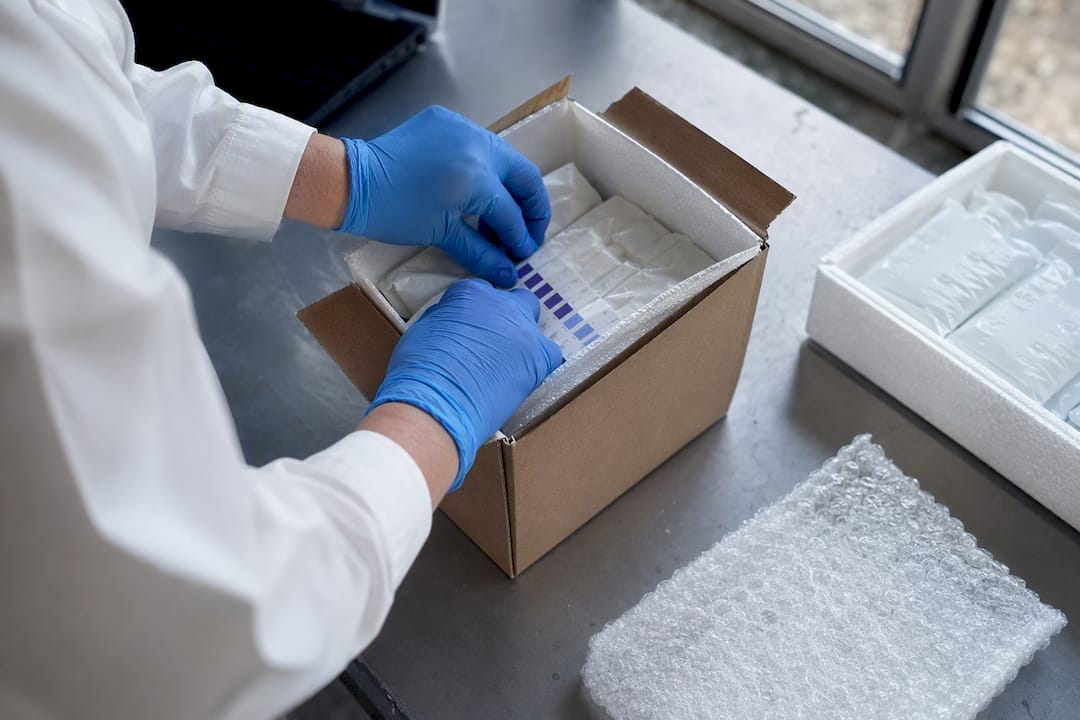
For temperature-sensitive compounds, request cold-chain packaging with temperature indicators and a trackable courier service rather than standard post. Domestic warehouses eliminate customs delays entirely, which is the core operational advantage of local peptide sourcing over importing from overseas.
Statistic callout: Suppliers maintaining Australian stock often enable same-business-day dispatch, an advantage generally not available for imported orders subject to customs clearance.
Key points to confirm before you commit to a delivery date:
- Transit times within Australia for standard courier services, typically one to three business days depending on state.
- Whether cold-chain packaging is standard or an optional add-on for your specific compound.
- Lead times for bulk or custom synthesis orders, which run longer than stock items and should be flagged early if your experiment has a fixed start date.
- Whether expedited handling is available for urgent orders, and what it costs.
If your lab runs on tight experimental timelines, our guide to cost factors in Australian peptide procurement breaks down how expedited shipping and bulk quantities affect pricing.
How to verify a certificate of analysis before accepting a lot
A COA is only useful if you know how to read it. Check five fields on every batch report: HPLC purity percentage, MS identity confirmation, the lot number, the testing laboratory's name and accreditation, and the date the test was performed. A COA with a purity figure but no lot number is effectively unverifiable against the vial in front of you.
Match the lot number on the COA to the lot number printed on the physical vial at the point of receipt, and retain both the sample vial and the COA for at least one full experiment cycle. This simplifies retesting and resolves quality disputes far faster than requesting historical records after the fact.
For cell culture work or other endotoxin-sensitive assays, don't assume a standard COA covers you. Endotoxin and sterility results are often separate test items that need to be requested explicitly before you accept a lot for sensitive work.
If a lot fails verification, or the COA doesn't match what arrives:
- Retain the sample and original packaging rather than discarding it.
- Request a retest from the supplier's stated testing lab.
- Ask for a return merchandise authorisation (RMA) if the discrepancy can't be resolved.
- Escalate to the supplier's technical contact with the mismatched COA data attached.
Our third-party testing guide for Australian researchers covers COA field interpretation in more detail if this is a new process for your lab.
Local evidence: how an Australian supplier meets the checklist
Applying the checklist above to a real Australian option makes the standard concrete.
Additional proof points relevant to procurement decisions:
- Discreet packaging on all shipments, which matters for institutional labs managing sensitive research materials.
- A verified customer satisfaction rating of 4.6/5, drawn from actual buyer reviews rather than a marketing claim.
- Batch COAs and technical datasheets available on request ahead of purchase, letting a lab confirm purity and identity before committing to an order.
A COA library you can check before you buy, rather than after a shipment arrives, is one of the clearest transparency signals a research supplier can offer. It shifts the verification burden from "trust the label" to "read the data".
For bulk or custom synthesis orders, contact technical support directly and request the specific test files for the lot you'd be receiving, not just a representative sample report. Our shortlist of Australian peptide manufacturers is a useful cross-reference if your lab sources from multiple vendors across a research program.
Why "closest supplier" is the wrong question to ask
Most guidance on this topic fixates on proximity, treating "local" as a geographic convenience rather than a compliance and logistics decision. That framing undersells what actually matters. A supplier three states away with genuine domestic stock, a published COA library, and a same-business-day dispatch policy beats a supplier physically nearer that ships from an unclear origin with no batch-level testing.
The conventional advice to "just find someone local" also glosses over the sharpest distinction in this whole category: research-grade versus pharmaceutical-grade. Plenty of procurement staff, particularly those newer to peptide research, don't realise that a compounding pharmacy and a research supplier are solving entirely different problems. Conflating them isn't just a paperwork error, it's the kind of mistake that invalidates results or triggers a compliance review.
If there's one thing worth prioritising above all else, it's documentation discipline. A lab that insists on matching lot numbers to COAs, retaining samples, and requesting endotoxin data for sensitive assays will catch problems that a purity percentage alone never reveals. Speed of dispatch matters, but only once the paperwork behind the shipment holds up.
— Dr. Authur
Ready to order? What to expect at Aupeptidelabs
If your lab has worked through the checklist above and needs product now, Aupeptidelabs is the Australian-stocked option built around exactly these verification standards, batch COAs on request, purity data exceeding 99%, and dispatch from Australian inventory within one business day, so you're not waiting on a customs queue while your experiment timeline slips.
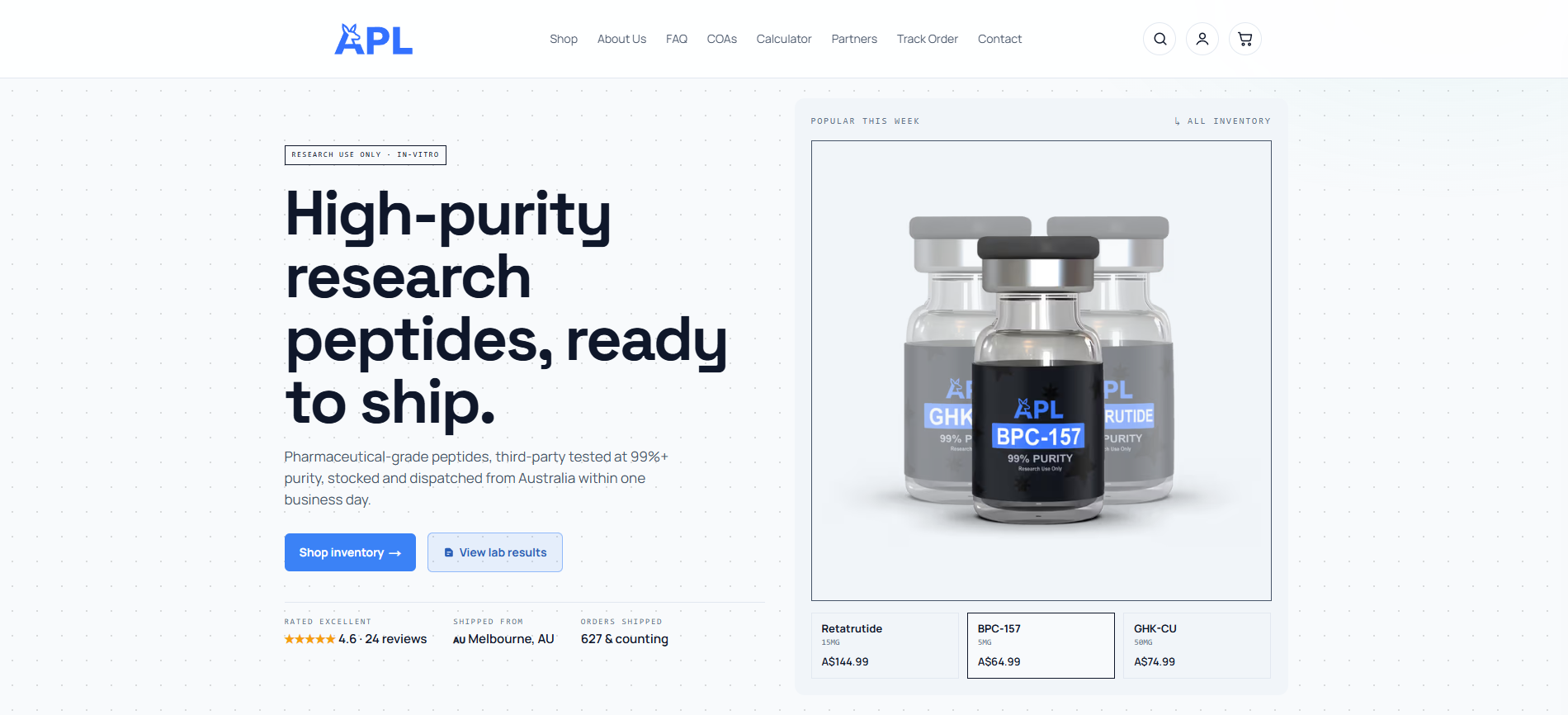
Every product listing carries clear "research use only" labelling with no therapeutic claims attached, and orders ship in discreet packaging suited to institutional procurement. At checkout, you'll find COA access alongside your order confirmation and a choice of shipping options, including cold-chain handling for temperature-sensitive compounds.
For a specific compound, the LL-37 product page and ARA 290 product page both list current batch documentation directly. If you're planning a bulk order or need a custom synthesis run, contact technical support before checkout to confirm lead times and request the exact test files for the lot you'll receive. That single email is the fastest way to turn a one-off purchase into a reliable, repeatable supply line for your lab.
Sources
- Therapeutic Goods Administration (TGA)
- Peptide company near me: how to find and vet one | FormBlends
- Peptides near me: complete guide to finding quality research peptides | SeekPeptides