
What are the top Australian peptide sources for research in 2026?
Verified, pharmaceutical-grade peptide supply in Australia is concentrated among a small number of wholesalers and specialist e-commerce operations, each differentiated by purity standards, stock location, and quality certification protocols. For laboratories requiring research-grade peptides with confirmed purity exceeding 99%, the shortlist below covers the most relevant options currently operating in the Australian market.
Key trust signals to confirm before ordering from any supplier:
- HPLC and mass spectrometry verification on every batch
- Batch-specific Certificate of Analysis (CoA) issued as standard
- GMP-compliant manufacturing or sourcing
- Same business day dispatch from local Australian stock
- Secure and discreet packaging to preserve peptide integrity
The following table compares the eight featured suppliers across the dimensions most relevant to laboratory procurement decisions.
| Supplier | Purity / Certifications | Peptide Range | Local Stock & Shipping | Rating | Best For |
|---|---|---|---|---|---|
| Pure Peptides Australia | Verified pharmaceutical-grade | Research peptides, local wholesale | Darlinghurst NSW; local dispatch | 4.6★ (reviews) | Labs needing verified local NSW presence |
| Peptide Supply Australia | Pharmaceutical-grade | Broad research range | Sydney NSW; rapid shipping | 5★ (16 reviews) | Researchers requiring fast NSW dispatch |
| Australia Peptides Sources | Verified health-category | Research peptides | Victoria; localised stock | 5★ (16 reviews) | VIC-based laboratory sourcing |
| Peptides Stores Australia | Pharmaceutical-grade wholesale | Bulk research peptides | NSW; local stock | 5★ (16 reviews) | Bulk buyers and research institutions |
| Australia peptide store A | Verified local operation | Research peptides | Australian local | 5★ (1 review) | Small to medium order laboratories |
| buy peptides australia | — | — | — | — | — |
| Alluvi Retatrutide Peptides Australia | — | Retatrutide-focused | — | — | Retatrutide-specific procurement |
| GHK - Cu Australia | — | GHK-Cu peptide | — | — | GHK-Cu research applications |
Pure Peptides Australia operates from Darlinghurst, NSW, and functions as a verified wholesaler with confirmed local stock. Its positioning suits laboratories that prioritise a documented physical presence in New South Wales alongside pharmaceutical-grade product specifications.
Peptide Supply Australia is a Sydney-based wholesale operation offering pharmaceutical-grade peptides with rapid local shipping. For researchers in NSW who need fast turnaround on orders, this supplier's proximity and service record make it a practical primary option.
Australia Peptides Sources is verified in Victoria and operates within the health category, making it the most relevant localised option for laboratories conducting scientific research in VIC. Its stock and dispatch infrastructure are oriented toward the Victorian market.

Peptides Stores Australia is a NSW-based wholesale supplier suited to bulk procurement. Research institutions placing larger orders benefit from its wholesale pricing structure and verified local stock.
Australia peptide store A suits small to medium order volumes and offers direct contact via WhatsApp for personalised order handling.
Alluvi Retatrutide Peptides Australia and GHK - Cu Australia are narrow-focus options. Alluvi is relevant specifically for Retatrutide procurement; GHK - Cu Australia for researchers working with the copper-binding tripeptide GHK-Cu. Neither publishes purity certification details publicly.
buy peptides australia has no publicly listed purity specifications, certifications, or peptide range details at this time.
How to choose a reliable research peptide source in Australia
Supplier selection for pharmaceutical-grade peptides requires systematic evaluation across several technical and operational criteria. Purity verification is the non-negotiable starting point: any credible supplier should provide HPLC and mass spectrometry data alongside a batch-specific CoA confirming identity, purity, and absence of residual solvents.
Critical selection criteria for Australian laboratories:
- Purity verification: Confirm HPLC and mass spectrometry data are batch-specific, not generic
- GMP compliance: Sourcing from GMP-compliant manufacturers is fundamental for research efficacy and repeatability
- Local stock: Australian-held inventory eliminates customs delays and reduces cold-chain risk
- Regulatory compliance: Confirm the supplier operates within the Therapeutic Goods Administration (TGA) framework for research-use peptides
- Customer support: Access to technical staff who can address reconstitution, storage, and dosage queries is a practical differentiator
- Refund and return policy: Confirm the supplier's policy on damaged, degraded, or incorrectly dispatched product before placing an order
Pricing transparency matters as much as the price itself. Suppliers who publish tiered pricing, bulk order discounts, and clear ordering conditions reduce procurement friction for laboratories managing research budgets. Vague or unlisted pricing is a flag worth investigating before committing to a supplier relationship.
Pro Tip: Always request a sample CoA before placing a first order. A legitimate supplier will provide a batch-specific document, not a generic template. Cross-reference the reported purity against the HPLC trace to confirm the figure is supported by the underlying data.
Enzyme choice during peptide production also affects the final sequence profile and yield, so researchers sourcing enzymatically hydrolysed peptides should confirm which proteolytic method was used and whether it is consistent across batches.
What does the Australian pharmaceutical peptide market look like in 2026?
Research peptides available through Australian suppliers derive from three primary biological origins: animal proteins (milk caseins, whey, eggs, meat), plant-based sources (soy, pulses, cereals, hemp seed), and marine organisms (fish, squid, sea urchin, oyster, seahorse). Plant-derived peptides are increasingly favoured in commercial production due to lower raw material costs and broad substrate availability. Marine-derived peptides demonstrate strong bioactivities relevant to metabolic and cardiovascular research, with species such as squid and sea urchin contributing structurally distinct sequences not found in terrestrial sources.
Production methodologies for pharmaceutical-grade research peptides fall into three categories:
- Enzymatic hydrolysis: Protease-driven cleavage of precursor proteins; reproducible and scalable, though enzyme selection directly affects peptide sequence and yield
- Microbial fermentation: Generates greater peptide diversity but with less process control than enzymatic methods
- Chemical synthesis: Preferred for defined-sequence peptides such as BPC-157, CJC-1295, and Retatrutide, where sequence fidelity is critical for research reproducibility
Commonly studied peptides in Australian research contexts include BPC-157 (tissue repair models), CJC-1295 (growth hormone secretagogue studies), Retatrutide (GLP-1/GIP/glucagon tri-agonist research), and GHK-Cu (wound healing and fibroblast activation studies). Each requires verified sequence identity, not just bulk purity, before use in controlled experiments.
Regulatory compliance in Australia is governed by the TGA. Research peptides are classified as Schedule 4 substances in many cases, and their procurement is restricted to legitimate research and laboratory use. Suppliers operating within this framework should be able to confirm their regulatory status on request.
Challenges specific to local sourcing:
- Limited number of domestic GMP-certified manufacturers relative to demand
- Cold-chain integrity during transit in warmer Australian climates
- Variability in net peptide content versus gross weight across suppliers, a factor researchers must account for in dosage calculations
Note on purity reporting: Net peptide content and gross weight are not equivalent. Researchers should confirm that supplier-reported purity figures reflect net peptide quantities, not total lyophilised mass including counterions and residual moisture.
How does Aupeptidelabs approach high-purity peptide supply in Australia?
Aupeptidelabs operates from Australia with a specific focus on the procurement challenges that affect local research laboratories: customs delays, inconsistent purity documentation, and slow domestic dispatch. All products are dispatched within one business day from Australian stock, eliminating the transit variability associated with international suppliers.
Key operational standards at Aupeptidelabs:
- Purity levels exceeding high pharmaceutical standards, verified by third-party testing
- Batch-specific CoA issued for every product
- Discreet packaging designed to protect peptide integrity and laboratory confidentiality
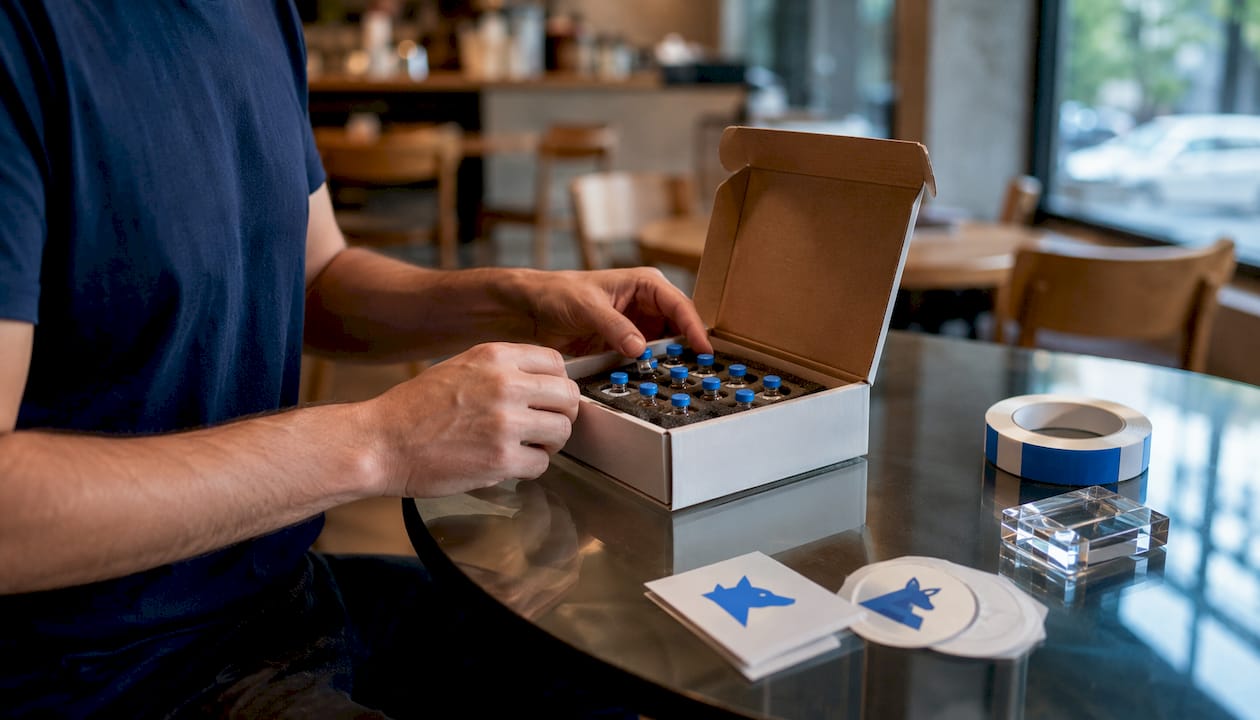
- Inventory includes research supplies: insulin syringes, bacteriostatic water, and alcohol wipes
- Custom and bulk order fulfilment available on request
- Affiliate programme for institutional referrals
Aupeptidelabs carries a customer satisfaction rating of 4.6/5 based on verified reviews, reflecting consistent performance across purity, dispatch speed, and order accuracy. The product catalogue covers a broad range of research peptides, with BPC-157 among the most frequently procured by Australian laboratories working in tissue repair and gastrointestinal research models.
For researchers who need to confirm reconstitution volumes or dosage parameters before use, Aupeptidelabs publishes a peptide dilution calculator to support accurate preparation at the bench level.
What return and refund policies apply to peptide orders in Australia?
Return and refund policies for research peptides in Australia vary by supplier and are shaped by the perishable, temperature-sensitive nature of the products. Most reputable suppliers will accept returns or issue replacements for orders that arrive damaged, degraded, or incorrectly fulfilled, provided the issue is reported promptly with photographic evidence and the original packaging.
Laboratories should clarify the following before placing an order:
- Whether the supplier accepts returns on unopened, correctly stored product
- The timeframe within which damage or quality issues must be reported
- Whether refunds are issued as credit, replacement product, or monetary reimbursement
- How cold-chain failures during transit are handled, including carrier liability
Aupeptidelabs' discreet and protective packaging is designed to reduce the incidence of transit damage. For any order discrepancy or quality concern, contacting the supplier directly and promptly with batch documentation is the most effective resolution pathway. Suppliers who provide batch-specific CoAs are better positioned to investigate and resolve quality disputes, as the documentation creates a traceable record from manufacture through to delivery.
Aupeptidelabs: local supply built for Australian research laboratories
Researchers who have worked through the comparison above will recognise that the core differentiators in Australian peptide supply come down to purity documentation, dispatch speed, and post-order support. Aupeptidelabs addresses all three from a single local operation.
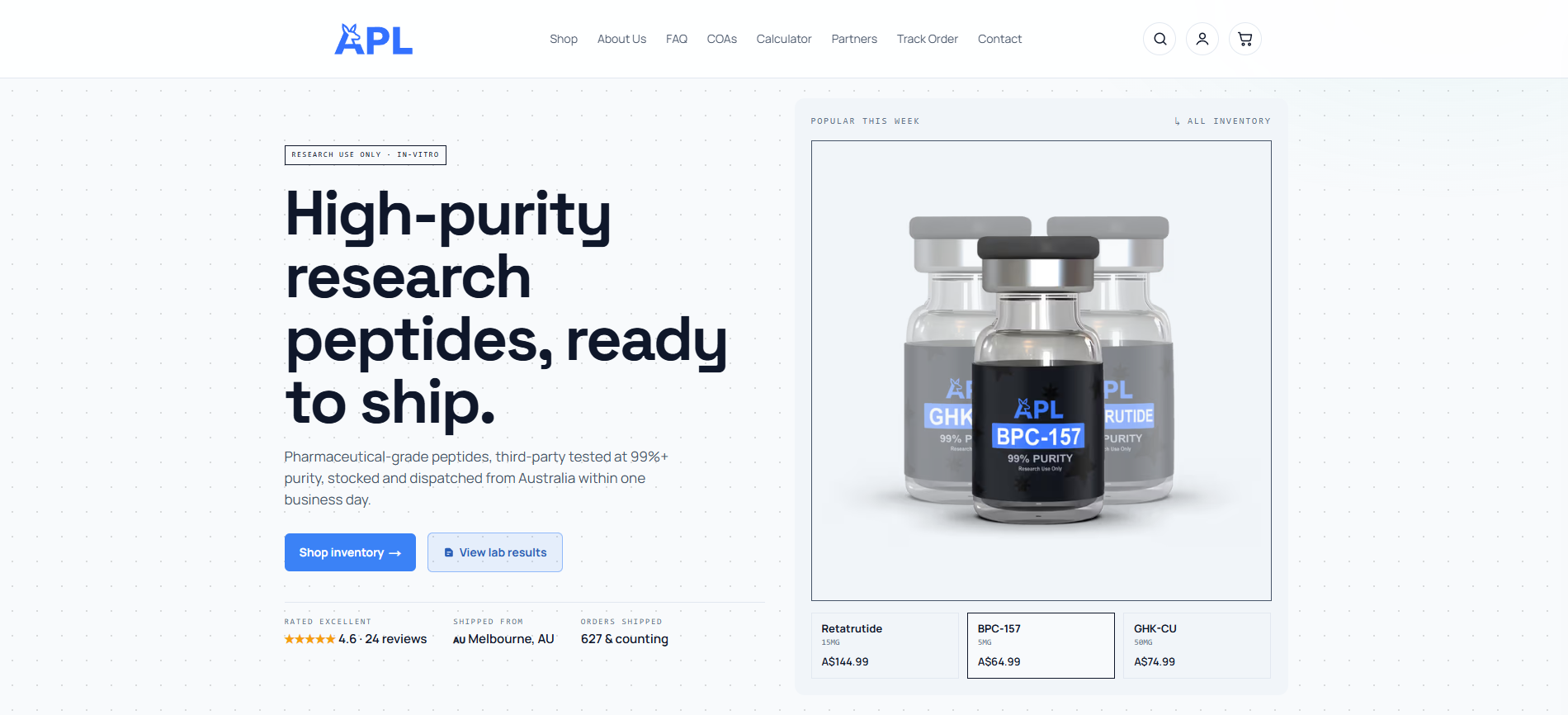
Aupeptidelabs stocks pharmaceutical-grade research peptides with purity exceeding 99%, ships every order from Australia within one business day, and issues a batch-specific CoA as standard. There are no customs delays, no minimum order requirements for standard lines, and no ambiguity around what the purity figure represents. For laboratories that need reliable, documented supply without the procurement overhead of international sourcing, research peptides from Aupeptidelabs are available to order directly. The peptide dilution calculator is also available for bench-level preparation support.