
Importing peptides into Australia is legal only within specific, regulated pathways, because most peptides fall under the Therapeutic Goods Act as unapproved therapeutic goods. Whether a shipment clears customs depends on the peptide's Australian Register of Therapeutic Goods (ARTG) status, its Poisons Standard scheduling, and which lawful route you use, be that the Personal Importation Scheme, the Special Access Scheme, or a Narcotics Control Section permit. Get the paperwork wrong and the Therapeutic Goods Administration (TGA) and Australian Border Force (ABF) will seize the parcel.
Quick checklist: what to verify before you order from overseas
Before you place an order with an overseas supplier, run through this checklist. It takes ten minutes and can save you a seized shipment and a wasted invoice.
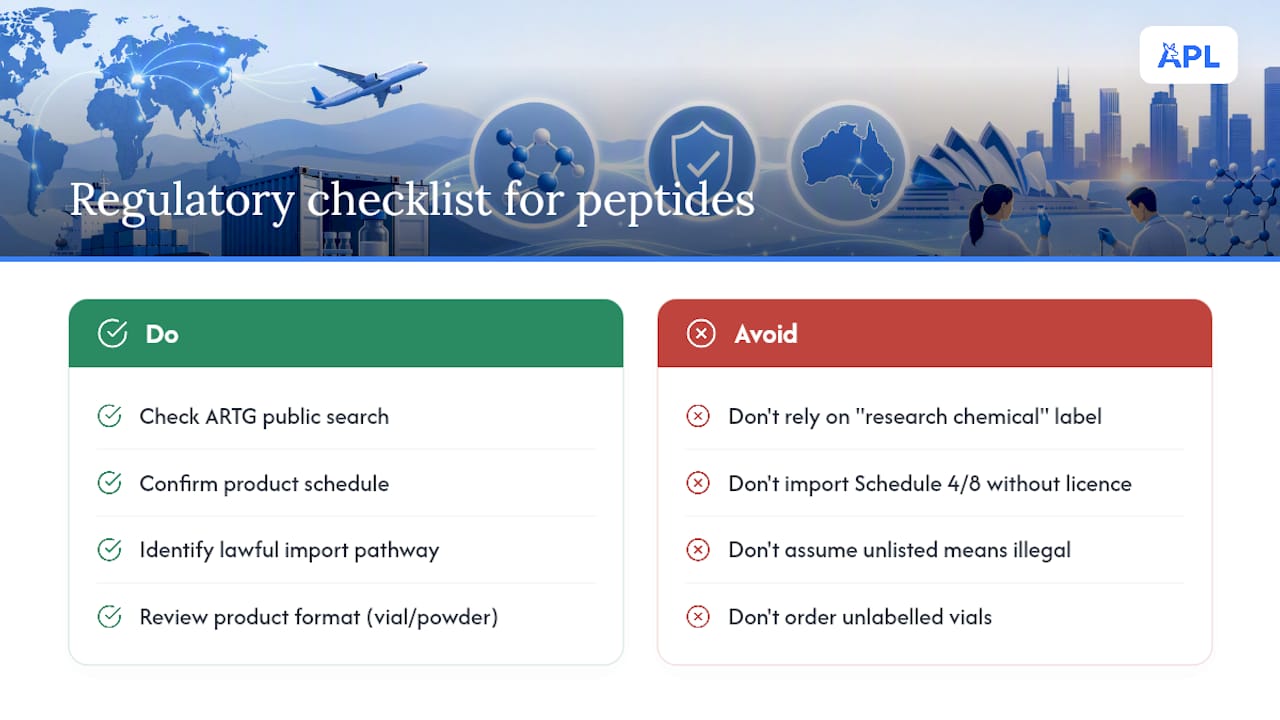
- Search the ARTG to confirm whether the specific peptide ingredient is listed, and check its Poisons Standard schedule.
- If it's Schedule 4 or Schedule 8, you need a valid Australian prescription or an approved clinical pathway before you order anything.
- Check whether the substance falls under Customs (Prohibited Imports) Regulations 5G or 5H, which trigger a mandatory Narcotics Control Section (NCS) permit.
- Confirm the packaging carries clear ingredient names, a certificate of analysis (COA) where available, and that quantities sit within Personal Importation Scheme (PIS) limits.
- When any of this is unclear, talk to a clinician or apply for the correct permit before you order, not after. See For Providers | EIV Diagnostics for clinician guidance on confirming results and diagnostic responsibilities.
How Australian regulation treats peptides: ARTG, scheduling and regulatory triggers
Under the Therapeutic Goods Act, most substances intended for therapeutic use in Australia must be entered on the ARTG before they can be lawfully supplied here. Peptides marketed for muscle repair, fat loss, cognitive support, or hormone effects almost always fall into this category, regardless of how the label describes them.
Scheduling under the Poisons Standard adds a second layer. Peptides classified as Schedule 4 (prescription only) or Schedule 8 (controlled drug) cannot be imported or supplied without the relevant prescription or licence. This is where "research chemical" labelling collapses as a defence: regulators assess a product by its presentation and likely use, not by the sticker on the vial. A sterile injectable vial with dosing instructions reads as a therapeutic good to the TGA and ABF, no matter what the packaging claims.
Format matters as much as chemistry. Bulk powder, unlabelled vials, or ambiguous dosing instructions all raise flags during customs screening. Before ordering anything, run the product name through the ARTG public search to see if it's listed, and check the associated schedule. An unlisted product doesn't automatically mean it's illegal to import, but it does mean you need to identify which lawful pathway applies before you proceed.
Legitimate pathways to access and import peptides
Three main routes cover almost every legitimate import scenario. Which one applies depends on who you are and why you need the peptide.
- Personal Importation Scheme (PIS). Individuals can import most therapeutic goods for personal use if they hold a valid Australian prescription where the item is prescription only, and the shipment stays within a three month supply per consignment, capped at fifteen months' total supply per year. Products on the prohibited list are excluded outright, no matter how the paperwork looks.
- Special Access Scheme (SAS) and Authorised Prescriber (AP). These pathways exist for clinical, not personal, access. An Australian registered medical practitioner assesses genuine clinical need and applies on the patient's behalf, most often under SAS Category A, B, or C depending on urgency and evidence base. This route suits a treating clinician managing an individual patient, not a lab stocking supply.
- NCS permits for controlled substances. Anabolic, androgenic, and hormone-related peptides controlled under Regulations 5G and 5H need a permit from the Narcotics Control Section for each consignment. This applies whether you're an individual researcher or an institution, and the permit has to match that specific shipment, not a general licence.
A lab importing bulk stock for institutional research sits in a different position again, usually requiring both an NCS permit and evidence of an appropriate state or territory drugs and poisons licence.
How to apply for permits and what to include
Getting the paperwork right the first time avoids weeks of delay. Work through these steps before you place an order, not after it ships.
- Confirm the product's status with an ARTG search and a Poisons Standard schedule lookup.
- For PIS or SAS access, get the prescribing clinician to provide a valid prescription, a clinician letter, and a clear clinical rationale for the specific peptide and dose.
- For NCS permits, submit the application with exact concentration, pack counts, and evidence of any relevant state or territory licence covering the substance.
- Keep copies of every document, and include COAs or lab certificates inside the shipment itself, not just in your email records.
Pro Tip: Apply for NCS permits before the goods ship, not after. Processing targets sit around one working day for Category A SAS-linked applications and up to five working days for other categories, but a permit lodged after a parcel is already in transit does nothing to stop a seizure at the border.
Why consignments get seized and how to reduce the risk
Most seizures trace back to a handful of predictable triggers, and none of them are exotic.
- Vague or coded ingredient names on the label, instead of the actual peptide name and concentration.
- Bulk powder or multi-vial quantities that suggest supply rather than personal use.
- Missing prescription, clinician letter, or NCS permit at the time of import.
- Packaging inconsistent with the declared quantity limits under the PIS.
The TGA has flagged unapproved peptides as a priority enforcement area, and ABF referrals to the TGA frequently involve poorly labelled imports that are seized and destroyed rather than released. Reducing your risk means favouring ARTG-listed products where they exist, keeping clinician documentation on file, and using clear, accurate labelling with the patient's name attached where a prescription applies.
If your shipment is seized or you receive an infringement notice
Seizure notices usually arrive by letter or through the courier, referencing the consignment and the regulation invoked. Record the date, the notice number, and every detail of the original order immediately.
Contact the seller for shipment records, then your prescribing clinician if the import was tied to a prescription. For anything beyond a straightforward personal-use case, contact the TGA or the ABF directly, and get legal advice early if the case involves quantities suggesting supply. Outcomes range from destruction of the goods to fines through an infringement notice, or in more serious cases, referral for prosecution. One recent example involved a Victorian individual fined for unlawfully importing an unapproved peptide, a reminder that enforcement isn't limited to commercial-scale importers.

What the enforcement trend really tells researchers
The TGA's tightened focus on unapproved peptides isn't a bureaucratic overreaction. Officials have pointed to hospitalisations and severe reactions linked to unverified imports, which is a genuine public health signal, not just a paperwork exercise.
For researchers and procurement teams, the practical response is straightforward. Document the clinical or research rationale before you order anything. Favour ARTG-listed or domestically sourced supply over grey-market imports labelled as research chemicals, since that label carries no legal weight once customs inspects the vial. For anything involving controlled substances or complex institutional import, engage a clinician or legal counsel before the shipment leaves the supplier, not after it's flagged at the border.
— Dr. Authur
A domestic alternative that removes the import-permit question entirely
For labs weighing the PIS paperwork, SAS timelines, or an NCS permit application against a simpler option, sourcing from an Australian-based supplier sidesteps the whole import question. Some Australian-based suppliers dispatch quickly from within Australia, which can mean no customs clearance, no permit application, and no risk of a shipment sitting in an ABF holding queue while you wait on paperwork.
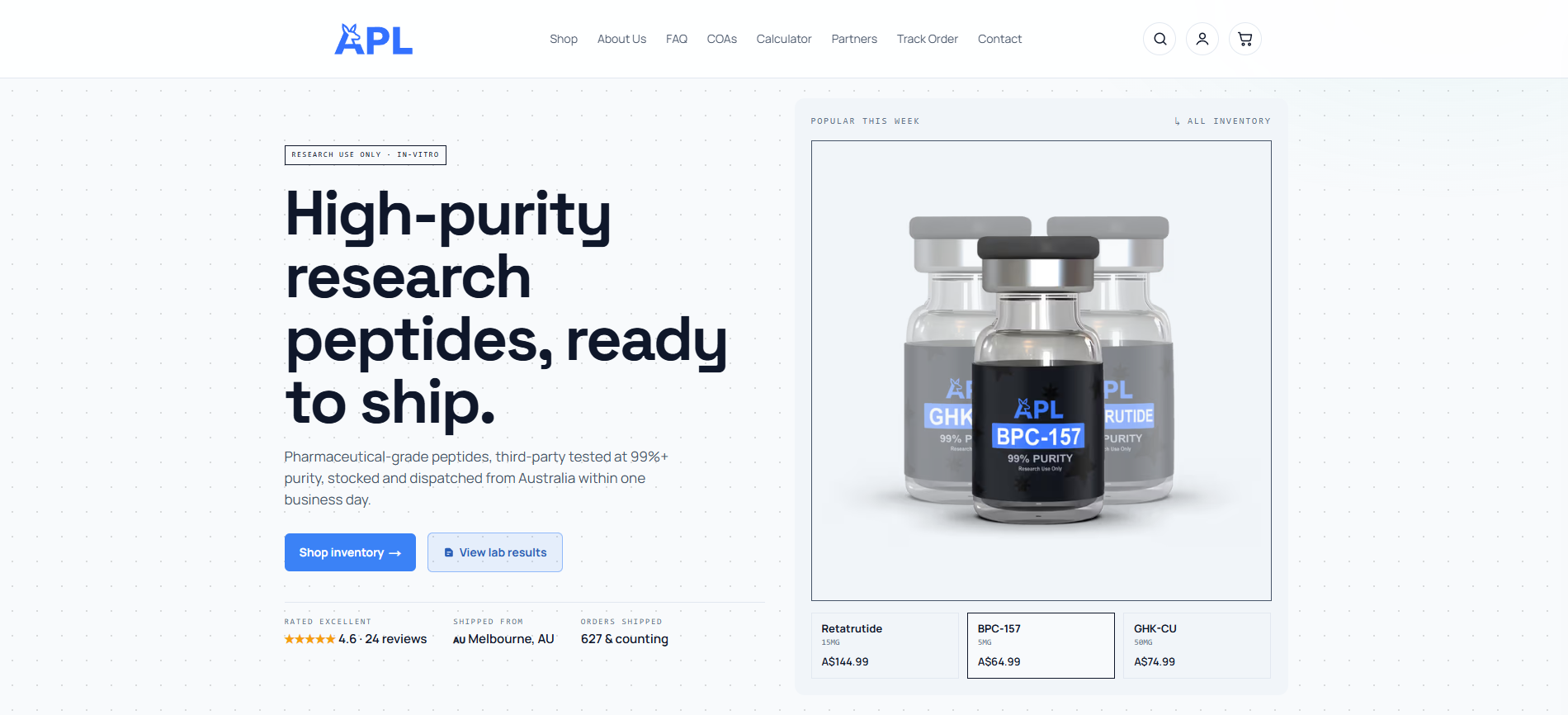
That combination of verified purity, fast domestic dispatch, and positive customer feedback is why some labs choose Australian suppliers instead of chasing overseas suppliers through import permits. Browse the Metabolic & GLP-1 range or the Recovery & Repair category for domestically stocked options, or check current stock and dispatch times on the Aupeptidelabs homepage before your next order.
Official pages to check now
- TGA safety alerts and personal importation guidance
- NCS permit guidance for Regulation 5G/5H substances
- The ARTG public search tool and the ABF's customs prohibited imports rules
This article is general information, not a substitute for advice from a qualified doctor. Consult a qualified healthcare professional about your own circumstances before acting on anything here.
Sources
- Personal importation scheme guidance | Therapeutic Goods Administration (TGA)
- Guidance: completing application for permission to import substances under Regulation 5G/5H
FAQ
Are peptides legal to import into Australia?
Some are, but only within specific pathways. It depends on the peptide's ARTG and scheduling status, and whether you use the Personal Importation Scheme, SAS, or an NCS permit correctly.
Is it legal to sell peptides in Australia?
Selling therapeutic peptides in Australia generally requires ARTG listing or a specific exemption, since supply of unapproved therapeutic goods without authorisation is restricted under the Therapeutic Goods Act. Peptides sold strictly for laboratory research use, rather than human consumption, sit outside that supply framework.
Can you bring peptides on a plane in Australia?
Carrying peptides into Australia in personal luggage faces the same rules as postal import: prescription-only or controlled substances need the same prescription, permit, or clinical pathway evidence, and undeclared items risk seizure at the border regardless of how they arrived.
How do I get an import permit in Australia?
For controlled substances under Regulations 5G or 5H, you apply to the Narcotics Control Section with exact concentration, pack counts, and licence evidence. For personal use under prescription, no separate permit applies, but you still must meet PIS quantity and documentation rules.