
Peptide scheduling in Australia means the order‑to‑delivery workflow: PO acceptance, supplier quality checks, dispatch, and transit to a laboratory bench. The fastest reliable route runs through an Australian supplier holding onshore stock with same‑business‑day dispatch, temperature‑controlled freight, and delivery scheduled Monday to Wednesday. Some suppliers ship from Australian stock within one business day and issue a certificate of analysis with each batch, which can remove the customs variable entirely.
How domestic scheduling works for research peptides in Australia
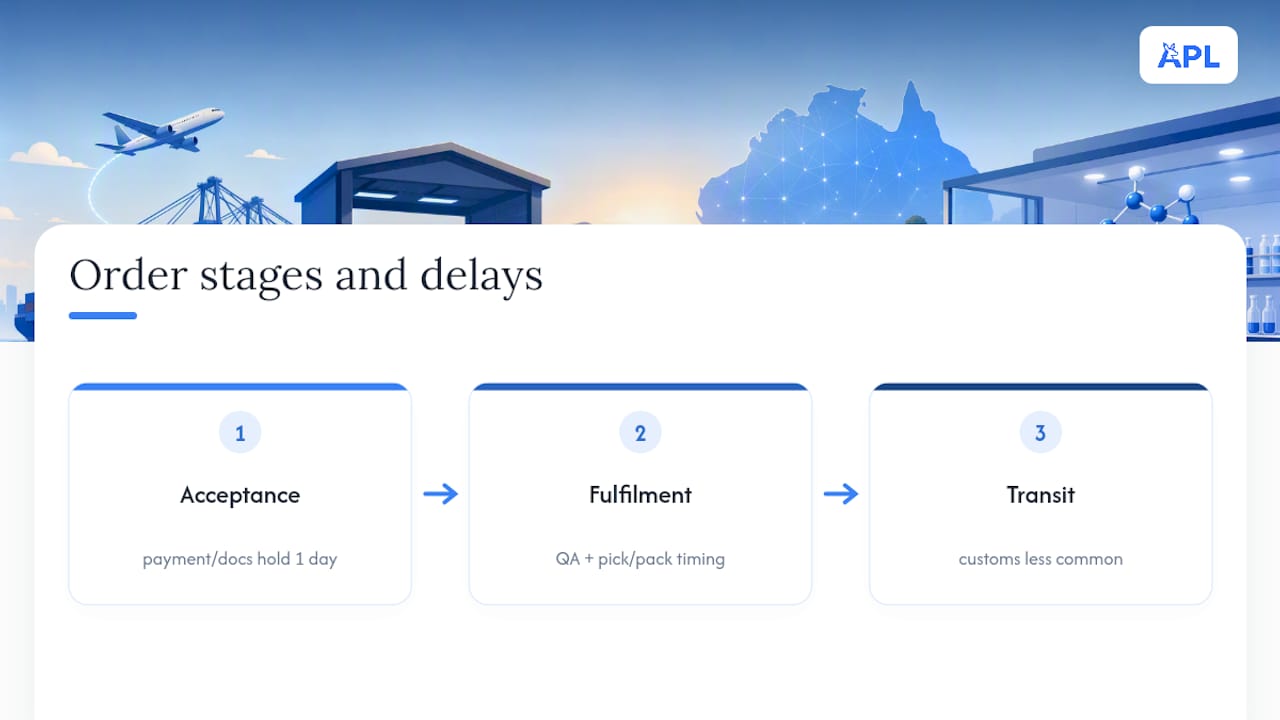
Every peptide order moves through three stages before it reaches a bench: acceptance, fulfilment, and transit. Delays tend to cluster at the first two, not the last.
Order acceptance is the most overlooked bottleneck. Purchase order confirmation, payment clearance, and documentation checks (institution details, delivery contact, storage requirements) commonly hold up dispatch by a full day if they're incomplete at checkout. A supplier can't dispatch what it hasn't verified.
Supplier quality assurance and pick/pack timing come next. This step is where same‑business‑day dispatch commitments are made or broken.
The single biggest lever, though, is stock location. Research Australia's report on importing reagents found that Australian researchers typically face longer reagent delays than overseas counterparts, driven by limited onshore manufacturing, a small domestic market, and freight logistics. Reagent imports increased significantly over recent years, reflecting how import-dependent the sector remains. Ordering from a supplier with genuine onshore stock skips the international leg altogether, and with it the customs and quarantine queue that trips up a meaningful share of overseas shipments.
What lead times look like by location
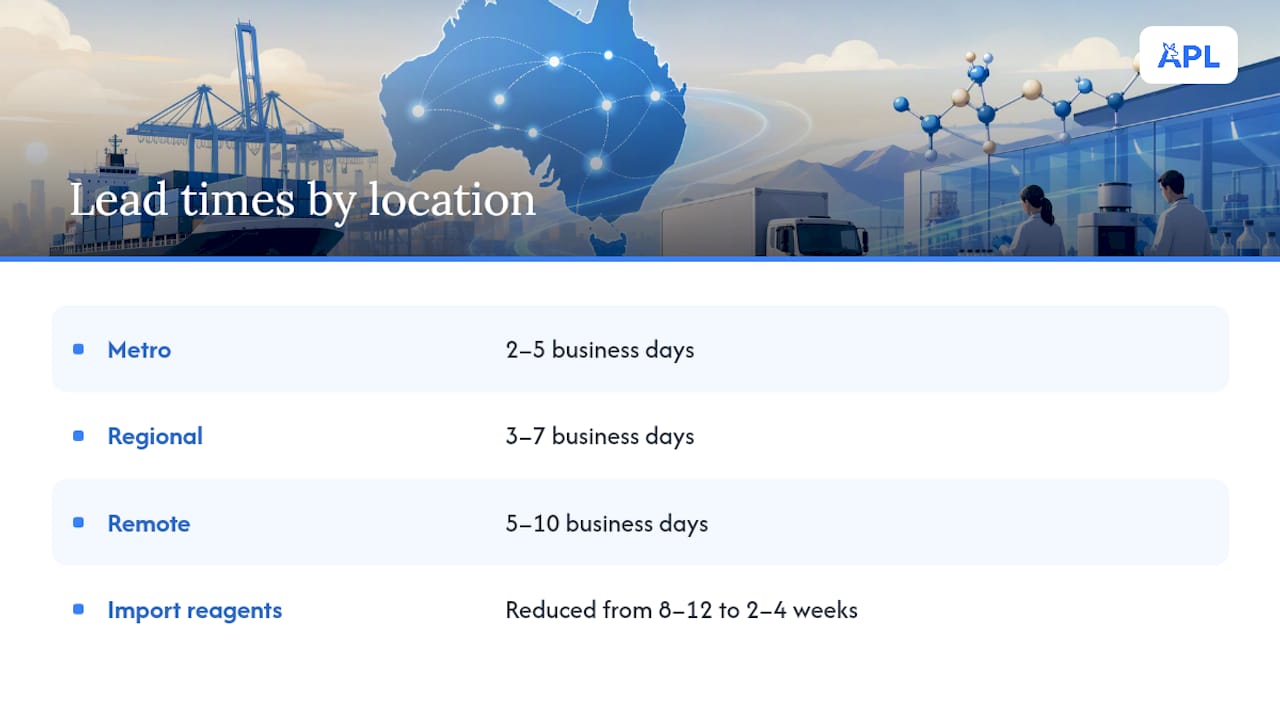
Domestic delivery windows vary by geography more than most procurement schedules assume. As a planning baseline: metro addresses typically see 2 to 5 business days, regional areas 3 to 7, and remote locations 5 to 10. IndexBox's analysis of the Australian life science reagent market notes that near‑shoring and onshore distribution hubs have pulled some lead times down from 8 to 12 weeks to 2 to 4 weeks for reagents that previously relied on international freight, with interstate delivery for temperature‑stable suppliers now commonly landing within 2 to 5 days.
Those windows stretch during peak periods. Summer heatwaves, Christmas and New Year freight backlogs, and carrier capacity constraints around long weekends all add days a schedule can't afford to lose. Build a buffer into any experiment timeline that depends on a peptide arriving intact and on time.
For projects with no slack, request express air freight rather than standard ground transit. For recurring or high‑volume research programs, place planned bulk orders ahead of known peak periods instead of relying on ad hoc reorders that compete with holiday freight volumes for courier space.
Cold‑chain, packaging and seasonal scheduling tactics
Australia's climate makes cold‑chain discipline non‑negotiable for anything shipped between November and March. Biovera's climate guide for peptide shipping recommends dispatching early in the week and requesting morning delivery windows, which limits the time a parcel sits on a hot loading dock or delivery van overnight.
Packaging choice depends on the compound's required storage state:
- Frozen peptides: dry ice with adequate headspace for sublimation over the expected transit period.
- Refrigerated shipments: gel packs or phase‑change materials sized for the transit duration, not just the distance.
- Lyophilised peptides: generally more temperature‑stable in transit, but still benefit from insulation during extended stability windows.
Double insulation and sufficient thermal mass matter more than any single packaging material. Active temperature monitoring, where a courier can supply a temperature log on request, gives a lab hard evidence if a shipment arrives outside spec.
Pro Tip: Check the weather forecast for your delivery corridor before confirming a dispatch date. A 38°C day in Adelaide or Perth on the courier's route is reason enough to hold dispatch a day, even if your own city is mild.
Avoid dispatching Thursday or Friday. A parcel that misses same‑day delivery ahead of a weekend can sit in a depot for 48 hours or more before the next window opens, and public holidays compound the problem further.
Regional and remote delivery strategies for Australian labs
Labs outside the metro corridor need a different playbook, not just a longer wait.
- Use multi‑carrier networks and depot collection. Some couriers move faster on long interstate legs when a regional depot pickup replaces a final rural delivery run, shaving a day or more off transit.
- Extend cold‑chain packaging for longer transit. A shipment expected to take 3 to 7 days needs packaging rated for the upper end of that window, not the average, and a named contact at the destination who can receive and immediately store the delivery.
- Consolidate orders where possible. Combining several peptide orders into one shipment, using an institutional procurement agreement, or nominating one centralised pickup point for a research group reduces both freight cost and the number of exposure events per project.
IndexBox's qPCR reagent market analysis notes that constrained air freight capacity can add 20 to 30% to landed costs, and refrigerated interstate freight between distant capitals adds a further 8 to 15%. Consolidated or institutional purchasing absorbs that cost more efficiently than repeated small orders.
Order checklist and SLA terms to request from suppliers
A complete order moves faster than an incomplete one. Before submitting a purchase order, confirm you've supplied:
- Catalogue code or exact peptide name and required storage state (frozen, refrigerated, lyophilised).
- Purchase order or payment confirmation attached at checkout, not sent separately afterward.
- A named delivery contact with a direct phone number, plus an after‑hours or emergency contact if the shipment is time‑critical.
On the documentation side, request a certificate of analysis (CoA) with batch number, written handling and temperature instructions, and the option to request the courier's temperature log for that specific consignment.
On service terms, negotiate same‑business‑day dispatch, cold‑chain tracking visibility, hold‑at‑temperature handling instructions for the receiving lab, and an emergency re‑ship policy if a shipment arrives outside spec. Research Australia's analysis points out that smaller labs gain disproportionate benefit from these SLA terms, because a single delayed or compromised batch can derail an entire time‑sensitive experiment where a larger institution might absorb the loss.
Practitioner perspective: procurement fixes that reduce scheduling errors
Most delivery failures trace back to the same three causes: authorisation signed off too late, a delivery contact missing or unreachable, and dispatch timed straight into a weekend's transit gap. None of these need new technology to fix. Centralised purchase orders, a small forecast buffer of stock, and one named on‑call contact solve most of it. When something does go wrong, an onshore supplier resolves it in days, not the weeks an international reorder demands.
— Dr. Authur
How Au Peptide Labs solves scheduling pain points for Australian labs
Some suppliers offer alternatives to overseas ordering for research peptides in Australia, with same‑business‑day dispatch from Australian stock potentially replacing the customs wait, freight uncertainty, and quarantine risk that come with international sourcing.
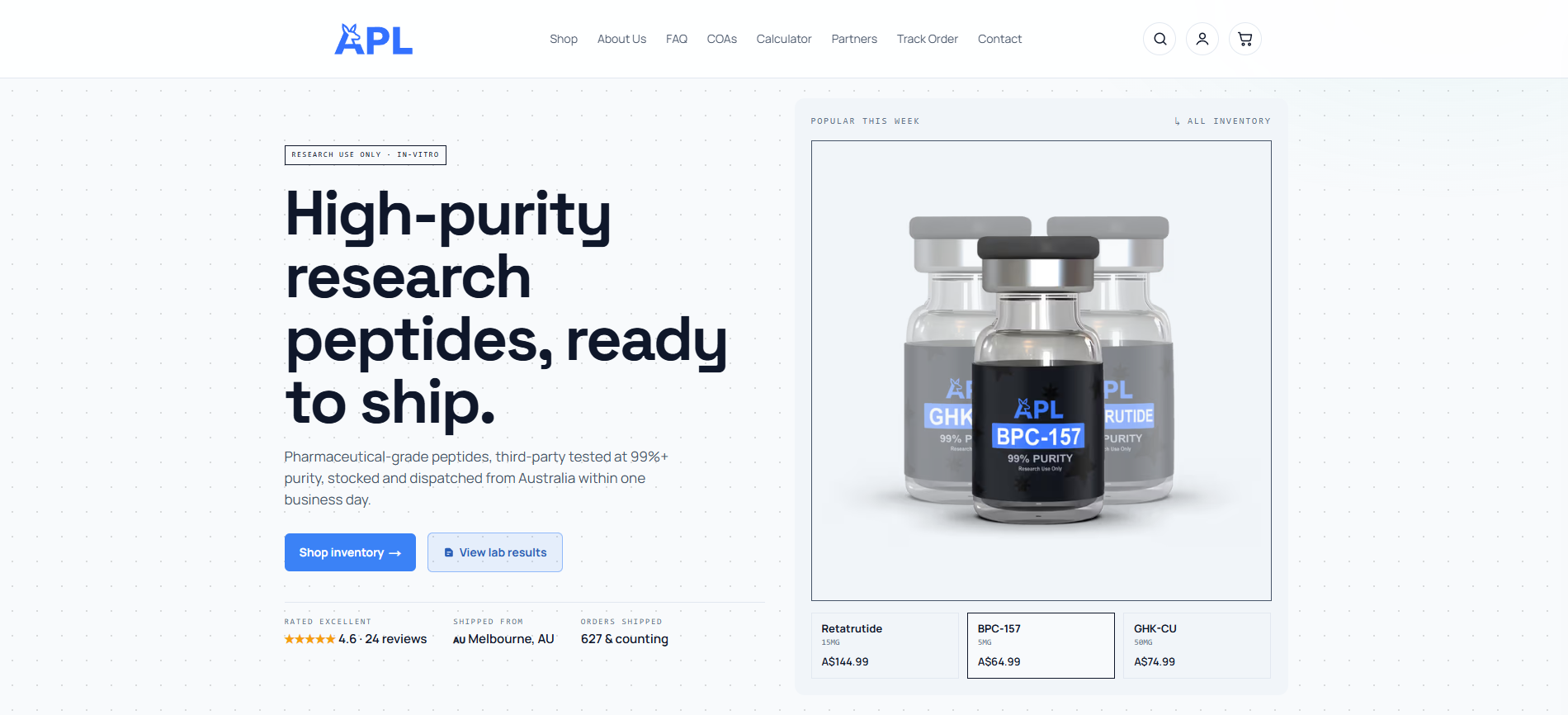
That combination directly targets the scheduling risks covered above. Onshore stock means there's no international leg to delay a project deadline. A same‑business‑day dispatch commitment can give procurement teams a fixed point to schedule delivery windows around. Cold‑chain packing and CoA documentation give a lab the evidence trail it needs if a shipment ever needs to be queried. For labs planning recurring orders or larger volumes, this is also where negotiating SLA terms, like the ones outlined above, becomes worth the conversation.
Browse the full research peptide catalogue to check current stock and place an order, or view a specific product such as LL‑37 to see its handling instructions and CoA before you order.
Sources
- Importing reagents into Australia — Research Australia (2022)
- Peptide shipping Australia: climate guide for research materials | Biovera
FAQ
What Does Peptide Scheduling Mean for Australian Labs?
It refers to the order, dispatch, and delivery workflow for research peptides, covering how long each stage takes and how to plan around it. Choosing a supplier with onshore stock and same‑business‑day dispatch can shorten the whole cycle.
How Long Does Peptide Delivery Take in Australia?
Metro addresses typically receive shipments in 2 to 5 business days, regional areas in 3 to 7, and remote locations in 5 to 10, though heatwaves and holiday periods can extend these windows.
Why Does Onshore Stock Matter for Scheduling?
Onshore stock removes the international customs and quarantine step, which Research Australia links to extended delays for a meaningful share of imported reagent shipments.
What Should I Ask a Supplier Before Ordering Peptides?
Request a certificate of analysis, batch number, dispatch SLA, cold‑chain tracking, and an emergency re‑ship policy before confirming a purchase order.
What's the Best Time to Schedule Peptide Delivery in Summer?
Dispatch early in the week, request morning delivery, and avoid known heatwave days on the courier's route to limit heat exposure during transit.