
What is bacteriostatic water?
Bacteriostatic water for injection is sterile water containing 0.9% benzyl alcohol (9 mg/mL) added as a bacteriostatic preservative. That single additive is what separates it from plain sterile water for injection and defines its entire clinical utility. The preservative does not sterilise the vial. It inhibits the multiplication of microorganisms introduced during needle punctures, which is precisely what the term "bacteriostatic" denotes: growth-slowing, not growth-killing.
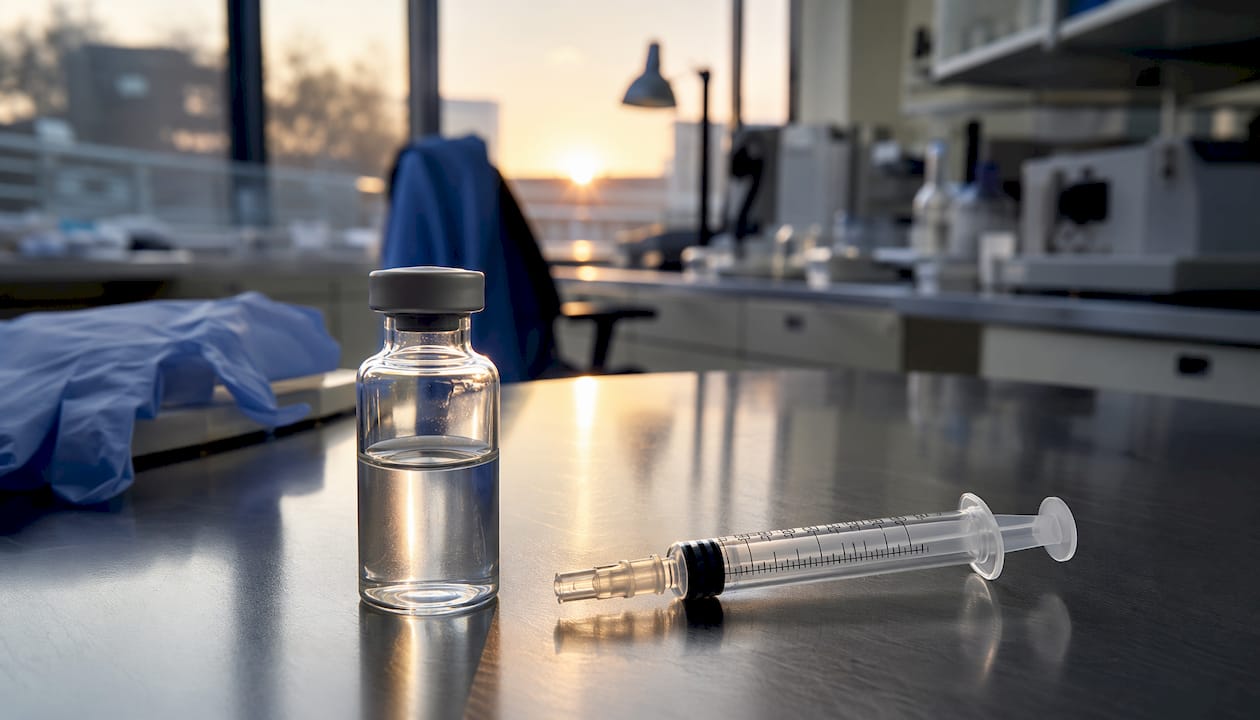
The practical consequence is significant. Because microbial proliferation is suppressed rather than permitted to proceed unchecked, the vial can be entered repeatedly over an extended period. Multi-dose vial labels commonly specify a 28-day discard window after first puncture, contingent on strict aseptic handling throughout.
Key attributes at a glance:
- Composition: Sterile water for injection plus 0.9% (9 mg/mL) benzyl alcohol
- Preservative action: Bacteriostatic, inhibiting microbial growth rather than sterilising
- Container type: Multi-dose vial, permitting repeated withdrawals
- Typical discard period: 28 days after first puncture under aseptic conditions
- pH: 5.7 (range 4.5–7.0) per the USP monograph
- Contraindication: Not for use in neonates due to benzyl alcohol content
Where can you buy bacteriostatic water in Australia?
Bacteriostatic Water Australia is a verified local distributor specialising exclusively in bacteriostatic water supply within Australia, operating from Unit 1/331 Logan Rd, Stones Corner QLD 4120.
| Supplier | Product type | Preservative content | Sterility duration after opening (as specified by supplier) | Primary uses | Purchase channels in Australia | Rating |
|---|---|---|---|---|---|---|
| Bacteriostatic Water Australia | Bacteriostatic water for injection | benzyl alcohol | A specified period with aseptic conditions | Peptide reconstitution, injectable drug dilution, research | Online (direct), specialist medical supply | 5★ (23 reviews) |
Bacteriostatic Water Australia positions itself as a specialist supplier rather than a general pharmacy, which matters when sourcing a product with specific sterility and documentation requirements. Researchers and medical practitioners sourcing locally should verify that any supplier provides a Certificate of Analysis (COA) and a Material Safety Data Sheet (MSDS) with each batch. These documents confirm preservative concentration, sterility testing outcomes, and handling requirements, and their absence from a supplier's offering is a credible red flag.
- COA confirms benzyl alcohol concentration and sterility test results
- MSDS details safe handling, storage temperature requirements, and hazard classification
- Local dispatch reduces transit time and minimises cold-chain risk compared with international suppliers
How does bacteriostatic water differ from sterile water for injection?
The distinction between these two products is not merely technical. Confusing them in a multi-dose preparation context carries real contamination risk.
Sterile water for injection contains no preservative whatsoever. Once the vial is punctured, nothing inhibits bacterial growth, so the contents must be used immediately and the vial discarded. Bacteriostatic water, by contrast, carries benzyl alcohol, which suppresses microbial multiplication after each needle entry and extends the safe-use window.
Key differences:
- Preservative: Bacteriostatic water contains 0.9% benzyl alcohol; sterile water contains none
- Container use: Bacteriostatic water supports multiple withdrawals; sterile water is single-dose only
- Post-puncture discard: Bacteriostatic water, up to 28 days; sterile water, immediate discard
- Neonatal use: Sterile water is an acceptable diluent for newborns; bacteriostatic water is contraindicated
- Preservative-sensitive drugs: Some formulations are incompatible with benzyl alcohol; sterile water is required in those cases
Pro Tip: Benzyl alcohol preservation does not guarantee vial safety on its own. Vial integrity depends equally on environmental sterile controls and needle hygiene. A contaminated vial cannot be rescued by the preservative chemistry alone.
What is bacteriostatic water used for in medicine and research?
The preservative-enabled multi-dose capability makes bacteriostatic water the standard diluent across a range of injectable preparations. Its applications span pharmaceutical compounding, clinical medicine, and laboratory research.
Primary uses include:
- Peptide reconstitution: Lyophilised peptides require a sterile aqueous diluent; bacteriostatic water permits multiple withdrawals from the same reconstituted vial over weeks, which is standard practice in research settings
- HCG dilution: Human chorionic gonadotropin preparations are routinely reconstituted with bacteriostatic water for multi-dose administration protocols
- Injectable drug preparation: Bacteriostatic water dilutes or dissolves a broad range of injectable pharmaceuticals administered by intravenous, intramuscular, or subcutaneous routes
- Pharmaceutical compounding: Compounding pharmacies use it as a vehicle in multi-dose formulations where preservative compatibility has been confirmed
- Laboratory research: Researchers preparing multi-dose injectable compounds rely on it to maintain preparation integrity across repeated experimental draws
One critical contraindication applies universally: bacteriostatic water is not appropriate for neonates because benzyl alcohol carries documented toxicity risks in newborns. Sterile water for injection is the correct diluent in that population. Compatibility between benzyl alcohol and the specific drug being dissolved must also be confirmed before use, as certain formulations are incompatible with the preservative.
How to purchase bacteriostatic water in Australia
Availability in Australia is more restricted than researchers sometimes expect. Standard retail pharmacies, including Chemist Warehouse, do not routinely stock bacteriostatic water for injection. The product sits in a regulated category, and prescription or practitioner authorisation may be required depending on the intended use and the jurisdiction within Australia.
Practical purchase guidance:
- Specialist medical suppliers: The most reliable channel; suppliers such as Bacteriostatic Water Australia operate specifically in this category and can provide COA and MSDS documentation
- Compounding pharmacies: Some compounding pharmacies supply bacteriostatic water directly to practitioners and researchers with appropriate authorisation
- Online Australian vendors: Several Australian-based online suppliers carry bacteriostatic water; confirm local dispatch, documentation availability, and regulatory compliance before ordering
- Chemist Warehouse and general retail: Not a reliable source; availability is limited and product-specific documentation is typically absent
When evaluating any supplier, confirm the following before placing an order:
- Australian business registration and physical address
- Batch-specific COA with benzyl alcohol concentration and sterility results
- MSDS available on request
- Clear labelling of expiry date and storage requirements
For researchers sourcing bacteriostatic water alongside peptides, the peptide regulatory context in Australia is relevant background, as the same prescription and authorisation considerations often apply to both.
Expert insights on bacteriostatic water in research: Au Peptide Labs
Benzyl alcohol in bacteriostatic water inhibits bacterial proliferation; it does not sterilise a vial that has already been compromised. Researchers who treat the preservative as a substitute for rigorous aseptic technique are misunderstanding its mechanism. The 28-day window is contingent on every withdrawal being performed under strict sterile conditions. One lapse in needle hygiene or environmental control can render the preservative insufficient. Pharmaceutical-grade bacteriostatic water, sourced with verified COA documentation and handled correctly, remains the most practical multi-dose diluent available for peptide and injectable drug research.
Aupeptidelabs maintains a 4.6/5 customer satisfaction rating based on verified Australian reviews and dispatches pharmaceutical-grade peptides and related research supplies, including bacteriostatic water, within one business day from Australia. All products carry third-party purity certificates, and the bac water technical guide published by Aupeptidelabs provides detailed reconstitution protocols for researchers working with lyophilised peptides.
The benzyl alcohol bacteriostatic mechanism operates by inhibiting microbial cell division rather than lysing existing organisms. A vial that has been contaminated through poor technique cannot be remediated by the preservative. This distinction underpins every best-practice recommendation around multi-dose vial handling.
Bacteriostatic water's place in Australian research and clinical practice
Bacteriostatic water occupies a precise and non-substitutable role in multi-dose injectable preparation. Its 0.9% benzyl alcohol content extends the safe-use window to 28 days, but only when aseptic technique is applied consistently at every withdrawal. The preservative is a tool, not a safeguard against procedural error.
For Australian researchers and practitioners, sourcing from a verified local supplier with documented COA and MSDS availability is the most defensible procurement approach. Imported products introduce cold-chain uncertainty and documentation gaps that local specialists eliminate. The regulatory environment in Australia means that due diligence on supplier credentials is not optional; it is a prerequisite for compliant and safe research practice.
Aupeptidelabs: pharmaceutical-grade research supplies dispatched from Australia
Researchers who need bacteriostatic water as part of a broader peptide research programme will find that sourcing both from a single verified Australian supplier reduces procurement complexity considerably.
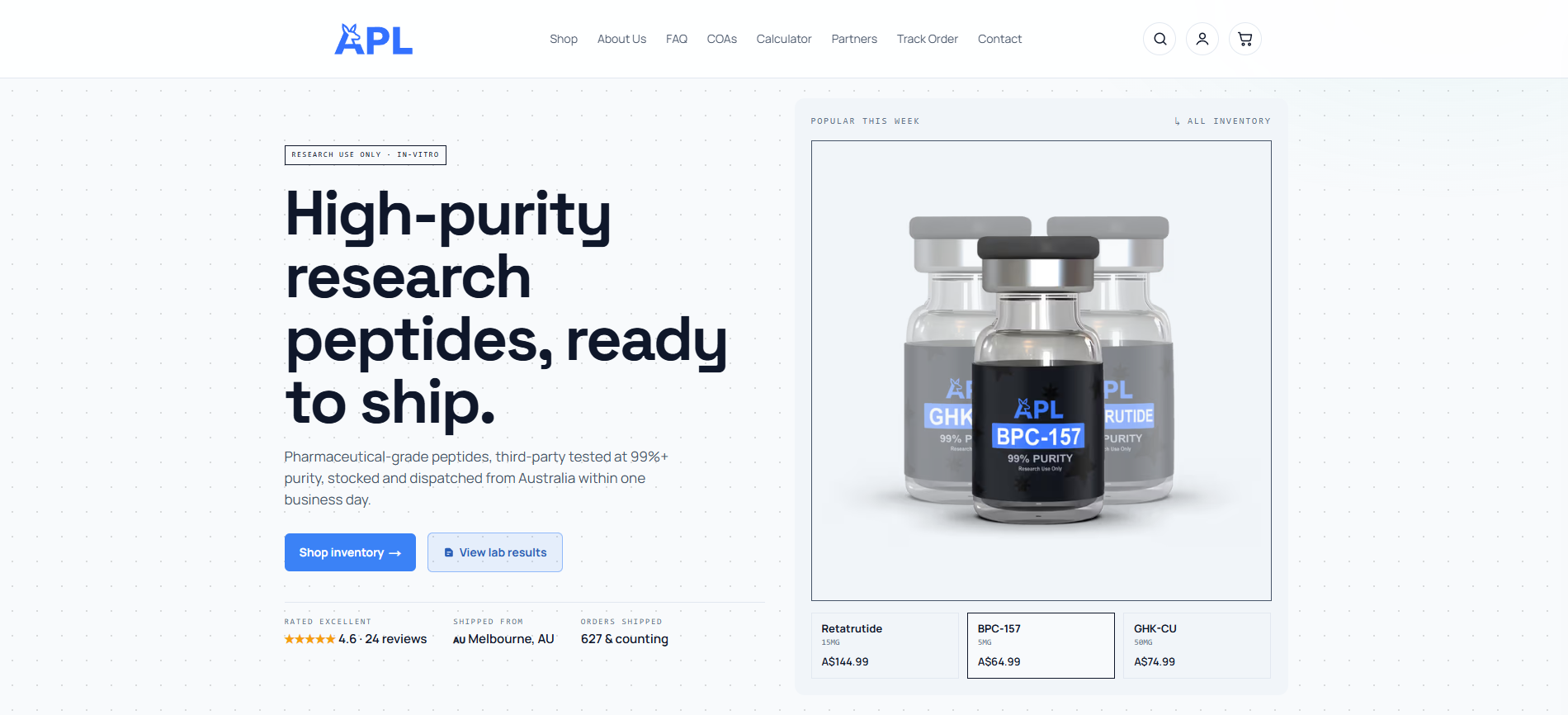
Aupeptidelabs supplies pharmaceutical-grade research peptides and bacteriostatic water from Australia, with dispatch within one business day and third-party purity certificates exceeding 99% included with every order. There are no customs delays, no documentation gaps, and no uncertainty about cold-chain integrity. For researchers calculating reconstitution volumes, the peptide dilution calculator at Aupeptidelabs converts vial milligrams and water volume into precise syringe draws. All products are supplied strictly for laboratory research purposes.