

"Research use only" (RUO) means a product is intended exclusively for non-clinical laboratory research and must not be used to report patient or client diagnostic results. Under Therapeutic Goods Administration (TGA) guidance, in-house tests developed for research purposes only are not classified as in vitro diagnostic medical devices (IVDs), and RUO items are excluded from the Australian Register of Therapeutic Goods (ARTG) provided they are never used to generate clinical reports. The classification hinges entirely on intended purpose, not on the label text alone.
Key takeaways
| Aspect | What it means for your lab |
|---|---|
| RUO definition | Lab use only; no patient/client result reporting |
| TGA position | RUO items excluded from ARTG when not used clinically |
| Classification trigger | Intended use, not the label, determines IVD status |
| Procurement priority | COA, third-party purity, explicit RUO labelling |
| Transition to clinical use | Requires separate regulatory pathway and TGA engagement |
- RUO products are not approved for diagnostic, therapeutic, or veterinary use.
- The TGA evaluates intended purpose from labelling, instructions, and distribution context.
- Moving from bench research to clinical application requires a distinct regulatory pathway.
What does "research use only" mean in everyday lab workflows?
RUO permits laboratory personnel to use a product for method development, reagent characterisation, and basic scientific investigation. It does not permit use of that product to generate results that inform clinical decisions about a patient or client.
Permitted RUO uses:
- Developing and optimising analytical methods before clinical validation
- Characterising reagent behaviour, binding kinetics, or biochemical properties
- Conducting mechanistic or exploratory research with no diagnostic output
RUO bench use vs. a regulated diagnostic workflow:
- RUO bench use: A researcher uses a peptide reagent to characterise receptor-binding affinity in a cell-based assay. Results are recorded in a laboratory notebook for internal analysis only. No result is reported to a clinician or patient.
- Regulated diagnostic workflow: The same reagent is used to test a patient sample, and the result is communicated to a treating clinician to guide therapy. At that point, the product functions as an IVD regardless of its label.
Pro Tip: Document the research purpose of each experiment in your laboratory information management system (LIMS) at the time of use, not retrospectively. Contemporaneous records are far more defensible during a TGA audit than notes compiled after the fact.
How does the TGA treat RUO items under Australian regulations?
The TGA's position is direct: an in-house test developed for research purposes only, where no patient or client results are reported, is not an IVD. The TGA guidance on in-house IVDs explicitly excludes RUO, investigational use only (IUO), and analyte-specific reagent (ASR) items from ARTG listing when they are not intended for clinical reporting.
The operative concept is intended purpose. Regulators do not accept a printed "research use only" disclaimer as conclusive evidence of intent. They assess the totality of evidence surrounding a product's use, including:
- Labelling and package inserts
- Instructions for use and performance claims
- Advertising, promotional materials, and website content
- Distribution channels and the nature of customers receiving the product
- Customer support communications and technical documentation
Pro Tip: Keep a copy of the supplier's RUO statement alongside each product's COA in a dedicated compliance folder. When a regulator requests evidence of intended use, a single organised folder is far more persuasive than scattered purchase records.
When does RUO use become a regulated IVD activity?
Regulators look at how a product is actually used, not merely how it is labelled. FDA guidance from 2013 established that distributing RUO-labelled IVDs for clinical diagnostic purposes has led to enforcement actions, and the same interpretive logic applies under the TGA framework.
Red flags that convert RUO use into regulated IVD activity:
- Reporting test results to a clinician, patient, or third party for clinical decision-making
- Including performance specifications or clinical interpretation guidance in instructions
- Supplying RUO materials to clinical pathology laboratories for patient testing
- Advertising or promoting diagnostic performance characteristics
- Providing customer support that assists clinical interpretation of results
- Distributing to end users who are not research personnel
Misuse carries real consequences. Under the Therapeutic Goods Act 1989 (Cth), supplying an unapproved therapeutic good or IVD can attract civil penalties and criminal prosecution. The TGA has powers to issue recalls, impose conditions on supply, and refer matters for prosecution.
What compliance controls should your lab maintain for RUO use?
The simplest compliance defence is a consistent, contemporaneous body of intended-use evidence. Labs that maintain structured records rarely face protracted regulatory scrutiny; those that cannot demonstrate intent at the time of use face the greatest exposure.
Step-by-step compliance checklist:
- Record the research purpose on the purchase order and internal requisition form.
- Review the COA at receipt and file it with the batch number and supplier invoice.
- Enter an SOP reference in the experiment record linking the product to its approved research application.
- Log all users who access RUO materials in a distribution or access register.
- Segregate RUO inventory physically from any materials approved for clinical or diagnostic use.
- Conduct annual training for all personnel who handle RUO products.
Sample SOP wording prompts:
- "This material is classified RUO and is approved for use in [method/assay name] for research purposes only. Results generated must not be reported to patients or clinicians."
- "Any proposed change in the intended use of this material must be reviewed by the laboratory manager and regulatory affairs before implementation."
Pro Tip: Use the Peptide Dilution Calculator to generate a preparation record at the time of reconstitution. That timestamped record doubles as contemporaneous evidence of research-context use.
How do RUO rules apply specifically to peptides?
An RUO label does not alter a peptide's regulatory pathway if the compound is subsequently used in a clinical context. Peptides occupy a distinct position in the biomolecule spectrum: conventionally defined as chains of roughly 2–50 amino acids, they sit below the molecular weight threshold typically associated with proteins, though the boundary is not absolute. Insulin, for example, straddles both categories depending on the classification framework applied. This size distinction has direct implications for how labs handle, store, and document these compounds.
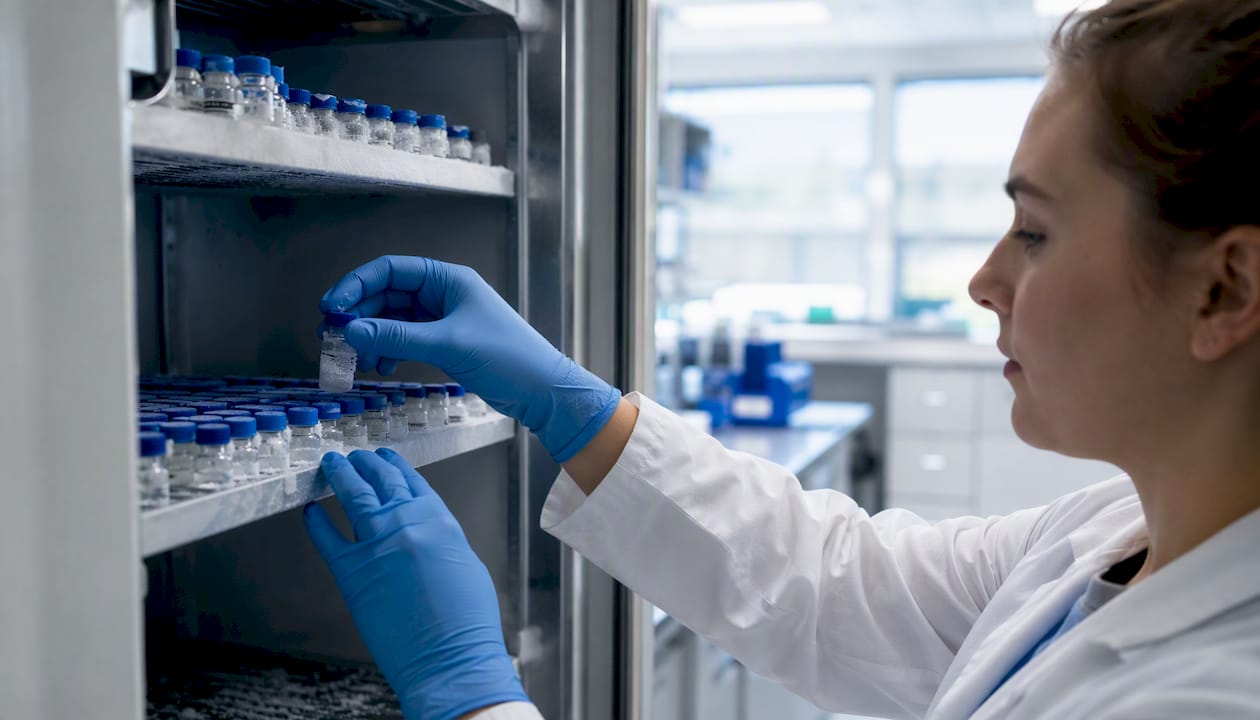
Peptides present specific formulation and stability considerations. Lyophilised peptides require appropriately cold storage conditions and documented reconstitution protocols to maintain batch integrity. Nanoparticle and lipid-based delivery systems are active research areas for improving peptide stability, which means handling procedures can vary considerably across compound classes.
Common procurement pitfalls for peptides:
- Purchasing from suppliers who cannot provide third-party COAs with lot-specific purity data
- Accepting purity claims based solely on manufacturer self-testing
- Failing to verify that the supplier's labelling includes explicit "not for human use" statements
- Overlooking Safety Data Sheet (SDS) alignment with GHS classification requirements
- Conflating net peptide content with gross weight, which can distort dosing calculations in research assays
Pro Tip: Always request a lot-specific COA, not a generic certificate. A COA tied to the exact batch you received is the only document that confirms the purity of the material in your freezer.
What should you verify when buying research peptides in Australia?
Procurement evidence is central to demonstrating intended use. A well-documented purchase trail, from supplier selection through to receipt and storage, forms the backbone of any RUO compliance position.
Supplier verification checklist:
- Confirm stock is held and dispatched from within Australia to avoid customs-related documentation gaps
- Request a lot-specific COA with third-party analytical data (HPLC purity, mass spectrometry confirmation)
- Verify purity specifications meet your research requirements (>99% is the standard for most biochemical assays)
- Confirm the supplier's labelling includes explicit RUO and "not for human use" statements
- Check that the supplier does not provide clinical support, diagnostic claims, or therapeutic use guidance
- Obtain a supply statement or product information sheet confirming research-only classification
Documents to retain at purchase:
- Supplier invoice with product description and lot number
- Lot-specific COA (HPLC trace and mass spec data)
- Safety Data Sheet (SDS) aligned to GHS standards
- Supplier correspondence confirming RUO classification
- Internal purchase requisition noting research purpose
Guidance on evaluating Australian peptide manufacturers provides a useful framework for assessing supplier documentation practices before committing to procurement.
Pro Tip: As noted by ChemVerify's RUO explainer, RUO does not imply inferior quality — it restricts clinical application. A supplier who conflates the two, either by downplaying quality or by implying clinical suitability, is a procurement risk on both counts.
How Aupeptidelabs supports Australian research labs
Aupeptidelabs operates as a local supplier of pharmaceutical-grade research peptides, with all stock held and dispatched from Australia.
Verifications researchers should request from any supplier, including Aupeptidelabs:
-
Lot-specific COA with HPLC purity data and mass spectrometry confirmation
-
Written supply statement confirming RUO and "not for human use" classification
-
Lot traceability records linking the dispatched batch to analytical testing
-
SDS aligned to current GHS standards
-
Aupeptidelabs maintains discreet packaging protocols to support laboratory confidentiality requirements.
-
A 4.6/5 customer satisfaction rating from verified reviews reflects consistent documentation and dispatch reliability.
-
Custom and bulk orders are available on request, with COA documentation provided for each lot.
Pro Tip: When placing an order, include your intended research application in the order notes. This creates a supplier-side record of research purpose that complements your internal SOP documentation.
Contact Aupeptidelabs directly to request COAs, supply statements, or bulk order terms before procurement.
What to do if you plan to move from research to clinical use
Planned clinical or diagnostic use requires a fundamentally different regulatory pathway and, in most cases, ARTG inclusion or sponsor approval before any patient-facing application can proceed. RUO materials used during the research phase cannot simply be relabelled or repurposed for clinical use without regulatory engagement.
Step-by-step actions when transitioning from RUO to clinical use:
- Pause all RUO use of the relevant material pending regulatory review.
- Engage a regulatory affairs specialist with experience in TGA IVD or therapeutic goods pathways.
- Validate the product's analytical performance for the specific intended clinical purpose.
- Determine whether the product requires ARTG inclusion as an IVD or registration as a therapeutic good.
- Contact the TGA directly via the TGA's regulatory guidance portal to confirm the applicable pathway and submission requirements.
- If a clinical trial is involved, consider whether an Investigational New Drug (IND) equivalent framework applies under Australian clinical trial regulations.
Documents regulators will expect:
- Performance validation data for the intended clinical use
- Analytical method validation records
- Evidence that RUO materials were not used to generate patient results during the research phase
- Proposed labelling and instructions for use for the clinical application
Regulatory commentary from Compound Review confirms that RUO is not an exemption from regulation — it is a classification that restricts use to non-clinical contexts. Labs that used RUO materials clinically before obtaining approval face potential enforcement action, including product recall and civil penalties under the Therapeutic Goods Act 1989 (Cth).
If RUO materials were inadvertently used in a clinical context, the recommended course is immediate cessation, internal incident documentation, and proactive engagement with the TGA before the issue is identified through external audit.
An editorial perspective on RUO compliance in Australian labs
The most persistent compliance failure in Australian research settings is not deliberate misuse. It is the gradual drift from bench research into quasi-diagnostic application, where results generated with RUO materials begin informing clinical conversations without anyone formally recognising the transition has occurred. This happens incrementally: a researcher shares a result with a clinician colleague, a result gets included in a patient file, a method gets adopted by a clinical unit before validation is complete.
The TGA's intended-purpose framework is designed precisely to catch this drift. What labs underestimate is that the regulatory exposure accumulates before anyone notices the problem. By the time an audit occurs, the documentation gap is already substantial.
The practical corrective is not more paperwork. It is a single, clearly worded SOP entry that defines the approved use of each RUO product and a training record confirming every user has read it. That combination, consistently maintained, is the most defensible position available to a research laboratory operating under Australian regulatory conditions.
Aupeptidelabs: research-grade peptides for Australian labs
Australian research teams that need consistent purity, local stock, and audit-ready documentation have a direct procurement option in Aupeptidelabs. Every order ships with a lot-specific third-party COA, dispatches within one business day from Australian stock, and carries explicit RUO and "not for human use" labelling that supports your internal compliance records.
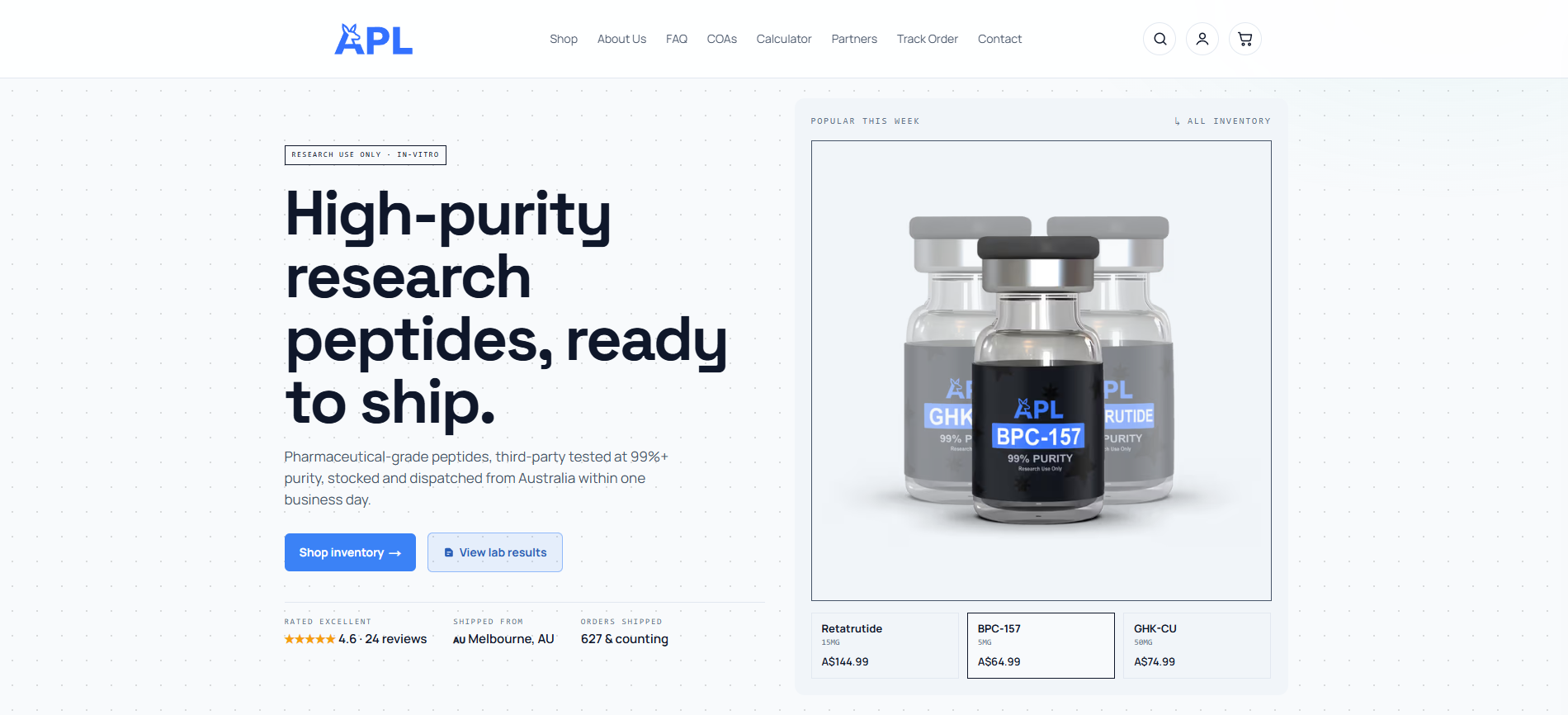
Aupeptidelabs supplies research peptides for Australian laboratories across a broad inventory, with custom and bulk order fulfilment available on request. COAs are provided for every lot. To request documentation, discuss bulk procurement terms, or verify stock availability, contact Aupeptidelabs directly through the website.
Sources
- Manufacturing or supplying in‑house in‑vitro diagnostic medical devices (IVDs) | Therapeutic Goods Administration (TGA)
- Distribution of In Vitro Diagnostic Products Labeled for Research Use Only or Investigational Use Only: Guidance for Industry and Food and Drug Administration Staff
- Regulatory landscape for research compounds: US, EU, and what RUO actually means | Compound Review
- Peptide vs protein — what's the difference | Peptide Journal
This article is general information, not a substitute for advice from a qualified doctor. Consult a qualified healthcare professional about your own circumstances before acting on anything here.