
Salt-mediated organic solvent precipitation, combining 100–200 mM ZnSO4 with acetone or acetonitrile at 90–97% v/v, is the fastest reproducible route to quench a digest and concentrate peptides before LC-MS. Mix the sample with the zinc sulfate stock, add the organic solvent to reach the target percentage, incubate at room temperature for around five minutes, then centrifuge at 13,000 × g for two minutes.
This sequence takes under ten minutes bench to pellet, and published work on pepsin-digested samples reports recovery above 70 to 95% by mass using this exact chemistry. Peptide precipitation of this kind suits two recurring jobs in a proteomics or synthesis workflow: quenching an enzymatic digest (pepsin, trypsin) before analysis, and preconcentrating a dilute peptide solution so it sits within the dynamic range of your mass spectrometer.
It has a bias, though. The method favours larger, more hydrophobic peptides, so if your analytical goal is exhaustive peptidome coverage rather than rapid preconcentration, treat this as a starting point rather than the final word.
- Salt: ZnSO4, 100–200 mM final concentration
- Solvent: acetone or acetonitrile, 90–97% v/v
- Incubation: ~5 minutes, room temperature
- Spin: 13,000 × g, 2 minutes
- Recovery: >70–95% by mass reported for pepsin digests
Statistic snapshot: the salt-mediated protocol behind this recipe recovered more than 95% of peptides in the pellet fraction for pepsin-digested samples, with the full workflow completed in under ten minutes.
One safety note before you start: acetone, acetonitrile, and the acids often present in cleavage mixtures are volatile and should be handled in a fume hood with appropriate gloves and eye protection.
Materials and reagents you need before you start
Reproducibility in peptide precipitation depends more on reagent grade and stock accuracy than on any single clever step. Prepare everything before the clock starts.
Salts. ZnSO4 is the workhorse for small-peptide protocols. Prepare a 200 mM stock in ultrapure water, filter it, and store it at room temperature away from light. Zinc paired with sulfate outperforms simple chloride salts for aggregating small peptides in high-organic environments, largely because divalent zinc bridges peptide carboxylate groups more effectively than monovalent chloride does. MgSO4 works as a secondary option with similar behaviour. NaCl has its place too, but mainly for intact proteins: 100 mM NaCl with roughly 80% acetone maximises protein recovery, while low molecular weight peptides show little benefit from chloride salts and respond far better to zinc or magnesium sulfate. Ammonium sulfate has a long history in bulk protein fractionation, but it is a poor first choice for small peptides in solvent-heavy systems, where it tends to underperform against the sulfate salts above.
Solvents. Use HPLC or analytical grade acetone or acetonitrile for the primary protocol. Ethanol can substitute in a pinch but generally needs a higher percentage to match recovery. For post-cleavage ether workups, you have three practical choices: diethyl ether (DEE), methyl tert-butyl ether (MTBE), and cyclopentyl methyl ether (CPME). Each carries a different risk profile, covered in detail further on, but as a quick rule: MTBE risks alkylation artefacts, DEE risks peroxide formation and has a low flash point, and CPME is the more chemically stable option under acidic conditions.
Equipment. You need a microcentrifuge capable of at least 13,000 × g, low-protein-binding microtubes (standard polypropylene tubes can adsorb small peptides at the wall, quietly eating into your recovery), and a SpeedVac or equivalent vacuum concentrator for drying pellets or reducing supernatant volumes. Ether-based workups need a cold source, either an ice/salt bath or dry ice/acetone bath, to keep temperatures low during precipitation and centrifugation.
PPE and storage. Nitrile gloves, safety glasses, and a fume hood are non-negotiable when handling volatile organics or TFA. Store ethers away from heat and light, and check container age before use, ageing ethers are a genuine peroxide risk covered under safety below.
How do you run a salt-mediated precipitation protocol?
The published salt-mediated method scales cleanly from microlitre digests to larger prep volumes, provided you keep the salt-to-solvent-to-sample ratios fixed. Here is a worked example you can adapt directly.
1. Calculate your target concentrations. Say you have 100 µL of pepsin-digested sample. To reach a final ZnSO4 concentration of 100 mM using a 200 mM stock, add 100 µL of stock, bringing the total to 200 µL before solvent addition.
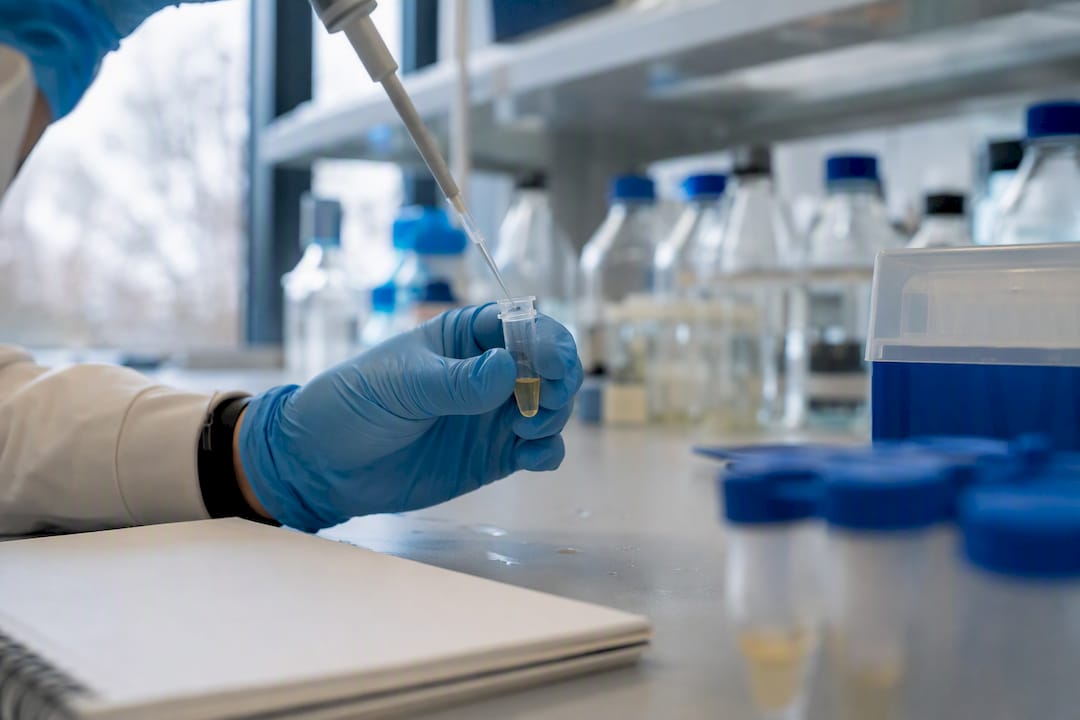
**2. In practice, most labs round this to a convenient working volume, for example scaling the digest down to 15 µg of peptide mass, a figure consistent with routine amounts used in published protocols, and scaling solvent volume proportionally.
3. Mix thoroughly. Vortex briefly or invert several times. Do not skip this step; uneven salt distribution produces patchy, inconsistent pellets.
4. Incubate. Leave the tube at room temperature for approximately five minutes. Longer incubation rarely helps and can occasionally encourage co-precipitation of unwanted matrix components.
5. Centrifuge. Spin at 13,000 × g for two minutes. This is enough force to compact even small peptide aggregates into a visible pellet without needing a refrigerated centrifuge.
6. Remove the supernatant carefully. Pipette off the solvent layer, leaving less than 5 µL behind. Disturbing the pellet at this stage is the single most common cause of lost yield in this protocol, work slowly and angle the pipette tip away from the pellet face.
7. Dry the pellet. Air dry briefly or use a SpeedVac on a low-heat or no-heat setting until the residual solvent has evaporated. Avoid extended vacuum drying beyond what is needed; over-drying can make small peptide pellets harder to resolubilise cleanly later.
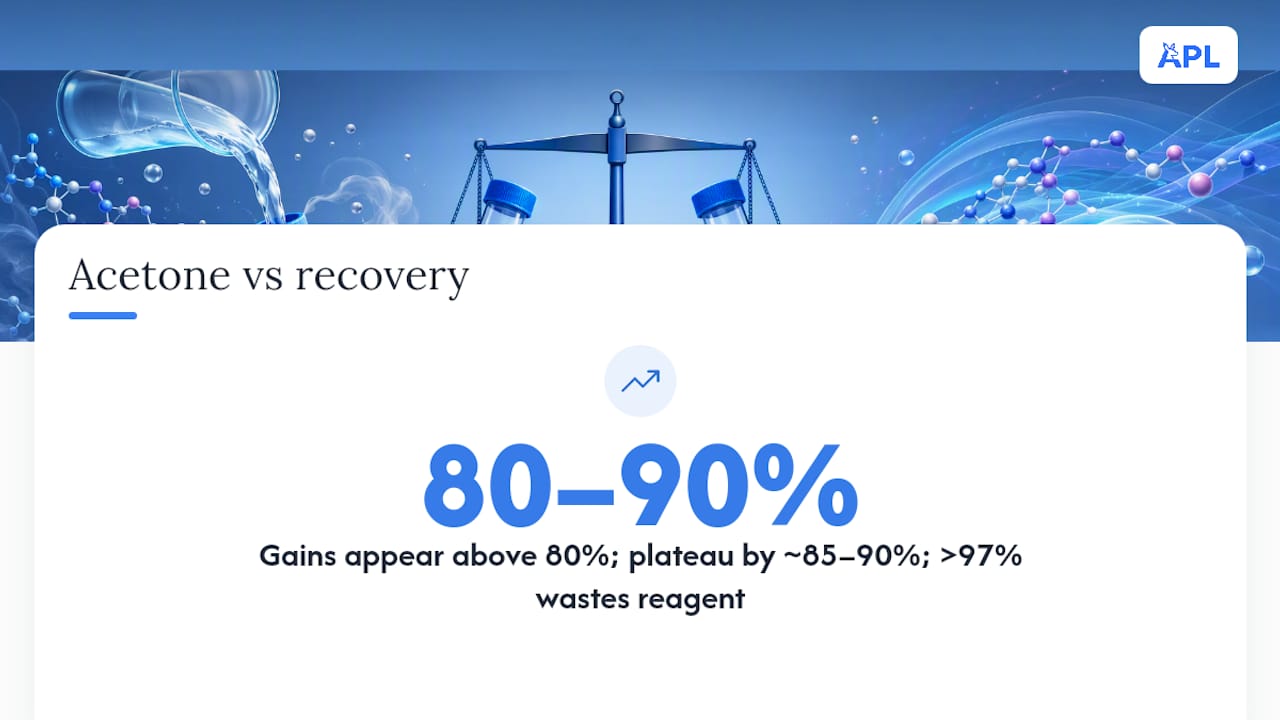
Solvent percentage is not a linear dial. Recovery for pepsin-generated peptides follows a sigmoidal curve as acetone percentage increases, with meaningful gains appearing above roughly 80% and diminishing returns beyond about 85 to 90% for many sequences. Pushing solvent concentration past 97% rarely buys you anything and just wastes reagent.
Statistic snapshot: studies using 100 mM ZnSO4 with 97% acetone and a five-minute incubation report recovery of peptides as small as roughly 800 Da, which matters if your downstream work involves short synthetic fragments rather than large tryptic peptides.
Scaling up follows the same ratios. If you move from 100 µL to 1 mL of digest, scale the ZnSO4 stock volume and the acetone volume by the same factor, and split the mixture across multiple tubes if your centrifuge rotor cannot accommodate the full volume at 13,000 × g. Larger volumes also mean longer settling of the solvent layer during pipetting, so budget extra care rather than extra time at this step.
At low peptide concentrations, resist the urge to simply add more solvent. Concentrating the sample first, or adjusting salt type and solvent percentage rather than volume alone, tends to recover more material than diluting an already-sparse sample further.
Cold-ether precipitation after peptide cleavage: what changes?
Post-cleavage workups after solid-phase synthesis face a different problem: removing trifluoroacetic acid (TFA), scavengers, and cleavage byproducts rather than concentrating a digest. Cold ether precipitation remains the traditional answer, and it still earns its place in most synthesis labs.
The standard workflow adds roughly nine parts cold ether to one part cleavage mixture, centrifuges at around 3,300 rpm for about five minutes, decants the ether, and repeats the cold wash three to four times before letting residual ether evaporate, often overnight. Each wash strips away more TFA odour and low molecular weight scavenger residue, improving crude purity before the next purification step.
Solvent choice within this workflow matters more than many syntheses protocols acknowledge. MTBE has long been a popular substitute for classic diethyl ether, but MTBE workups can introduce t-butylation artefacts, appearing as a mass shift of +56, particularly in sequences rich in residues prone to alkylation. DEE avoids that specific problem but brings its own hazards: a low flash point and a real tendency to form peroxides over time, which is why cold DEE workups often run closer to negative 70°C in some labs to control both volatility and oxidation risk. CPME sits between the two as a more chemically stable option under acidic cleavage conditions, with a higher flash point and lower peroxide-forming tendency than DEE.
- Cold ether workups excel at removing TFA and small-molecule scavengers after cleavage.
- MTBE risks t-butylation artefacts (M+56) in alkylation-prone sequences.
- DEE risks peroxide formation and flammability; store cold and check age before use.
- CPME offers better stability for acidic workups but is less universally stocked in older labs.
- Salt-mediated solvent precipitation is faster and better suited to quenching digests, not removing synthesis scavengers.
Pro Tip: If your sequence is rich in tryptophan, tyrosine, or methionine, skip MTBE altogether and reach for DEE or CPME instead; the alkylation risk with MTBE is highest in exactly those residues.
Ether precipitation remains the right call when your job is cleaning up a fresh cleavage mixture. Salt-mediated organic solvent precipitation is the better choice when your job is concentrating or quenching an already-cleaved digest for analysis.
What is the best way to resolubilise a peptide pellet for LC-MS?
Getting the pellet back into solution cleanly matters just as much as forming it in the first place. A poorly resolubilised pellet undercounts your true recovery even when the precipitation step worked perfectly.
For most peptides heading to LC-MS or HPLC, water with 5% acetonitrile and 0.1% formic acid is the standard resolubilising solvent. It matches typical mobile phase chemistry, keeps peptides ionisable for positive-mode electrospray, and avoids introducing incompatible salts or buffers into the instrument.
Hydrophobic peptides need a different first step. Adding a small volume of DMSO to the dry pellet before diluting into the aqueous LC-MS solvent helps dissolve sequences that resist water and acetonitrile alone; a dedicated DMSO solubility protocol covers the practical ratios and pitfalls in more depth. Avoid heating the mixture to speed dissolution: heat can trigger aggregation or side reactions in some sequences rather than helping.
- Vortex briefly, then pipette-mix rather than relying on vortexing alone for sticky pellets.
- Centrifuge the resolubilised sample for one to two minutes to pellet any remaining particulate matter.
- Filter through a low protein-binding membrane if particulates persist after centrifugation.
- Use a SpeedVac to reduce volume before reconstitution if quantitative recovery matters for your assay.
- Match the final reconstitution volume to the target concentration required by your mass spec verification workflow.
If you plan to store the reconstituted or dried sample rather than injecting immediately, check hygroscopicity behaviour for your specific sequence; some dried pellets pick up ambient moisture quickly enough to compromise weighed concentrations within hours. General solubility guidance is worth reviewing if your peptide sits outside the standard aqueous/acetonitrile range.
Which other peptide extraction methods are worth knowing?
Solvent precipitation is not the only tool worth having in a peptide purification strategy, and matching method to sample matters more than defaulting to one protocol out of habit.
Ammonium sulfate precipitation remains a mainstay for bulk protein enrichment, where fractional salting-out separates protein classes by solubility. It is a poor match for small peptides, though, where the salting-out effect that works so well on folded proteins has little structural surface to act on. If your target is a small peptide rather than a protein, this method generally underperforms the zinc and magnesium sulfate systems described earlier.
PEG and polyelectrolyte flocculation offer a gentler alternative when denaturation risk is a concern. These methods precipitate through steric exclusion or charge-based flocculation rather than through the disruptive combination of high salt and high organic solvent, which makes them useful in particular matrices, such as when a downstream assay requires a protein or peptide to retain some native structure. They see less use in routine peptide proteomics workflows simply because they are slower and less standardised than the acetone/acetonitrile methods.
Solid-phase extraction (SPE) solves a different problem entirely. Where precipitation excels at speed, SPE tends to deliver broader peptide diversity and better recovery for biomarker discovery work, because it is not biased toward the larger, more hydrophobic sequences that precipitation favours. A study comparing protein precipitation directly against SPE across four model peptides and their catabolites found that precipitation with multiple acetonitrile washes gave the highest overall recovery, above 50%, for the specific peptides tested, while SPE offered wider coverage of chemically diverse peptides at the cost of different matrix effects. Some workflows combine both: using acetonitrile precipitation as a quick prefractionation step ahead of SPE, which can improve signal profiles before the more selective SPE cleanup.
Ultrafiltration rounds out the toolkit for size-based separation, useful when you specifically need to exclude larger proteins while retaining small peptides, or vice versa, and it introduces essentially no organic solvent exposure.
- Ammonium sulfate: best for bulk protein fractionation, weak on small peptides.
- PEG/polyelectrolyte flocculation: lower denaturation risk, suited to sensitive matrices.
- SPE: superior peptide diversity and coverage for biomarker discovery, slower than precipitation.
- Mixed ACN precipitation plus SPE: combines speed and coverage as a two-step prefractionation strategy.
- Ultrafiltration: size-selective, avoids organic solvent exposure entirely.
Why is your peptide pellet cloudy, low-yield, or gelatinous?
Most precipitation failures trace back to one of four issues: contamination, insufficient driving force, aggregation, or sample dilution. Work through them in that order before you assume the whole protocol needs redesigning.
1. The mixture stays cloudy after centrifugation. Distinguish insoluble contaminants from genuine peptide aggregation first, contaminants usually appear as fine particulate that does not pellet even at 13,000 × g, while aggregated peptide tends to form a loose, diffuse pellet with a hazy supernatant above it. If it is contamination, filter the sample before precipitation next time. If it is aggregation, drop the solvent percentage slightly or switch salt type; over-aggressive conditions can occasionally trap peptide in a poorly compacted, light-scattering form rather than a clean pellet.
2. Recovery is lower than expected. Work through salt identity and concentration first, ZnSO4 or MgSO4 generally outperform NaCl for small peptides, and confirm you are within the 100 to 200 mM range. Next check solvent percentage; recovery follows a sigmoidal curve for many peptides, so if you are sitting below roughly 80% acetone, pushing higher often helps meaningfully. Test centrifuge speed and time as a third variable, some smaller or less hydrophobic peptides need the full 13,000 × g and the full two minutes to compact fully. If the sample started dilute, concentrate it before precipitation rather than simply adding more solvent to a weak signal.
3. The pellet gels or smears instead of forming a discrete pellet. This usually signals the peptide concentration was too high going in. Dilute the starting sample slightly, or introduce gentle sonication for a few seconds before centrifugation to break up loosely associated aggregates. Switching solvent, from acetone to acetonitrile or vice versa, sometimes resolves gelation in specific sequences where one solvent promotes tighter, more ordered aggregation than the other. For persistently sticky or hydrophobic sequences, a polymer flocculation approach can succeed where solvent precipitation repeatedly struggles.
4. Sample dilution is masking a working protocol. If everything about your salt, solvent, and centrifuge parameters is correct but yield still looks poor, check whether the digest or synthesis mixture is simply too dilute for the ZnSO4-driven aggregation to nucleate efficiently. Concentrating the sample before precipitation, rather than increasing solvent volume, is the more reliable fix in this scenario.
Pro Tip: Keep a small aliquot of your original digest or cleavage mixture untouched at each troubleshooting step. Comparing pellet appearance and supernatant clarity against that untouched control makes it far easier to tell whether a change in solvent or salt actually improved things, rather than guessing from memory between runs.
Solvent precipitation or SPE: which extraction method fits your goal?
Method choice comes down to one question: are you optimising for speed or for coverage? The literature is fairly consistent on this split.
Salt-mediated solvent precipitation wins on speed. A full cycle from mixing to pellet takes under ten minutes, and reported recovery for pepsin digests sits above 70 to 95% by mass. The trade-off is a systematic bias: precipitation skews toward larger and more hydrophobic peptides, so smaller, more polar sequences are underrepresented in the pellet relative to their true abundance in the original sample.
SPE wins on coverage. It generally recovers a wider diversity of endogenous peptides for biomarker discovery precisely because it does not rely on the same size and hydrophobicity-driven aggregation mechanism. The cost is time and, in some workflows, more complex matrix effects downstream.
A direct comparison across four model peptide drugs and their catabolites found that protein precipitation with three volumes of acetonitrile or ethanol gave the highest overall recoveries for the specific peptides tested, which complicates any blanket claim that SPE always wins. The honest answer is that neither method is universally superior; the right choice depends on your peptide class and your analytical goal.
- Goal: rapid preconcentration or digest quenching → salt-mediated solvent precipitation.
- Goal: exhaustive peptidome discovery or biomarker work → SPE, or SPE preceded by ACN prefractionation.
- Goal: quantifying a known peptide drug and its catabolites → protein precipitation with multiple organic washes, per the comparative catabolism study above.
- Goal: removing synthesis scavengers post-cleavage → cold ether precipitation, not solvent precipitation.
Handling solvents and waste safely during precipitation work
Every method above involves flammable, and in some cases peroxide-forming, organic solvents, alongside the acids common in cleavage chemistry. Treat the hazard profile as part of the protocol, not an afterthought.
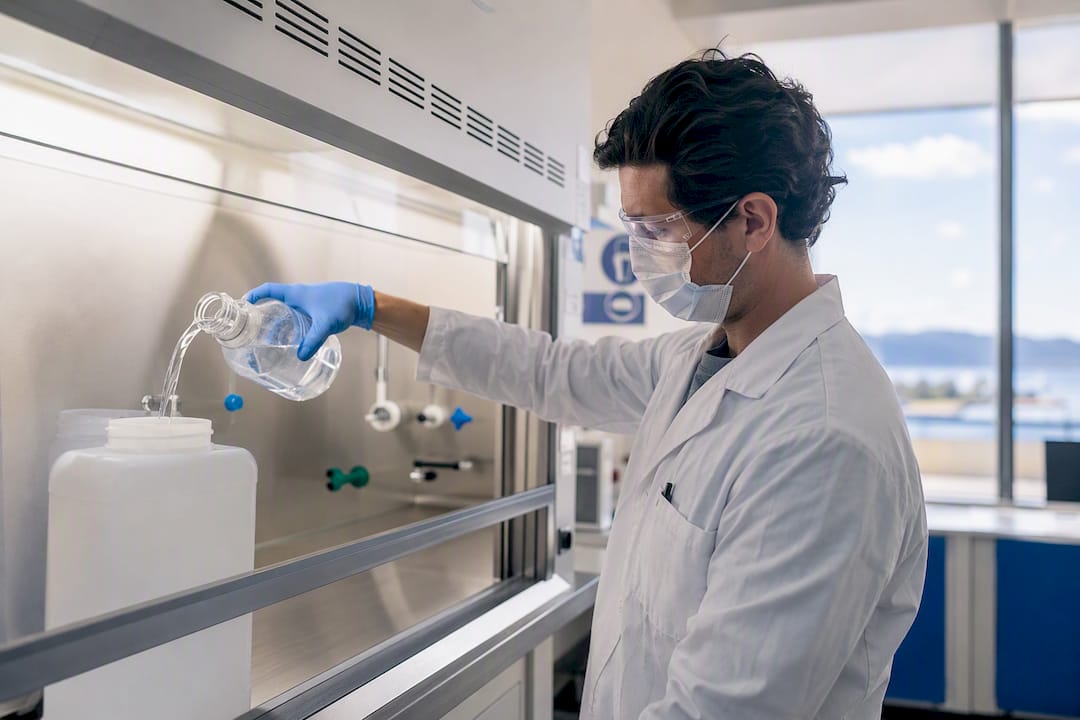
MTBE and DEE both carry peroxide formation risk over time, particularly once a container has been opened and exposed to air repeatedly; check bottles for cloudiness or crystal formation before use and discard aged stock rather than risking a peroxide test on a bottle you are unsure about. DEE also has a notably low flash point, so keep it away from any spark source and store it in a flammables cabinet. CPME's higher flash point and lower peroxide tendency make it the safer long-term stock item where your synthesis chemistry allows the substitution.
Segregate acid waste from organic solvent waste. Mixing TFA-containing aqueous waste with ether or acetone streams in the same container risks unwanted exothermic reactions and complicates disposal. Small volumes of dilute acid can generally be neutralised with a mild base before aqueous disposal, following your institution's chemical waste protocol, while spent organic solvents belong in dedicated flammable waste containers, never down the sink.
- Test ethers for peroxide formation before use if storage age is uncertain.
- Keep acid waste and organic solvent waste in separate, labelled containers.
- Work in a fume hood for all volatile solvent steps.
- Use cold baths (ice/salt or dry ice/acetone) rather than a standard fridge for ether precipitation steps requiring sub-zero temperatures.
- Ground metal containers when transferring flammable solvents in bulk to reduce static discharge risk.
Practical tools and resources for peptide precipitation workflows
Running these protocols reliably day to day usually comes down to getting the arithmetic right before you touch a pipette. Aupeptidelabs maintains a peptide dilution calculator with worked examples that map directly onto the salt and solvent ratios described in the step-by-step protocol above, useful when you are scaling a published recipe to a non-standard peptide mass. A companion solubility guide covers solvent selection for resolubilising pellets, particularly for sequences that resist standard aqueous/acetonitrile mixtures.
Protocol performance is only half the story; reagent quality is the other half. A precipitation step is only as reliable as the peptide standard you validate it against, which is where product provenance matters. The distinction between stated purity and net peptide content is worth understanding before you use a reference standard to benchmark your own recovery numbers, since a peptide's purity certificate and its true peptide content by mass are not always the same figure.
- Dilution calculator for scaling salt and solvent ratios to your peptide mass.
- Solubility guide for solvent selection during pellet resolubilisation.
- Purity versus net content resource for interpreting reference standard certificates.
- Third-party tested inventory exceeding 99% purity, with same-business-day dispatch from Australia.
Verified customer feedback places Aupeptidelabs at a 4.6 out of 5 satisfaction rating, a figure worth weighing when reagent reliability is the variable you can least afford to troubleshoot mid-experiment.
What actually matters most when you optimise a precipitation protocol?
The published salt-mediated protocol deserves its growing popularity, but the enthusiasm around it has created a subtle blind spot: researchers increasingly treat it as a universal peptide purification strategy rather than the speed-optimised tool it actually is. It excels at exactly one job, quenching a digest and concentrating peptides fast, and the recovery figures reported for that job are genuinely strong. Extending it to biomarker discovery work, where coverage of the full peptidome matters more than speed, misapplies a tool built for a different problem.
The conventional advice on solvent choice for ether workups also undersells the risk asymmetry. MTBE's convenience keeps it in circulation despite a documented alkylation artefact that specifically corrupts sequences rich in the residues many peptide chemists work with most often. That is not a marginal risk to footnote, it is a reason to default to CPME or DEE unless you have a specific reason not to.
If you take one thing from this guide, prioritise matching method to analytical goal before you optimise salt concentration or solvent percentage. Getting that choice right upfront saves more recovery than any amount of fine-tuning afterward.
Where to source reagents and reference peptides for these protocols
Running any of the protocols above reliably depends on starting with a peptide standard you can trust, since a variable reference material makes it impossible to tell whether a low recovery number reflects your technique or your reagent.
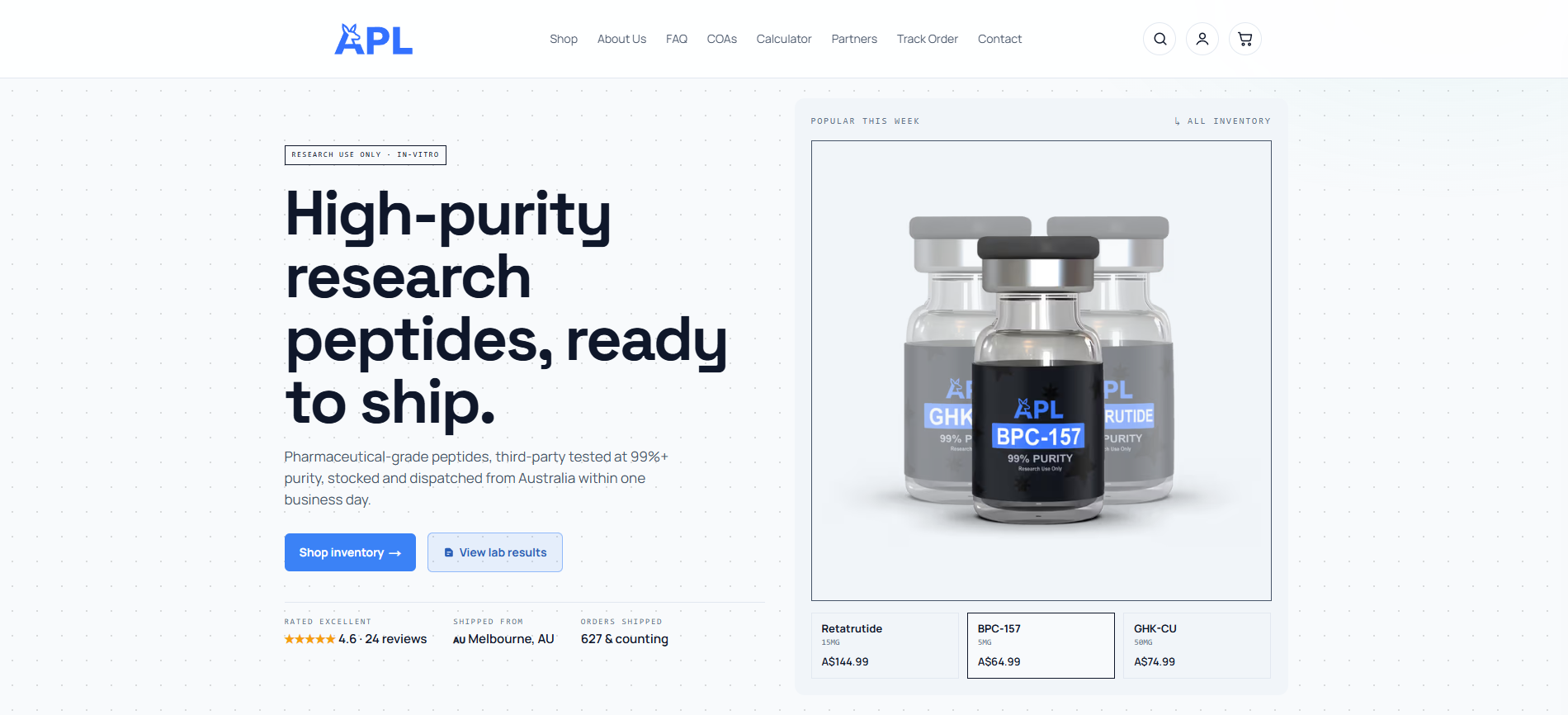
The catalogue includes commonly used research peptides such as LL-37, VIP, SS-31, and ARA 290, alongside laboratory supplies including bacteriostatic water and low-binding consumables that support the pellet handling steps described earlier. Every order ships with discreet packaging and a purity certificate, so you can validate your precipitation recovery against a known reference before committing an entire batch to a new protocol.
If you are setting up a salt-mediated precipitation run for the first time, browse the current research peptide range and check technical documentation against the specific peptide mass you plan to work with before placing an order.
Sources
- Salt‑Mediated Organic Solvent Precipitation for Enhanced Recovery of Peptides Generated by Pepsin Digestion
- Evaluation of endogenous plasma peptide extraction methods for mass spectrometric biomarker discovery
- On choosing the right ether for peptide precipitation after acid cleavage
- Comparison of different protein precipitation and solid‑phase extraction protocols for the study of the catabolism of peptide drugs by LC‑HRMS