

Peptide lead time is the sum of three separate clocks: manufacturing, analytical quality control, and transit. Suppliers usually quote only the first, so the figure on a website rarely reflects when the vial reaches your bench. Add a buffer of two to three business days for routine unmodified peptides and a considerably wider margin for custom or modified sequences, where HPLC-based release testing and courier variability compound. A 90 day rolling forecast removes most of that guesswork from recurring orders.
What actually makes up a peptide delivery schedule?
A supplier's "turnaround" figure almost always describes production completion, not the day the courier hands over the parcel. GenScript, for example, advertises a guaranteed five business day service for short, unmodified peptides but states explicitly that the guarantee excludes shipping time. That distinction sits at the centre of most missed deadlines in a research schedule.
Solid-phase peptide synthesis builds the chain one residue at a time, and each coupling, deprotection, and wash cycle adds minutes that stack up over a 20 or 30 residue sequence. Cyclisation, disulfide bridges, or non-standard amino acids extend that further because side reactions need extra purification passes.
Once synthesis finishes, analytical release testing begins. HPLC purification and mass spectrometry confirm identity and purity, and these steps are not optional extras. A QC failure that triggers re-purification is one of the more common causes of multi-week slippage, because it sends the batch back through a step that was assumed complete.
Common friction points include:
- Complex or long sequences requiring multiple purification passes
- QC re-runs after a failed purity or identity check
- Courier network disruptions, particularly around public holidays
- Customs holds on shipments crossing international borders
Statistic worth flagging: Biosynth's delivery information page lists regional transit windows of one to seven business days on top of production time, which shows how much variance sits in the leg most quotes leave out.
How do processing and cut-off times affect dispatch?
Dispatch policy is where a lot of avoidable delay creeps in. Most suppliers set a cut-off, often mid-afternoon on a business day, after which the order rolls to the next dispatch cycle. Aussie Peptides, for instance, publishes a same-day dispatch cut-off of 2pm AEST for in-stock items, a pattern common across the industry.
Pre-order items complicate this further. Some suppliers hold the entire order until every line is in stock, which means one backordered peptide can delay an otherwise-ready shipment by weeks.
- Separate in-stock items from pre-order items into distinct orders where possible.
- Confirm in writing whether the supplier holds shipments for complete orders or ships in partial batches.
- Ask directly what the dispatch cut-off time is and whether it varies by product category.
- Request an estimated ship date at the time of order, not just at confirmation.
What do rush and expedited synthesis options really cover?
Rush lanes exist, but they are narrower than the marketing suggests. Expedited services generally apply to short, unmodified peptides with straightforward chemistry. Intavis Peptide Services notes that express offerings typically exclude complex modifications from any guaranteed delivery promise, and that pattern holds across most custom synthesis providers.
Pushing a hydrophobic or heavily modified sequence through a compressed schedule raises the failure rate rather than lowering it. A rushed batch that fails QC does not save time. It costs more, because the lab pays a premium for speed and still waits for a re-synthesis.
Before paying for rush service, weigh:
- Is the sequence short and unmodified, or does it carry disulfides, cyclisation, or isotopic labels?
- Would reordering two weeks earlier achieve the same result at standard pricing?
- Can the experimental timeline shift instead of the synthesis timeline?
Pro Tip: If a sequence has more than one non-standard feature (a cyclisation plus a labelled residue, for example), assume rush service is not available and plan against the standard lead time instead.
Why do packaging and temperature control slow delivery?
Peptides are temperature-sensitive, and that single fact reshapes courier choice, paperwork, and cost. Vendors that ship internationally routinely note cold-chain requirements on their shipping pages, where thermal packaging or active cooling becomes necessary for longer transit legs.
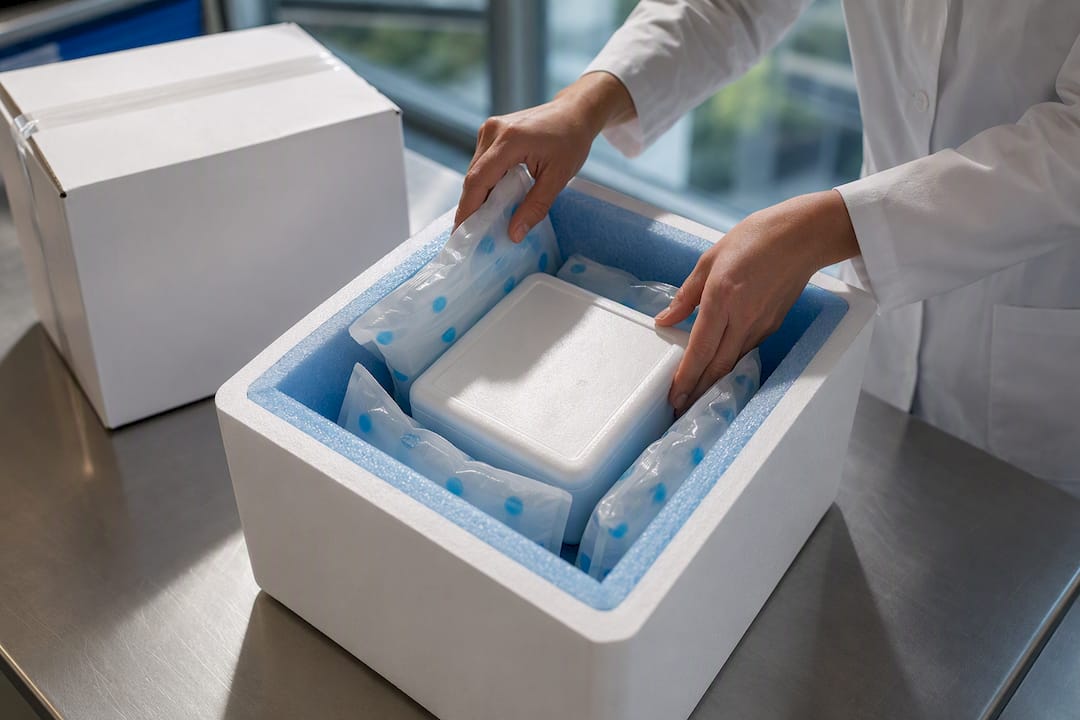
Hazardous material classifications add a second layer. Certain reagents and stabilisers used in peptide kits (bacteriostatic water, for instance) can trigger HazMat paperwork that slows dispatch and adds a surcharge.
Practical steps that keep this from becoming a surprise:
- Ask whether temperature-monitoring data loggers are included for high-value or long-transit shipments.
- Confirm the HazMat classification of any ancillary reagents before the order ships.
- Choose a priority courier lane when the transit window exceeds 48 hours in warm climates.
How should labs plan around variable peptide lead times?
The fix for unpredictable lead time is rarely a faster supplier. It is a better forecast. Labs that run a rolling procurement window rather than reactive ordering rarely hit the wall of an urgent, expensive rush order.
- Set a standing reorder point for peptides used in recurring assays, triggered well before stock runs out.
- Run a 90-day rolling forecast against experimental calendars so procurement and bench work stay aligned.
- Request written lead-time estimates that separate manufacturing, QC, and shipping into distinct figures.
- Confirm partial shipment policy before the order is placed, not after a delay is already underway.
Pro Tip: Ask suppliers point-blank whether their quoted lead time includes analytical release testing. Many quotes silently assume QC is instantaneous, and it is one of the more common gaps between the promised date and the actual delivery date.
A rolling forecast and a defined minimum stock level do more to protect an experimental timeline than any expedited synthesis option, because they remove the need to gamble on rush lanes in the first place.
Where local dispatch actually shortens the timeline
Because some suppliers stock high-purity research peptides locally and dispatch quickly, the transit and customs components that usually inflate total lead time can largely disappear for local orders. Combined with discreet packaging, this can turn the least predictable part of the schedule into the most reliable one. Its 90-day rolling forecast guide gives labs a template for applying that same discipline to their own ordering calendar.
A lab manager's pre-order checklist
Order earlier than feels necessary, and always confirm exactly what a quoted lead time includes before it goes anywhere near an experimental calendar. Three checks catch most of the delays covered in this guide: does the sequence carry complexity that rules out rush service, does the quote include QC release testing or just synthesis, and does the shipment need temperature control or HazMat handling that could add days to transit.
— Dr. Authur
Shortening your peptide lead time with a local dispatch model
The alternative to guessing at international transit windows is buying from a supplier already positioned to remove that variable. Some suppliers stock high-purity, third-party-tested research peptides locally and dispatch quickly, which cuts out customs delays that can inflate quotes from offshore synthesis providers.
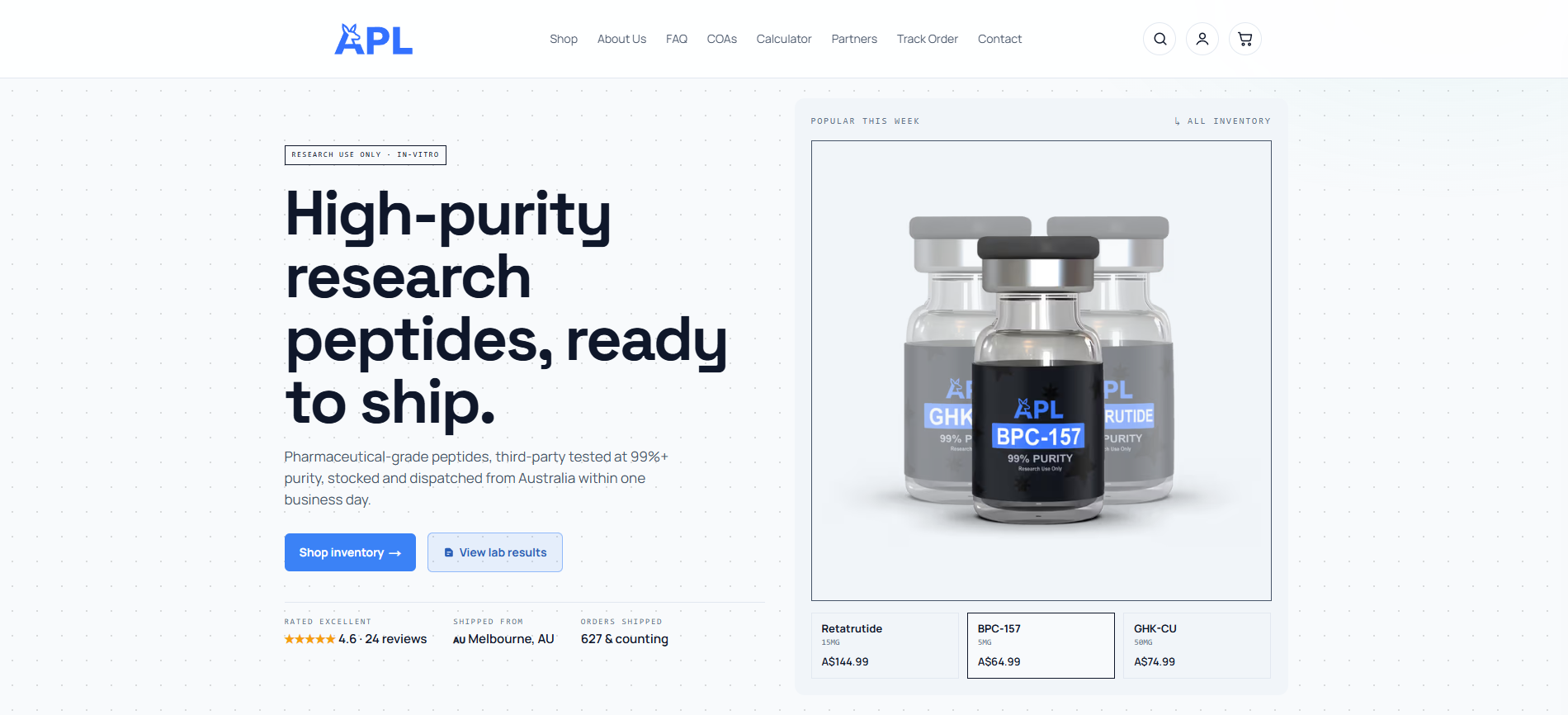
If your lab has missed more than one experimental deadline because of transit uncertainty, or you need a partial shipment fulfilled urgently, that is the signal to check stock locally rather than waiting on another cross-border quote. Review current inventory and dispatch policy at Au Peptide Labs before your next order goes in, and pair it with the 90-day rolling forecast approach to keep future orders off the rush lane entirely.
Sources
- Peptide Synthesis & Customized Peptide Synthesis for Life Science Research | GenScript
- Delivery Information | Biosynth
FAQ
How long does it take for peptides to arrive after ordering?
Total time typically covers manufacturing, analytical release testing, and transit, so even a supplier's five-business-day production guarantee excludes the shipping leg. Locally dispatched orders from some suppliers cut the transit component down to within-country courier times rather than international transit.
How long do peptides take to deliver internationally?
International delivery adds customs clearance and cold-chain handling on top of production, and regional transit windows commonly run one to seven business days by courier estimates. Add a buffer for customs holds, particularly around public holidays.
How long does it take for BPC-157 to show effects in a research setting?
That question concerns biological timing rather than delivery, and mechanism-driven timing guidance varies by peptide class and half-life. It falls outside a delivery lead-time discussion and should be assessed against the specific research protocol and peptide mechanism.
Does peptide timing matter for research protocols?
Yes, dose and administration timing is peptide-specific because it depends on mechanism, half-life, and factors like circadian rhythm or feeding state. This is a separate question from delivery lead time and should be planned against the experimental protocol, not the shipping schedule.
Does higher purity mean a longer lead time?
Generally yes. Supplier turnaround tables commonly show crude peptides shipping fastest, with ultra-pure grades taking progressively longer because of additional purification and QC passes.