
TL;DR:
- Selank is a key peptide with proven anxiolytic effects comparable to benzodiazepines, without sedation or dependence. It acts as a positive allosteric modulator of GABA-A receptors, explaining its non-sedating profile and safety. In Australia, these peptides are only available for research use, requiring proper handling, storage, and compliance with ethical and safety standards.
Selank is the primary peptide to prioritise for anxiolytic research. Across multiple small RCTs involving approximately 150 participants, Selank demonstrated anxiolytic effects comparable to benzodiazepines, with superior tolerability and no sedation or dependence. Mechanistically, Selank acts as a positive allosteric modulator of GABA-A receptors, potentiating endogenous GABA only when present — a physiological ceiling effect that explains its non-sedating profile and distinguishes it categorically from benzodiazepines, which broadly suppress CNS activity. Semax carries secondary human data for cognitive and mood endpoints; BPC-157 remains preclinical, with no human anxiety trials published as of 2026. A whey-derived β-lactolin peptide showed trait anxiety improvements in a healthy adult cohort, though its evidence base is narrower.
Evidence tier summary for Australian labs:
- Human RCT evidence: Selank (primary anxiolytic indication); β-lactolin (supplementation cohort, healthy adults)
- Secondary human data: Semax (cognitive/mood endpoints; anxiety is not the primary indication)
- Preclinical only: BPC-157 (robust rodent data; no human anxiety trials)
Procurement bottom line: In Australia, none of these compounds hold TGA therapeutic approval. All must be procured as research-use-only (RUO) reagents. Require a third-party Certificate of Analysis (COA), batch traceability, stated purity exceeding 99%, and HREC approval for in-house protocols. Supplier signals to verify: Australian domestic dispatch, documented cold-chain practices, RUO labelling, and local technical support. Aupeptidelabs supplies pharmaceutical-grade Selank and Semax from Australia with next-business-day dispatch and third-party COA documentation.
How should you store and handle anxiety research peptides?
Lyophilised peptides — including Selank and Semax — are stable at –20°C for extended periods when stored desiccated and away from repeated freeze-thaw cycles. Upon reconstitution, use sterile bacteriostatic water (0.9% benzyl alcohol) for intranasal formulations; plain sterile water is appropriate for single-use aliquots. Reconstituted solutions should be stored at 4°C and used within 28 days; discard any preparation showing particulate matter or discolouration.
For intranasal delivery specifically, vehicle composition — pH, osmolarity, and bacteriostatic agent concentration — materially affects both nasal mucosal tolerance and peptide absorption. An improperly formulated vehicle can confound behavioural endpoints, particularly in stress-sensitive paradigms. Refer to peptide formulation guidance when developing intranasal vehicles for in-house protocols.
Disposal must comply with institutional biosafety SOPs and relevant state environmental regulations. Peptide solutions should be inactivated prior to drain disposal; lyophilised waste is typically managed as general laboratory chemical waste unless the protocol specifies otherwise.
What study design considerations apply to anxiety peptide research?
Intranasal administration is the route used in the human Selank trials, with reported onset of 15–30 minutes — a parameter that directly informs endpoint timing windows in behavioural or self-report paradigms. Subcutaneous routes are used in rodent models and may be appropriate for translational preclinical work, but route-switching between species introduces pharmacokinetic variables that must be controlled.
For endpoint selection, validated instruments (Hamilton Anxiety Rating Scale, State-Trait Anxiety Inventory) align with the published Selank RCT methodology and facilitate cross-study comparison. Crossover designs should incorporate washout windows to reduce receptor desensitisation risk; conservative dose escalation is standard given inter-individual metabolic variability. All human or animal protocols require HREC approval under Australian National Health and Medical Research Council (NHMRC) guidelines before procurement or administration. The peptide therapeutic development process provides a useful regulatory framework reference for translational planning.
Known safety and toxicity profiles for anxiety research peptides
Selank's clinical safety record is the most documented among anxiolytic peptides: a 62-patient RCT comparing Selank to medazepam reported no sedation, no dependency, and no significant adverse events in the Selank arm. Longer-term tolerability data from Russian clinical use since 2009 are consistent with this profile. Semax shares a comparable tolerability profile in the human data available, though its activating mechanism means high doses may exacerbate anxiety in sensitive subjects — a relevant consideration for protocol design. BPC-157 shows a benign safety profile in rodent studies, but the absence of human trial data means toxicity in humans remains uncharacterised; researchers should classify it accordingly in ethics submissions.
No peptide in this category has been evaluated by the TGA for therapeutic use. Researchers must not extrapolate Russian regulatory approval for Selank to Australian clinical contexts. This article is general scientific information, not clinical or regulatory advice; confirm current import and research-use requirements with the TGA and your institutional ethics committee.
Aupeptidelabs: pharmaceutical-grade supply for Australian anxiety research
Australian labs sourcing anxiety relief peptides for legitimate research face a consistent procurement problem: offshore suppliers introduce customs delays, inconsistent cold-chain documentation, and COA gaps that complicate HREC submissions. Aupeptidelabs resolves this directly. Pharmaceutical-grade Selank and Semax are stocked in Australia and dispatched within one business day, with third-party COA documentation, batch traceability, and stated purity exceeding 99% included with every order. The Semax + Selank research stack bundle simplifies multi-arm procurement and COA management for labs running combined-use protocols. Lab consumables — bacteriostatic water, insulin syringes, alcohol wipes — are available alongside peptides, reducing the number of suppliers your lab needs to manage. All products are sold strictly for research use only and are not intended for human or veterinary use.

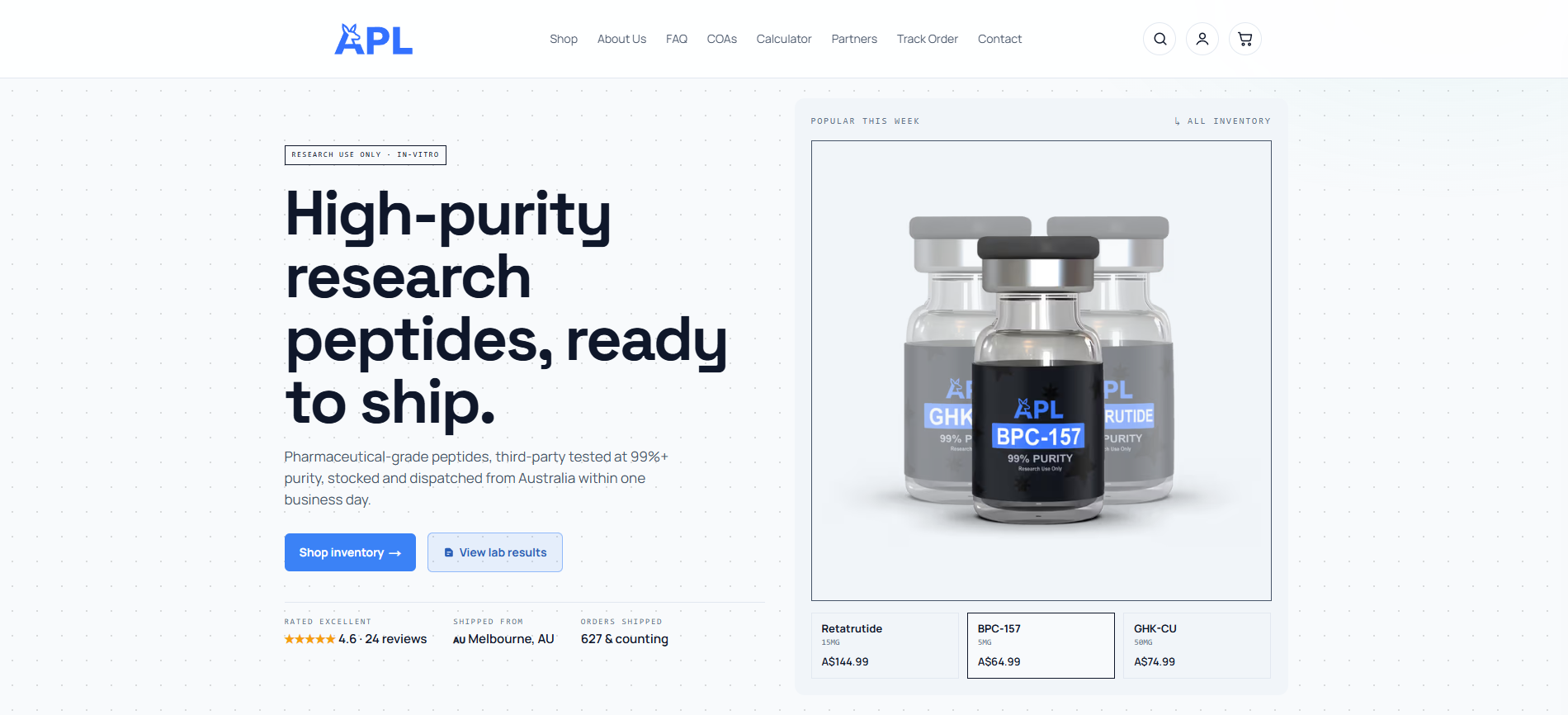
Discreet packaging and local customer support assist with HREC documentation and import compliance queries. Labs requiring BPC-157 for preclinical comparator arms can source it from the same catalogue. View the full research peptide catalogue to access product pages, technical data sheets, and bulk order enquiry forms.