
Recovery peptides are bioactive short-chain amino acid sequences that target tissue repair by modulating cellular signalling pathways involved in healing. The two most discussed compounds in this category are BPC-157 and TB-500, both of which have generated substantial preclinical interest for musculoskeletal applications. Key points for Australian researchers and clinicians:
- BPC-157 (Body Protective Compound-157): a 15-amino-acid pentadecapeptide derived from gastric protein; promotes angiogenesis, fibroblast migration, and neuromuscular stabilisation, particularly in poorly vascularised tissues such as tendons and ligaments
- TB-500: a synthetic 17-amino-acid fragment of thymosin beta-4; facilitates broader cell migration and tissue remodelling via actin sequestration dynamics
- GHK-Cu: a copper tripeptide with anti-inflammatory and collagen-synthesis activity; used topically and via intra-articular injection for connective tissue support
- KPV: a three-amino-acid fragment of alpha-MSH; notable for oral bioavailability and NF-κB-mediated anti-inflammatory action
- Collagen peptides: hydrolysed collagen formulations with clinical trial data supporting reduced markers of exercise-induced muscle damage
Preclinical data across these compounds is substantial. Human evidence, however, remains extremely limited, and no large-scale randomised controlled trials have confirmed efficacy or safety for musculoskeletal recovery in people.
What does the current science say about peptides for tissue repair?
Therapeutic peptides influence recovery through multiple molecular signalling networks. Key pathways include PI3K/Akt, mTOR, MAPK, TGF-β, and AMPK, which collectively regulate tissue regeneration, inflammation resolution, and neuromuscular repair. BPC-157 specifically activates VEGFR2 and nitric oxide synthesis via the Akt-eNOS axis, promoting angiogenesis and fibroblast activity in tendons and myotendinous junctions.
Animal model data is consistently positive. BPC-157 accelerates healing of tendons, ligaments, skeletal muscle, and bone in rodent studies, with no identified toxic or lethal thresholds reported. TB-500 shows strong preclinical data for cardiac, corneal, and soft-tissue recovery. Yet the translational gap between rodent models and human clinical outcomes remains large.
For BPC-157, only three small pilot studies have examined human subjects, covering intra-articular knee pain, interstitial cystitis, and intravenous pharmacokinetics. None were adequately powered or controlled for musculoskeletal injury outcomes. The July 2026 PCAC ruling and ongoing Phase 1 trials represent the next significant evidence milestones for this category.
Safety, side effects, and product quality in Australia
The absence of standardised manufacturing oversight for peptides sold online creates real risks for Australian researchers. Sports medicine experts caution that products labelled "research chemicals" are not subject to quality control or safety monitoring equivalent to approved medicines, resulting in variability in purity, dosing, and composition.
Commonly reported adverse events from anecdotal sources include:
- Injection-site erythema and localised pain
- Nausea and gastrointestinal disturbance, including diarrhoea
- Emotional numbness (reported in user analyses of online forums)
- Risks from contaminated vials or inadequate sterility protocols
- Potential allergic reactions and unknown long-term effects
Improper handling compounds these risks. Reuse of needles and incorrect preparation of bacteriostatic water significantly increase infection risk with injectable peptides.
Pro Tip: Source only peptides accompanied by third-party certificates of analysis confirming purity above 99%. Pharmaceutical-grade purity testing is the single most important quality signal when procuring research peptides in Australia.
Who uses healing peptides in Australia and for what purposes?
Peptide use in Australia spans several distinct communities, each with different risk profiles and access pathways:
- Athletic and sporting communities: seeking accelerated tendon, ligament, and muscle recovery, often self-administering compounds sourced online
- Rehabilitation clinics and sports medicine practitioners: exploring peptides as adjunct therapies under clinical protocols, though uptake varies considerably given evidence gaps
- Biohacking and longevity enthusiasts: using peptide stacks for post-surgical recovery, inflammation reduction, and general tissue maintenance
- Veterinary and regulated research contexts: where peptide use operates under formal oversight
Typical research applications include post-surgical recovery, tendon and ligament repair, inflammation modulation, and muscle regeneration. Outside formal clinical trials or veterinary use, most access in Australia operates in a grey-market or research-use context, carrying regulatory and safety implications that researchers must account for.
Are peptides legal to access in Australia?
Peptides occupy a complex regulatory position in Australia. BPC-157 and TB-500 are not approved medicines under the Therapeutic Goods Administration (TGA) framework, meaning they cannot be legally sold for human therapeutic use without prescription. They may be accessed through compounding pharmacies under specific clinical circumstances, subject to prescriber authorisation.
The July 2026 PCAC ruling is the most consequential regulatory event for this category. The Pharmacy Compounding Advisory Committee will formally evaluate BPC-157, TB-500, Thymosin alpha-1, CJC-1295, Ipamorelin, and KPV for the 503A/503B compounding bulk substances list. The outcome will determine whether these compounds remain accessible through legitimate compounding pharmacies or shift toward research-only access. For a detailed breakdown of current requirements, the Australian peptide legal framework is covered in full elsewhere.
Purchasing from unregulated online sources carries legal risk and exposes researchers to products of unknown composition. Australian-based suppliers operating within regulatory frameworks offer meaningfully lower contamination and dosing uncertainty.
Comparing verified Australian peptide suppliers
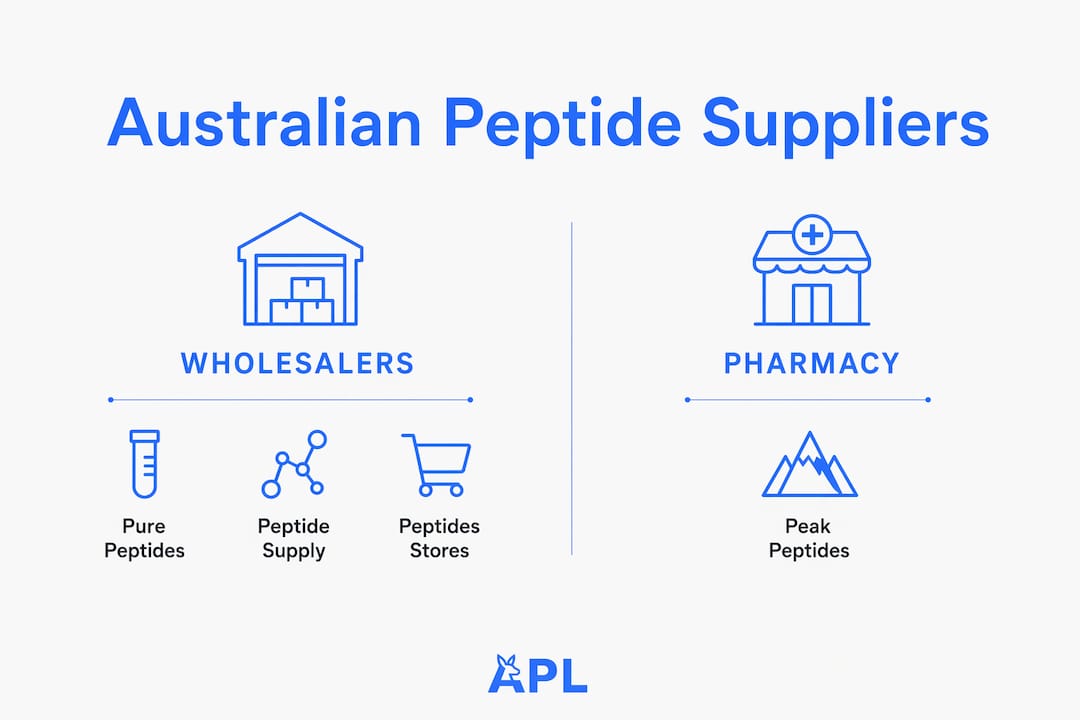
Australian-based suppliers with proper regulatory oversight can substantially reduce the contamination and dosing risks associated with internet-sourced peptides. The four verified local options below differ in business type, location, and quality assurance approach.
| Supplier | Business type | Location | Product range | Purity/quality assurance | Customer rating |
|---|---|---|---|---|---|
| Pure Peptides Australia | Wholesaler | Darlinghurst, NSW | Extensive research peptide range | Verified local supplier | 4.6★ (26 reviews) |
| Peptide supply Australia | Wholesaler | Sydney, NSW | Quality peptide products | Local presence, rapid delivery | 5★ (17 reviews) |
| Peptides Stores Australia | Wholesaler | Alexandria, NSW | Dedicated peptide focus | Verified Australian supplier | 5★ (17 reviews) |
| Peak Peptides Australia | Pharmacy | Point Piper, NSW | Pharmaceutical peptide products | Pharmacy-grade credentials | 5★ (1 review) |
Pure Peptides Australia operates as a wholesaler in Darlinghurst with an extensive research peptide catalogue, making it a practical option for researchers requiring consistent local supply across multiple compounds.
Peak Peptides Australia is the only pharmacy-based supplier on this list, operating from Point Piper, NSW. Pharmacy credentials mean products are subject to dispensing standards not applicable to general wholesalers, which is relevant for researchers prioritising pharmaceutical-grade sourcing.
Peptide supply Australia and Peptides Stores Australia are Sydney-based wholesalers suited to researchers who need rapid local fulfilment and a focused peptide product range.
How clinicians typically integrate peptides into injury recovery plans
Where peptides are used under clinical oversight in Australia, the following approaches are most common:
- Subcutaneous injection near the injury site: maximises local tissue concentration, particularly relevant for BPC-157's angiogenic mechanism
- Combined stacking protocols: BPC-157 plus TB-500 is the most documented combination, targeting overlapping but distinct repair pathways
- Adjunct therapies: physiotherapy, structured nutrition, and adequate rest are maintained alongside any peptide protocol
- Clinical monitoring: assessment of injection-site reactions, hormonal panels for GH-axis agents, and pharmacovigilance reporting
- Professional oversight: dosing decisions made by a prescribing clinician, not self-directed
The role of peptides in muscle repair is best understood as adjunctive rather than primary, with evidence-based rehabilitation remaining the foundation of any recovery plan.
Dosing protocols and administration methods
Dosing for recovery peptides lacks formal clinical consensus. BPC-157 has been administered at varying doses across animal and pilot regimens, with no established therapeutic threshold for humans. The most commonly referenced research protocol for the BPC-157 and TB-500 stack is 250 mcg BPC-157 twice daily plus 2 mg TB-500 twice weekly, administered subcutaneously near the injury site for 8–12 weeks.
Route of administration materially affects outcomes. Intra-articular injection provides localised effects with minimal systemic exposure, while oral formulations offer systemic distribution but face gastric stability and bioavailability limitations. Oral BPC-157 in the arginate salt form demonstrates better gastric stability than the acetate form, making it more appropriate for gut-targeted indications. Transdermal formats are emerging but lack published bioavailability data as of mid-2026.
How to select a reputable Australian healthcare provider for peptide therapy
Selecting a provider requires verifying several specific credentials. Researchers and patients should confirm that the practitioner holds a current AHPRA registration, can issue a valid prescription or compounding referral, and operates within TGA-compliant protocols. Providers affiliated with sports medicine clinics or integrative medicine practices with documented peptide experience are preferable to general practitioners unfamiliar with the category.
Ask directly whether the clinic sources peptides from a licensed compounding pharmacy, whether third-party purity certificates are available for each batch, and whether the prescribing clinician monitors for endocrine and immunological effects during treatment. The 2026 prescription requirements guide outlines what documentation a compliant provider should be able to produce.
Potential interactions with other medications and therapies
Peptides exert pleiotropic effects, influencing multiple physiological pathways beyond their primary target tissue. This creates complexity in polypharmacy contexts. GH-axis peptides such as ipamorelin and CJC-1295 can alter IGF-1 levels, which may interact with insulin sensitivity and glucose regulation, a concern for researchers or patients managing diabetes or metabolic conditions.
BPC-157 has demonstrated interactions with dopaminergic and serotonergic systems in animal models, raising theoretical concerns when co-administered with psychoactive medications. TB-500's promotion of cell migration and angiogenesis warrants caution in oncology contexts, given that these same processes play roles in tumour biology. No formal drug interaction studies exist for these compounds in humans; clinical oversight and full medication disclosure to the prescribing practitioner are therefore non-negotiable.
Regulatory requirements and the prescription process in Australia
Under the TGA's current framework, BPC-157 and TB-500 are classified as unapproved therapeutic goods. Legal access requires either a Special Access Scheme (SAS) application or a prescription from an authorised prescriber directing a licensed compounding pharmacy. The SAS Category B pathway allows practitioners to apply on behalf of individual patients for specific clinical circumstances.
The July 2026 PCAC ruling will directly affect compounding access. If the committee recommends against including BPC-157 or TB-500 on the 503A/503B bulk substances list, compounding pharmacies will lose the ability to prepare these compounds legally, effectively restricting access to research-use channels only. Researchers should monitor the PCAC outcome and review their procurement pathways accordingly.
Cost and reimbursement considerations for peptide therapy in Australia
Peptide therapies are not listed on the Pharmaceutical Benefits Scheme (PBS), meaning no government subsidy applies. Out-of-pocket costs vary by compound, dose, and compounding pharmacy. Compounded injectable peptide courses typically represent a meaningful expense over an 8–12 week protocol, with costs dependent on the specific formulation and dispensing pharmacy.
Private health insurers in Australia do not currently reimburse peptide therapy, as the absence of TGA approval and PBS listing places these compounds outside standard coverage criteria. Researchers and clinicians should factor the full cost of compounding, syringes, bacteriostatic water, and clinical monitoring into any protocol budget. Bulk procurement from verified Australian wholesalers can reduce per-unit costs for research applications, though this pathway is distinct from clinical therapeutic use.
The evidence gap is real, but the regulatory risk is immediate
The preclinical case for BPC-157 and TB-500 is genuinely interesting. The angiogenic and fibroblast-activating mechanisms are biologically plausible, the animal data is consistent, and the safety profile in rodent studies is favourable. What is less often acknowledged is that the gap between "biologically plausible in rats" and "clinically validated in humans" is not a minor formality. It is the entire evidentiary foundation that determines whether a compound is medicine or speculation.
The more pressing concern for Australian researchers right now is not the science. It is the regulatory clock. The July 2026 PCAC ruling could meaningfully restrict compounding access to BPC-157 and TB-500 within months. Researchers and clinicians who have built protocols around these compounds through compounding pharmacies need contingency plans, not optimism about the ruling's outcome. Sourcing from verified, Australian-based suppliers with documented purity testing is the minimum standard for responsible research practice, regardless of how the regulatory landscape shifts.
Aupeptidelabs: pharmaceutical-grade research peptides, shipped from Australia
For researchers who need verified purity without customs delays or sourcing uncertainty, Aupeptidelabs stocks an extensive range of research-grade peptides with third-party certificates of analysis confirming purity above 99%. All orders ship from Australia within one business day, with discreet packaging as standard.
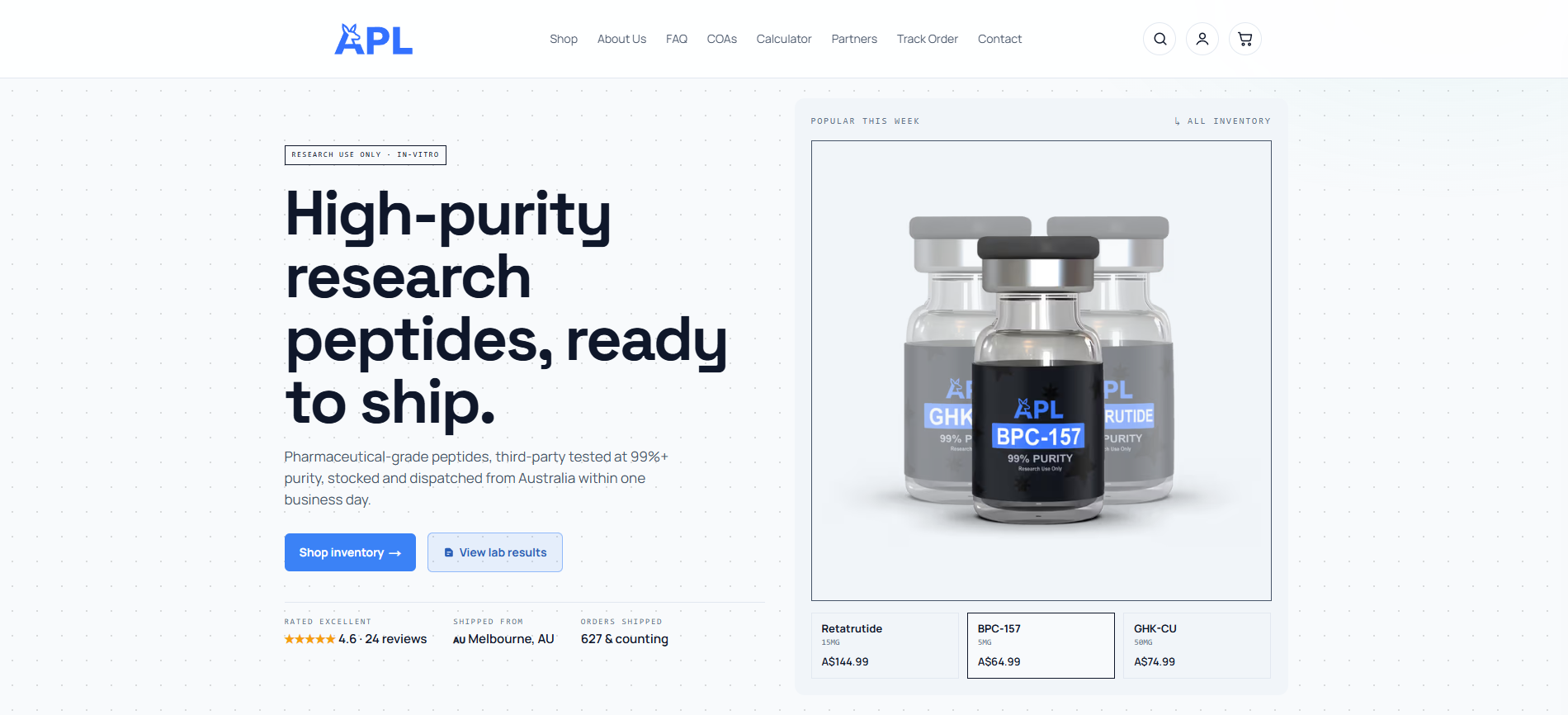
The inventory covers BPC-157, TB-500, GHK-Cu, and a broad range of recovery-relevant compounds, with custom and bulk orders available on request. Research supplies including bacteriostatic water, insulin syringes, and alcohol wipes are stocked alongside peptides for complete protocol support. The peptide dilution calculator assists with accurate reconstitution for laboratory use. Aupeptidelabs holds a 4.6/5 customer satisfaction rating from verified reviews, reflecting consistent fulfilment standards for the Australian research community.