

What are sleep peptides and why does DSIP matter?
Sleep peptides are short-chain biologically active molecules that modulate neurochemical systems governing sleep architecture, particularly slow-wave sleep (SWS). Delta Sleep-Inducing Peptide (DSIP) is the most extensively characterised among them. First isolated from the cerebral venous blood of rabbits in 1977, DSIP is a nonapeptide with the sequence Trp-Ala-Gly-Gly-Asp-Ala-Ser-Gly-Glu and a molecular weight of approximately 849 Da.
DSIP promotes delta-wave sleep across multiple species, including rabbits, rats, cats, and humans, with effects mediated through serotonergic and GABAergic neurotransmission. Despite this, its endogenous synthesis pathway, precursor protein, and dedicated receptor remain unidentified after nearly five decades of investigation. The leading 2006 review in the Journal of Neurochemistry described DSIP as "a still unresolved riddle."
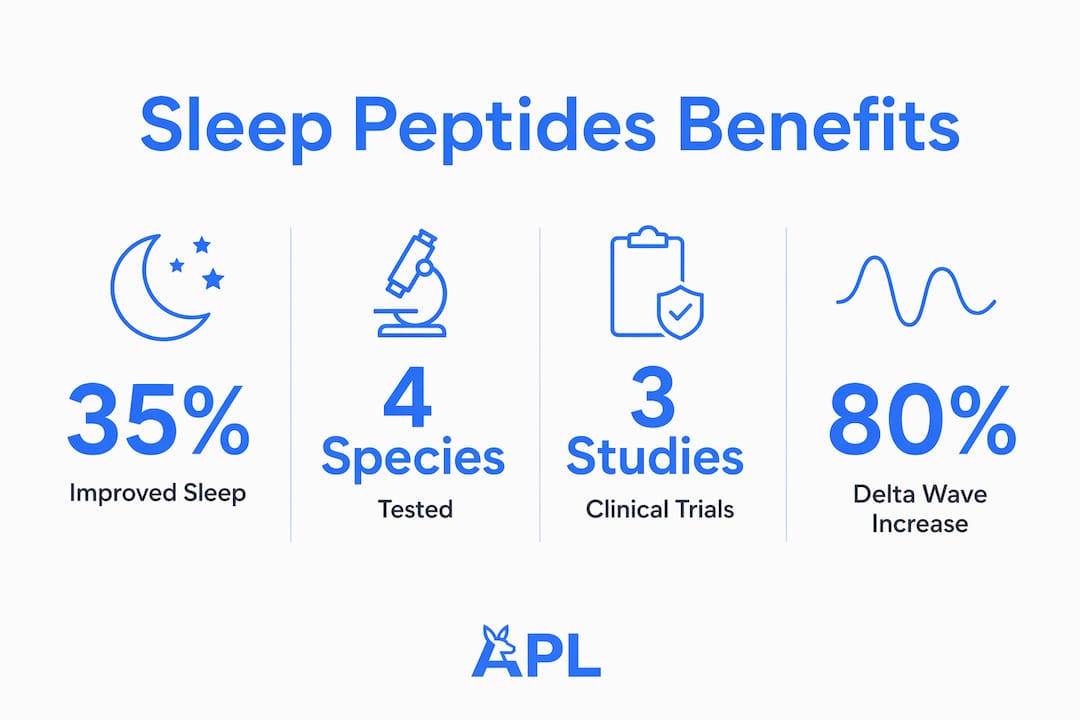
Clinical evidence is modest. Small double-blind trials in chronic insomnia patients reported higher sleep efficiency and shortened sleep latency with DSIP versus placebo, though one study concluded effects were "weak" and DSIP was "not likely to be of major therapeutic benefit." Researchers must distinguish carefully between animal model outcomes and limited human clinical data when interpreting these findings.

Beyond DSIP, emerging bioactive peptides derived from botanical and marine sources, including walnut peptides and Pneumatophorus japonicus bone peptides, demonstrate sleep-modulating activity via HPA axis regulation and neurotransmitter modulation. Fusion constructs such as DSIP-CBBBP address a central pharmacokinetic challenge: blood-brain barrier penetration, which limits effective DSIP delivery. Mouse model data show DSIP-CBBBP achieves stronger neurotransmitter balance and sleep restoration than unmodified DSIP alone. Future research directions centre on improving bioavailability through structural analogues and fusion peptide strategies.
Key sleep peptides and mechanisms in current research:
- DSIP (Delta Sleep-Inducing Peptide): Promotes SWS via GABAergic and serotonergic modulation; no identified receptor or gene
- Walnut peptide + theanine (WPT): Restores SWS duration and corrects HPA axis hyperactivity in preclinical and human models
- TG7 (Tyr-Gly-Asn-Pro-Trp-Glu-Lys): Isolated from Pneumatophorus japonicus bone; regulates circadian rhythm genes including per1b, cry1ba, and per2
- DSIP-CBBBP fusion construct: Enhanced BBB crossing; superior sleep restoration versus DSIP alone in mouse insomnia models
- Casein-derived peptides: Increase GABA-A receptor expression in rat hypothalamus; reduce sleep-wake cycle fragmentation
How to procure pharmaceutical-grade sleep peptides in Australia
Procurement of research-grade sleep peptides within Australia requires rigorous attention to purity standards, regulatory compliance, and laboratory handling protocols. Purity exceeding 99%, verified by independent third-party certificate of analysis (CoA), is the minimum acceptable standard for any peptide intended for controlled laboratory research. Suppliers without documented CoA data introduce unacceptable variability into experimental outcomes. Understanding common peptide synthesis challenges is equally relevant when evaluating supplier credibility.
Regulatory compliance is non-negotiable. Researchers must operate within the framework of the Australian Code for the Responsible Conduct of Research and adhere to relevant Therapeutic Goods Administration (TGA) import and export provisions governing non-clinical research compounds. All peptides procured must be designated strictly for laboratory use, with no application to human or veterinary consumption.
Verified customer satisfaction rating: 4.6/5 — Aupeptidelabs, based on verified reviews from Australian research clients.
Aupeptidelabs supplies pharmaceutical-grade research peptides with purity exceeding 99%, dispatched from Australia within one business day, eliminating customs delays that commonly disrupt research timelines. Discreet packaging and domestic fulfilment support both institutional and independent laboratory procurement. For guidance on supplier selection in Australia, researchers should cross-reference CoA documentation, dispatch speed, and post-sale technical support before committing to any source.
Procurement checklist for sleep peptide research:
- Confirm purity ≥99% via independent third-party CoA
- Verify domestic Australian dispatch and estimated delivery window
- Review TGA and institutional ethics compliance requirements
- Confirm peptide is designated for non-human, non-veterinary laboratory research only
- Assess cold-chain storage specifications (typically –20°C for lyophilised peptides)
- Request bacteriostatic water and sterile reconstitution supplies from the same supplier
- Confirm availability of bulk or custom order fulfilment for extended research programmes
Aupeptidelabs: pharmaceutical-grade sleep peptides, dispatched from Australia
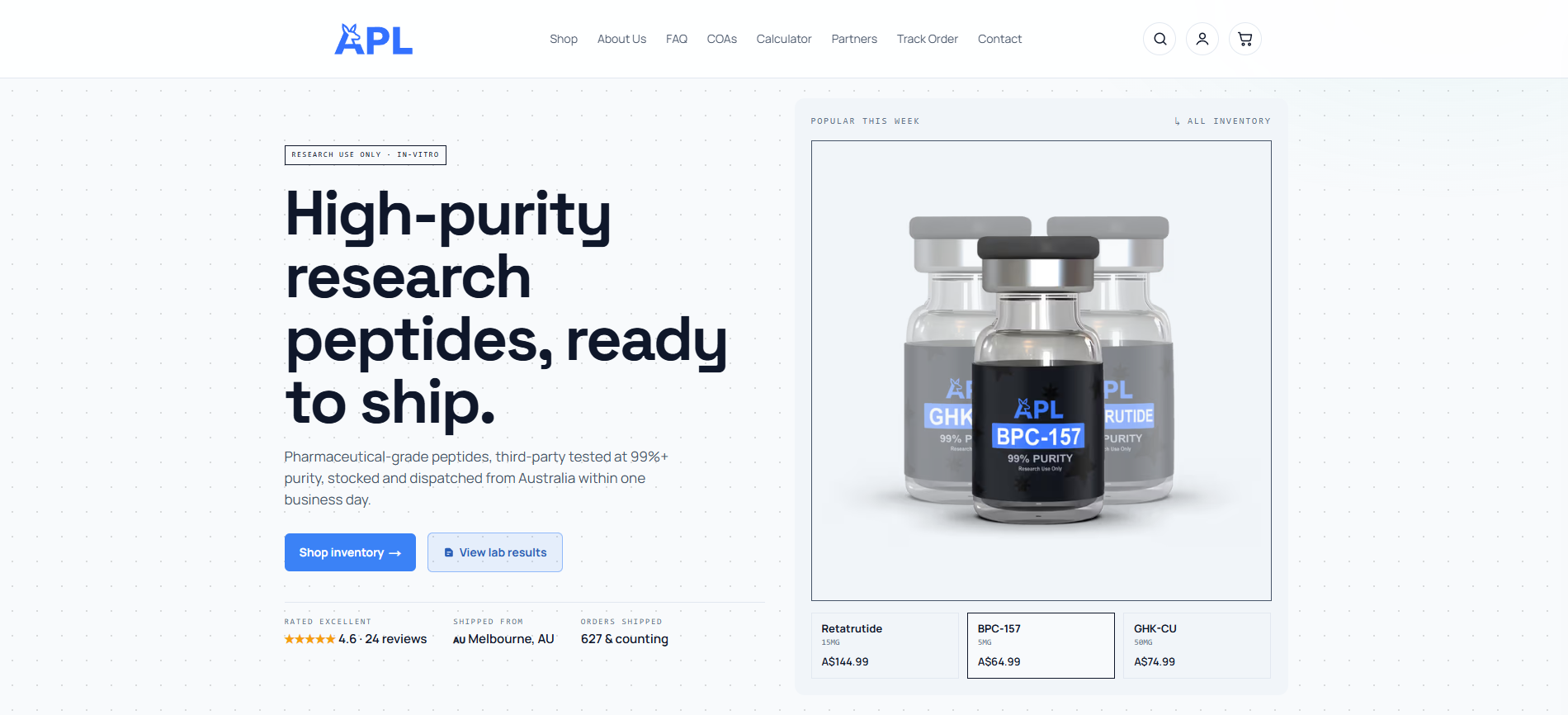
Researchers sourcing sleep peptides for laboratory investigation need a supplier that eliminates procurement friction without compromising analytical integrity. Aupeptidelabs stocks an extensive inventory of pharmaceutical-grade research peptides, including DSIP and related compounds, each verified at purity levels exceeding 99% with third-party CoA documentation. Every order ships from Australia within one business day, removing the customs delays and cold-chain uncertainty that accompany international procurement. Discreet packaging, bulk order capacity, and access to essential laboratory consumables, including bacteriostatic water, insulin syringes, and alcohol wipes, make Aupeptidelabs a complete procurement solution for sleep peptide research programmes. Visit aupeptidelabs.com to review the current inventory and place an order.