
What are nootropic peptides and why do they matter in neuroscience research?
Nootropic peptides are synthetic or structurally modified peptide compounds that modulate neurotrophic factor expression, neurotransmitter receptor activity, and synaptic plasticity to produce measurable improvements in cognitive function. Unlike classical small-molecule cognitive enhancers, these peptides act through highly specific receptor-mediated pathways, including NMDA and AMPA receptor modulation and upregulation of brain-derived neurotrophic factor (BDNF) and nerve growth factor (NGF), making them precise mechanistic tools for neuropharmacology research rather than blunt stimulants.

Their significance in laboratory settings stems from this specificity. Researchers modelling neuroprotection, synaptic plasticity, or cognitive decline require compounds with well-characterised pharmacodynamic profiles and reproducible dose-response relationships. Smart peptides such as Noopept and Semax fulfil these criteria, provided reagent purity is sufficient to exclude confounding variables.
Key properties that define research-grade nootropic peptides:
- Selective modulation of BDNF/TrkB and NGF signalling pathways
- Glutamatergic activity via AMPA and NMDA receptor interactions
- Neuroprotective profiles relevant to ischaemia, oxidative stress, and amyloid toxicity models
- Pharmacokinetic challenges including protease susceptibility and blood-brain barrier (BBB) permeability constraints
- Requirement for third-party purity certificates and pharmaceutical-grade standards for experimental reproducibility
Australian laboratories procuring these compounds must also account for the Therapeutic Goods Administration (TGA) regulatory framework, which distinguishes research chemicals from medicines and places strict compliance obligations on suppliers and end users alike.
Noopept and Semax: the primary peptides in Australian cognitive research
Noopept
Noopept (INN: Omberacetam; chemical structure: N-phenylacetyl-L-prolyl-glycine ethyl ester) is a synthetic dipeptide prodrug with potency approximately 1,000-fold greater than piracetam, effective in research models at 10–30 mg/day versus 1,200–4,800 mg/day for piracetam. Following hydrolysis, its active metabolite cycloprolylglycine (CPG) modulates AMPA-type glutamate receptors and facilitates long-term potentiation in hippocampal circuits. Noopept also activates HIF-1 DNA-binding under hypoxic conditions, contributing to its neuroprotective profile in ischaemia models, and produces anxiolytic effects in animal behavioural paradigms via TrkB receptor engagement.
For laboratory protocols, the standard oral research dose is typically low and starts at a minimal amount to assess efficacy. Sublingual and intranasal administration routes are documented as faster-onset alternatives where pharmacokinetic comparisons are the experimental objective.
Semax
Semax is a synthetic heptapeptide analog of ACTH(4–10) with the sequence Met-Glu-His-Phe-Pro-Gly-Pro, engineered to retain neurotrophic and cognitive effects without stimulating cortisol secretion. The C-terminal Pro-Gly-Pro (PGP) extension enhances metabolic stability against protease degradation, addressing one of the core pharmacokinetic limitations of unmodified peptides. Semax upregulates BDNF and TrkB receptors and additionally activates dopaminergic and serotonergic systems, supporting multi-pathway cognitive modulation.
Nasal administration is the established delivery route in research settings. Outcome variability across cognitive tasks is a documented consideration: extended, complex paradigms yield more consistent measurable effects than brief or simple tasks, which has direct implications for experimental design and statistical power calculations.
Pro Tip: When designing nootropic peptide studies, standardise your protocols around task complexity and duration. Sourcing peptides with verified third-party purity certificates eliminates purity as a confounding variable and strengthens inter-laboratory reproducibility. For toxicology and safety profiling in parallel studies, clinical diagnostic support can provide validated reference data.
Researchers must maintain a clear operational separation between laboratory use of these compounds and any personal or off-label consumption. Australian legal frameworks, administered through the TGA, strictly enforce this distinction, and supplier compliance documentation is a non-negotiable component of procurement due diligence. Verifying that a supplier holds current Australian regulatory compliance documentation is as important as confirming purity specifications.
Aupeptidelabs: pharmaceutical-grade peptides dispatched from Australia
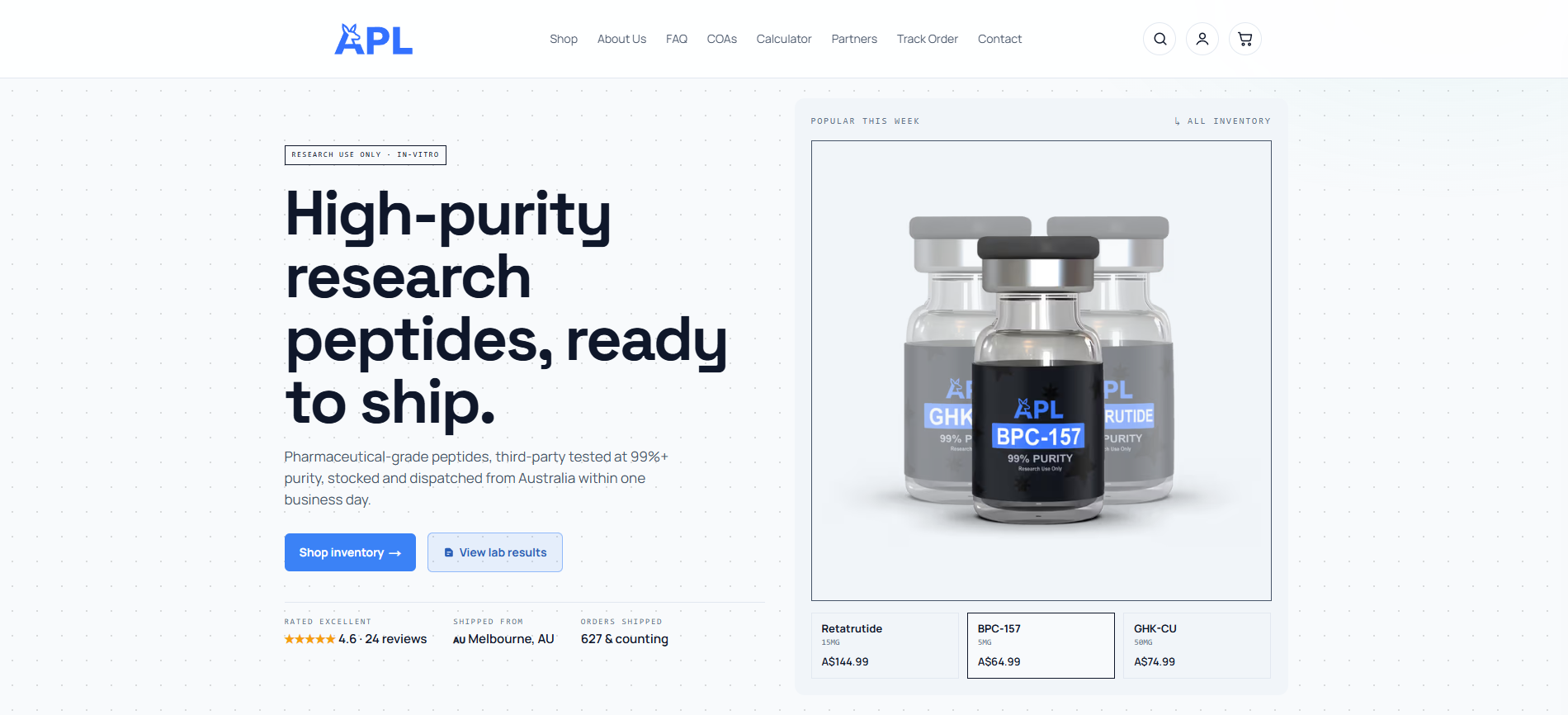
For Australian laboratories requiring research-grade nootropic peptides without customs delays or supply uncertainty, Aupeptidelabs provides a direct local solution. All peptides exceed 99% purity, verified by third-party certificates of analysis, and shipments are dispatched within one business day from within Australia. Custom orders, bulk procurement, and a full range of research consumables, including bacteriostatic water and insulin syringes, are available to support complete experimental workflows.
Aupeptidelabs holds a 4.6/5 customer satisfaction rating based on verified reviews, reflecting consistent product integrity and reliable fulfilment. Browse the full catalogue and place an order at Aupeptidelabs.