

KPV (Lys-Pro-Val), formally designated as the C-terminal tripeptide fragment of α-melanocyte-stimulating hormone (α-MSH, residues 11–13), is a research-use compound with a well-characterised preclinical anti-inflammatory profile. In Australia, it is available exclusively as research-grade material and is not approved for human consumption by the Therapeutic Goods Administration (TGA). Researchers procuring KPV domestically should prioritise suppliers offering a Certificate of Analysis (COA), reported purity of ≥98–99%, clear "for research use only" labelling, and same-country dispatch to avoid customs complications. Aupeptidelabs is one such domestic supplier, dispatching from Australia within one business day.
Quick-reference specifications:
- Sequence: Lys-Pro-Val (K-P-V)
- Molecular formula C₁₆H₃₀N₄O₄, molecular weight ≈342.44 g·mol⁻¹
- CAS No: 67727-97-3
- Physical form: lyophilised powder
- Common research pack sizes typically include small quantities suitable for laboratory research.
- Regulatory status (Australia): research use only; not TGA-approved for human therapeutic use
What is the KPV peptide, and how does it work?
KPV is a synthetic tripeptide whose sequence corresponds to positions 11–13 of the 13-amino-acid melanocortin hormone α-MSH. Its chemical identity is registered on PubChem under CAS 67727-97-3, with molecular formula C₁₆H₃₀N₄O₄ and molecular weight ≈342.44 g·mol⁻¹. Despite being three amino acids in length, KPV retains most of α-MSH's anti-inflammatory activity while lacking the His-Phe-Arg-Trp "message" sequence responsible for melanocortin-receptor-driven pigmentation.
| Property | Value |
|---|---|
| Peptide name | KPV (Lys-Pro-Val; α-MSH 11–13) |
| Molecular formula | C₁₆H₃₀N₄O₄ |
| Molecular weight | ≈342.44 g·mol⁻¹ |
| CAS number | 67727-97-3 |
| Parent molecule | α-melanocyte-stimulating hormone (α-MSH) |
| Physical form | Lyophilised powder |
| Common pack size | 10 mg |
| Typical purity (research grade) | ≥98–99% |
The mechanistic profile of KPV operates through two complementary pathways. First, KPV interacts with melanocortin receptors (MC1R, MC3R, MC5R) on immune and epithelial cells, engaging an endogenous anti-inflammatory signalling axis that dampens pro-inflammatory cytokine release. Second, and more distinctively, KPV enters intestinal epithelial cells via the PepT1 (SLC15A1) transporter, a proton-coupled oligopeptide transporter highly expressed in small intestinal mucosa and upregulated in inflamed colonic tissue. Once intracellular, KPV inhibits NF-κB nuclear translocation, reducing transcription of TNF-α, IL-1β, IL-6, and IFN-γ-driven genes. This intracellular mechanism is largely independent of surface receptor binding, which distinguishes KPV from simpler melanocortin agonists and explains its activity in cell types with low receptor expression.
In research settings, KPV is supplied as a lyophilised powder. Standard pack sizes for laboratory use are 10 mg vials, with research-grade suppliers reporting purity levels of ≥98–99% and providing batch COAs.
What does the preclinical evidence actually show?
The published literature on KPV is internally consistent and mechanistically well-characterised, but the evidence base is predominantly in vitro and rodent models. No robust, completed, peer-reviewed randomised human clinical trials have established efficacy or safety for isolated KPV as a therapeutic agent. Researchers designing experiments with KPV should calibrate their expectations accordingly.
Established preclinical findings:
- Reduced colonic inflammation in dextran sulfate sodium (DSS) and TNBS-induced rodent colitis models
- NF-κB pathway inhibition demonstrated in intestinal epithelial cell lines (Caco-2-BBE), including suppression of IκB-α degradation
- PepT1-mediated uptake into intestinal epithelial cells, with PepT1 expression upregulated in inflamed colonic tissue, creating a built-in lesion-targeting mechanism
- Attenuation of pro-inflammatory cytokines (TNF-α, IL-1β, IL-6) in lipopolysaccharide-stimulated mouse models
- Anti-inflammatory and wound-healing activity in skin inflammation models, with transdermal delivery studies confirming tissue penetration via iontophoresis and microneedle pretreatment
- Preliminary antimicrobial activity against Candida and Staphylococcus in vitro
A critical pharmacokinetic limitation governs all oral and systemic research designs. Free tripeptides are susceptible to rapid degradation by plasma and intestinal peptidases, and efficient PepT1 uptake in the proximal small intestine can mean KPV is absorbed or degraded before reaching an inflamed colon. This is precisely the problem that targeted nanoparticle delivery systems address: hyaluronic-acid-functionalised PLGA nanoparticles loaded with KPV demonstrated substantially higher colonic tissue concentrations and efficacy at lower KPV doses than free peptide in DSS mouse models.
Evidence-grading note: KPV has a coherent dual-pathway mechanism and a substantial preclinical literature. However, the absence of completed human pharmacokinetic, safety, and efficacy data means that any claim presenting KPV as a "proven" treatment for gut disease, skin conditions, or infection overstates what the data currently support. The appropriate framing for research purposes is: promising preclinical profile, investigational status in humans.
KPV versus BPC-157 in research design: The two peptides are mechanistically distinct and pharmacologically complementary. KPV acts via melanocortin receptor signalling and intracellular NF-κB inhibition, targeting inflammatory gene transcription directly. BPC-157 operates through angiogenesis support, growth-factor receptor modulation, and nitric-oxide pathway interactions, providing broader tissue-protective and mucosal-repair signalling. Researchers studying gut barrier integrity may find the two compounds address different aspects of intestinal pathophysiology rather than duplicating each other.
What is the regulatory status of KPV in Australia?
KPV is not a scheduled prescription medicine under the Therapeutic Goods Act 1989, but it is also not TGA-approved for any human therapeutic indication. The TGA has issued warnings against unapproved peptides, and the RACGP has communicated these advisories to practitioners. Purchasing KPV for personal use or human administration falls outside the intended regulatory scope of research-grade supply.
Regulatory position: In Australia, KPV is sold strictly for laboratory research purposes. It is not approved for human consumption, and its procurement, storage, and use must comply with institutional research governance frameworks.
"Research use only" labelling carries specific practical implications for Australian laboratories. Procurement records, chain-of-custody documentation, and COA retention are standard institutional requirements. Researchers importing KPV from overseas suppliers must also assess whether an import permit is required under the Customs (Prohibited Imports) Regulations 1956, depending on the compound's classification at the time of import.
Practical compliance steps for Australian labs:
- Obtain institutional ethics or research governance approval (HREC or equivalent) before procurement
- Retain the supplier COA, lot number, and chain-of-custody records for each batch
- Confirm import permit requirements with the TGA or your institutional biosafety officer if sourcing from overseas
- Monitor the TGA's current scheduling and compounding guidance, as regulatory classifications for research peptides can shift; the legal status of peptides in Australia is subject to ongoing review
- Contact your institutional safety office or the TGA directly for jurisdiction-specific advice
This article provides general research information, not legal or medical advice. Researchers should confirm current regulatory requirements with the TGA or a qualified professional for their specific situation.
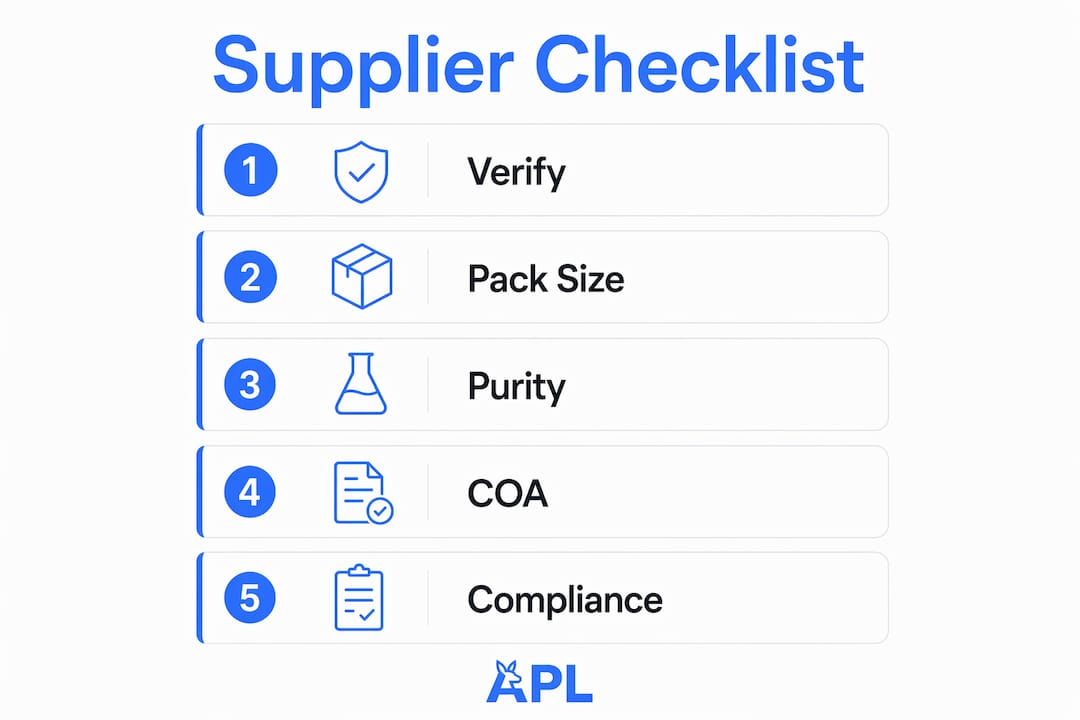
How to assess a KPV supplier: a practical checklist
Sourcing research-grade KPV in Australia requires systematic vendor assessment. The checklist below covers the minimum verification criteria; suppliers unable to satisfy these should be excluded from procurement consideration.
Core verification checklist:
- Certificate of Analysis (COA): batch-specific, not generic; must include HPLC and MS traces confirming identity and purity
- Reported purity: ≥98–99%; product listings from reputable Australian suppliers typically report purity at this level with COA download options
- Batch number and expiry date: traceable lot identification is non-negotiable for research records
- Storage instructions: lyophilised KPV requires −20 °C long-term; reconstituted material requires 2–8 °C
- "For research use only" labelling: explicit on product, packaging, and documentation
- Third-party testing: COA issued by an independent analytical laboratory, not the supplier's in-house facility
- Domestic dispatch: Australian-origin shipments eliminate customs delays and reduce cold-chain risk; confirm dispatch timelines before ordering
Red flags that disqualify a supplier:
- No COA, or a COA without HPLC/MS data
- Vague purity claims ("high purity" without a stated percentage)
- Marketing language implying human therapeutic use
- Unverifiable laboratory address or no traceable contact details
- No lot-specific documentation
For researchers evaluating pharmaceutical-grade peptide sources in Australia, the comparison dimensions that matter most are pack size (typically 10 mg for KPV), purity percentage with COA verification, price per vial, shipping origin and estimated transit time, and stated storage requirements and shelf life. Domestic dispatch from an Australian-based supplier is the single most operationally significant factor for maintaining cold-chain integrity and avoiding customs-related delays.
| Dimension | What to verify |
|---|---|
| Pack size | 10 mg standard; confirm availability of custom or bulk quantities |
| Purity (%) | ≥98–99% with batch-specific HPLC/MS COA |
| Price per vial | Compare on a per-milligram basis, not per-vial sticker price |
| Shipping origin | Domestic (Australia) preferred; overseas requires import assessment |
| Dispatch time | Confirm business-day dispatch commitment |
| Storage requirements | Lyophilised: −20 °C; reconstituted: 2–8 °C |
| Shelf life | Confirm from COA expiry; aliquot to extend working stock life |
Safe handling, reconstitution and disposal of KPV in the laboratory
KPV is supplied as a lyophilised powder and is stable under appropriate conditions. The following guidance applies to research laboratory use; all handling must comply with institutional biosafety and hazardous waste protocols.
Storage of lyophilised material: Store at −20 °C for long-term stability, protected from light and moisture. Avoid repeated freeze-thaw cycles, which accelerate degradation of the peptide backbone. Once a vial is opened, reconstitute promptly and aliquot before refreezing.
Reconstitution: Add sterile bacteriostatic water (or an appropriate research buffer) to the lyophilised powder. Calculate the target working concentration before adding solvent; for a 10 mg vial, adding 1 mL of bacteriostatic water yields a 10 mg/mL stock. Prepare aliquots at volumes appropriate for individual experimental runs to minimise freeze-thaw exposure of the bulk stock.
Laboratory record-keeping standard: Every reconstituted vial should be labelled with the lot number, reconstitution date, solvent used, concentration, and "for research use only." These records support both institutional compliance and experimental reproducibility.
Post-reconstitution storage: Refrigerate at 2–8 °C and use within 30 days. Do not return unused reconstituted material to the original vial.
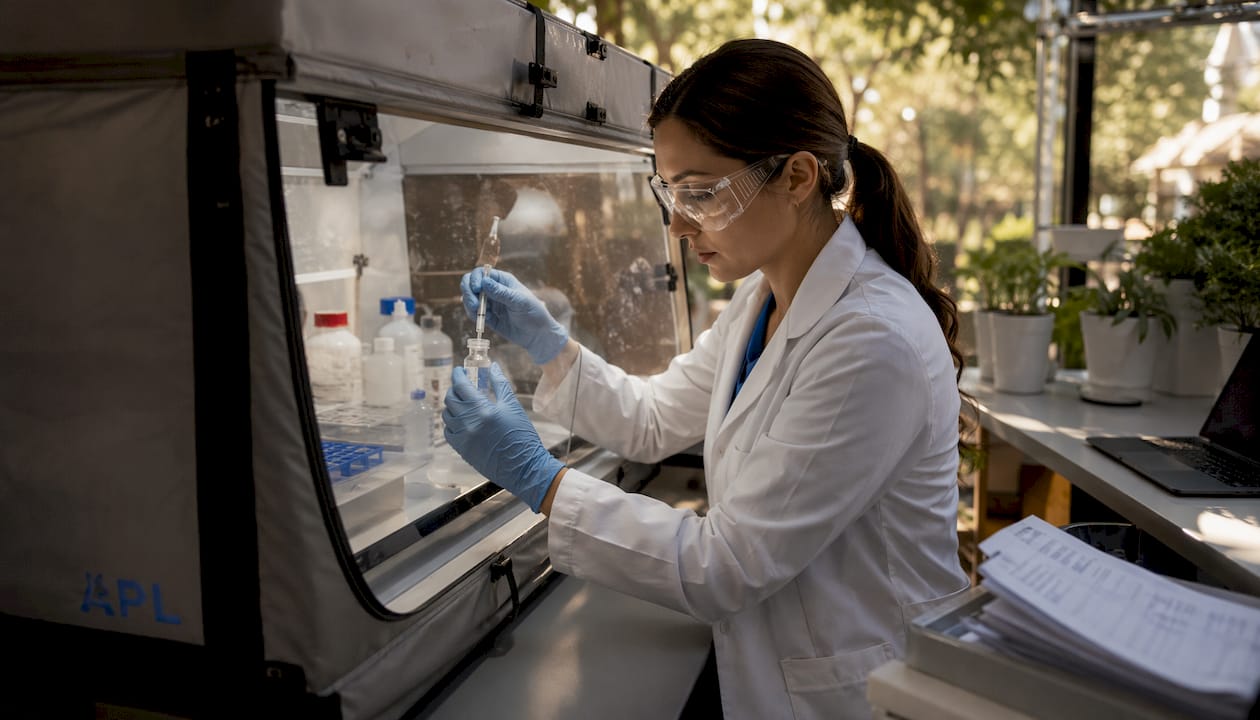
Personal protective equipment and biosafety: Standard laboratory PPE (gloves, lab coat, eye protection) applies. Use a biosafety cabinet when handling reconstituted peptide solutions in open vessels, consistent with institutional biosafety requirements.
Disposal of unused or expired KPV: Dispose of unused peptide material, reconstituted solutions, and contaminated consumables in accordance with your institution's hazardous biological and chemical waste protocols. In Australia, this typically means segregation into labelled biohazard or chemical waste containers and collection by a licensed waste contractor under the relevant state environment protection legislation. Do not dispose of peptide solutions via the general drain without confirming institutional approval.
Pro Tip: Prepare a working aliquot series from each reconstituted vial immediately after reconstitution. For example, from a 10 mg/mL stock, prepare 50 µL aliquots at 1 mg/mL by serial dilution into bacteriostatic water, then store at −20 °C. This approach preserves the bulk stock and provides ready-to-use research concentrations without repeated freeze-thaw of the primary vial.
How Aupeptidelabs supports Australian KPV research
Aupeptidelabs supplies pharmaceutical-grade KPV peptide as a lyophilised research reagent, dispatched from Australia within one business day of order confirmation. Each batch is accompanied by a third-party Certificate of Analysis reporting purity levels of ≥99%, with HPLC and MS data available for researcher verification. All products carry explicit "for research use only" labelling and traceable lot numbers, supporting institutional chain-of-custody requirements.
The domestic fulfilment model is operationally significant for Australian laboratories. Shipments originating within Australia bypass the customs assessment process that applies to overseas consignments, reducing both transit time and the risk of cold-chain interruption. Discreet packaging is standard, and the customer satisfaction rating of 4.6/5 based on verified reviews reflects consistent fulfilment performance across the research community.
Aupeptidelabs also provides a Peptide Dilution Calculator to assist researchers in preparing accurate working concentrations from lyophilised stock, reducing calculation errors during reconstitution. Technical support and bulk or custom order enquiries are available directly through the website. Researchers requiring complementary reagents, including bacteriostatic water, insulin syringes, and alcohol wipes, can source these from the same supplier, simplifying procurement logistics for multi-component experimental setups.
Research-grade KPV from Aupeptidelabs: ordering and compliance
Aupeptidelabs offers KPV as a 10 mg lyophilised vial with ≥99% reported purity and a batch-specific COA supplied with every order. Domestic dispatch within one business day from Australia means most researchers receive their order without the delays or import complications associated with overseas procurement.
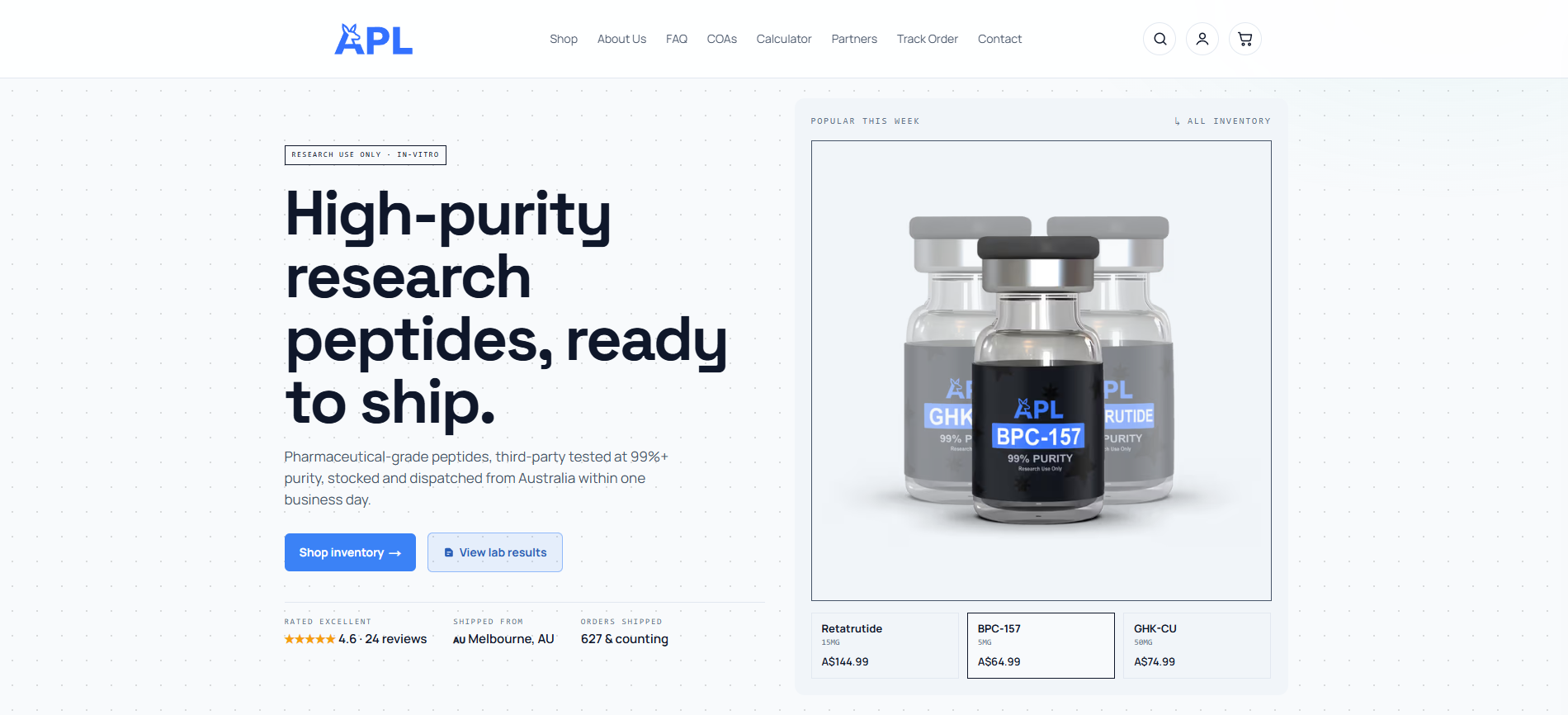
Ordering is completed through the KPV product page on the Aupeptidelabs website. Bulk and custom order quantities are available on request via technical support. All products are strictly for laboratory research use and are not intended for human or veterinary administration. Researchers are advised to confirm institutional ethics or governance approval before procurement, retain the supplied COA and lot documentation, and store material in accordance with the cold-chain specifications provided.
For researchers evaluating the full range of research peptides available in Australia, Aupeptidelabs maintains an extensive inventory with consistent purity standards and domestic fulfilment across all product lines. Contact technical support directly for research pack pricing, bulk quantities, or specific formulation enquiries.
An editorial perspective on sourcing and evidence standards
The gap between community enthusiasm for KPV and the actual state of the human evidence is wider than most online commentary acknowledges. The preclinical literature is genuinely interesting: the PepT1-mediated intracellular mechanism is well-characterised, the rodent colitis data is consistent, and the nanoparticle delivery work demonstrates that the compound can be made to work efficiently in targeted formulations. What the literature does not contain is a completed, controlled human trial establishing that isolated KPV, administered as a raw tripeptide, produces the same outcomes in people that it produces in DSS-treated mice.
The practical implication for Australian researchers is straightforward. KPV is a legitimate and well-sourced research reagent with a defensible mechanistic rationale for gut-inflammation and skin-inflammation experimental models. It is not a validated human therapy, and the absence of human pharmacokinetic data means that extrapolating preclinical dosing to any human context is speculative. The regulatory position of the TGA reflects this distinction precisely: research-grade supply is permitted; therapeutic claims are not.
Where sourcing decisions intersect with evidence quality, the COA is the minimum threshold, not the ceiling. Researchers should treat third-party HPLC and MS verification as standard, not optional, and should prefer domestic suppliers who can provide traceable lot documentation. The operational advantages of Australian-origin dispatch, reduced customs risk and preserved cold-chain integrity, are not trivial considerations when experimental reproducibility depends on material quality at the point of use.
Useful sources and regulatory references
The following primary sources and regulatory references support the claims in this article and provide a starting point for further literature review and compliance verification.
| Source | Type | Key content |
|---|---|---|
| PubChem: KPV (MSH 11-13) | Chemical registry | Molecular formula, MW, CAS number, structural data |
| Dalmasso et al. — PepT1 transport study (PubMed) | Primary research | PepT1-mediated KPV uptake in intestinal epithelial cells; Kₜ characterisation |
| Xiao et al. — HA-KPV-NP/hydrogel (PMC) | Primary research | Nanoparticle-targeted KPV delivery in DSS mouse colitis; mucosal healing data |
| RACGP: TGA warning on unapproved peptides | Regulatory/professional | TGA advisory on unapproved peptide use in Australia |
| The Guardian: unapproved injectable peptides in Australia | Regulatory journalism | Clinician and expert warnings on community peptide use; absence of human safety data |
| Peptide Protocol Wiki: KPV molecule and handling | Technical reference | Storage, reconstitution, and stability guidance for lyophilised KPV |
How to use these sources in experimental design: The PubChem entry provides the chemical identity data required for reagent documentation. The Dalmasso PepT1 study and the Xiao nanoparticle paper are the two most-cited mechanistic references for gut-targeted KPV research and should be included in any literature review for IBD or intestinal inflammation models. The RACGP and TGA references are the primary regulatory documents for Australian compliance purposes. Researchers should check the TGA website directly for the current scheduling status of any peptide before procurement, as classifications are subject to revision.