

TL;DR:
- HPLC quantifies purity while mass spectrometry confirms molecular identity, and both are essential for peptide verification. For routine quality control, HPLC alone often suffices, but MS is necessary for detailed structural confirmation or trace impurity detection. Combining both techniques via LC–MS provides comprehensive analysis, especially for critical quality assessments and new peptide approvals.
HPLC quantifies relative purity; mass spectrometry confirms molecular identity. For complete peptide verification, both are needed: HPLC provides purity data with typical accuracy of ±1–2%, while ESI mass spectrometry delivers identity confirmation with accuracy around ±0.5 Da. The most common error in peptide analytics is treating these as interchangeable — a clean HPLC peak does not guarantee the correct molecular sequence.
Practical takeaways:
- HPLC alone suffices when the research question is quantitative purity for a well-characterised compound in a routine QC workflow, particularly where pharmacopoeial validation is required.
- MS is required when you need molecular identity, sequence confirmation, or detection of trace impurities below the UV sensitivity threshold.
- Both are recommended for new supplier onboarding, critical batch release, and any peptide work where purity and identity must be independently verified.
- Regulatory note: HPLC is substantially easier to validate for routine QC under TGA and ICH Q2(R1) frameworks; LC–MS validation carries greater complexity and is typically reserved for identity and trace work.
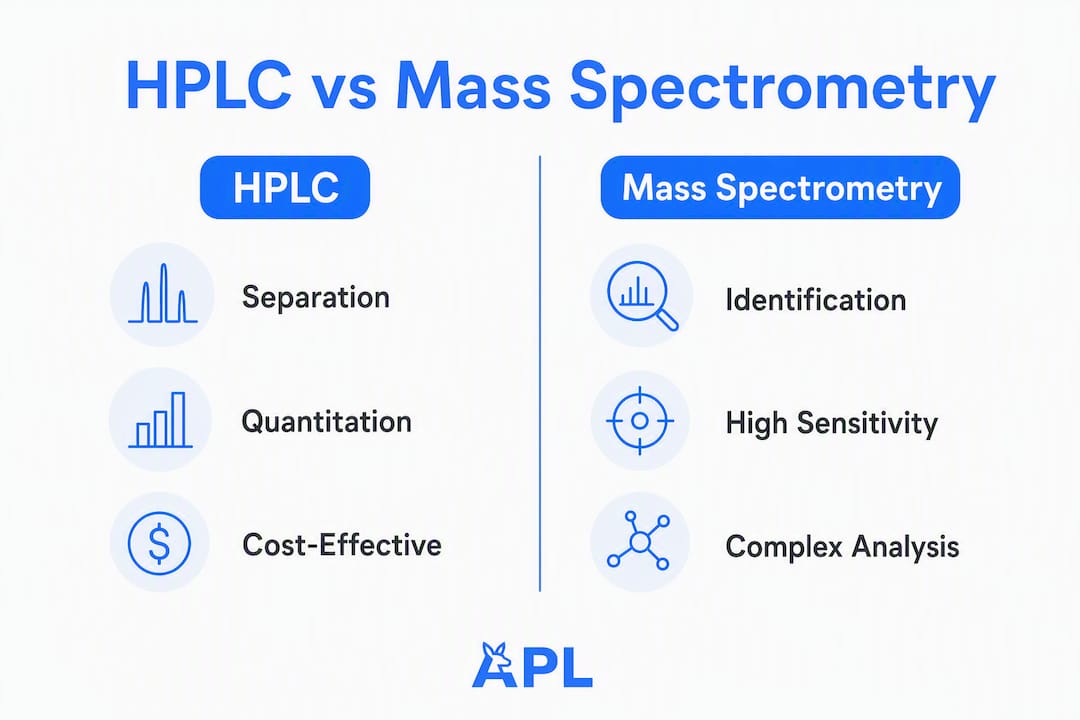
How do HPLC and mass spectrometry compare at a glance?
| Parameter | HPLC | Mass spectrometry (MS) | LC–MS / LC–MS/MS |
|---|---|---|---|
| Detection principle | Absorbance, refractive index, or light scattering | Mass-to-charge ratio (m/z) | Chromatographic separation + m/z detection |
| Primary role | Quantitation and purity determination | Molecular identification and structural elucidation | Purity + identity in a single run |
| Typical sensitivity | ppm (UV detector) | ppb (single quad); ppt (triple quad MS/MS) | ppb–ppt depending on analyser |
| Specificity / structural info | Low — retention time only; no identity confirmation | High — exact mass, isotope pattern, fragmentation | Very high — peak-by-peak identity with optional MS/MS |
| Sample prep demands | Moderate; matrix effects manageable with dilution | High; ion suppression from salts, buffers, and lipids | High; LC–MS-grade solvents and low-background vials required |
| Typical cost / complexity | Lower capital and running costs; well-established SOPs | Higher capital; requires specialist operator | Highest capital and operational complexity |
| Throughput / validation | High throughput; straightforward ICH Q2(R1) validation | Lower throughput; complex calibration and validation | Moderate throughput; validation demanding but achievable |
| Common detectors / ion sources | UV-Vis, PDA, ELSD, RI | ESI, MALDI, APCI; single quad, triple quad, TOF, Orbitrap | ESI most common; triple quad for quantitation, Orbitrap for HRMS |
Three implications follow directly from this comparison. For routine quantitation and regulated QC, HPLC is the practical default. For molecular identification, unknown characterisation, or trace-level detection, MS is required. When a single analytical run must deliver both a purity figure and an identity confirmation, LC–MS is the appropriate choice.
How does HPLC separate and measure compounds?
HPLC separates compounds by differential affinity between a stationary phase (the column packing) and a mobile phase (the solvent system). A high-pressure pump drives the mobile phase through the column at controlled flow rates, typically 0.5–2.0 mL/min for analytical-scale work. Compounds with stronger affinity for the stationary phase elute later, producing distinct peaks on the chromatogram at characteristic retention times.
Core components and detector options
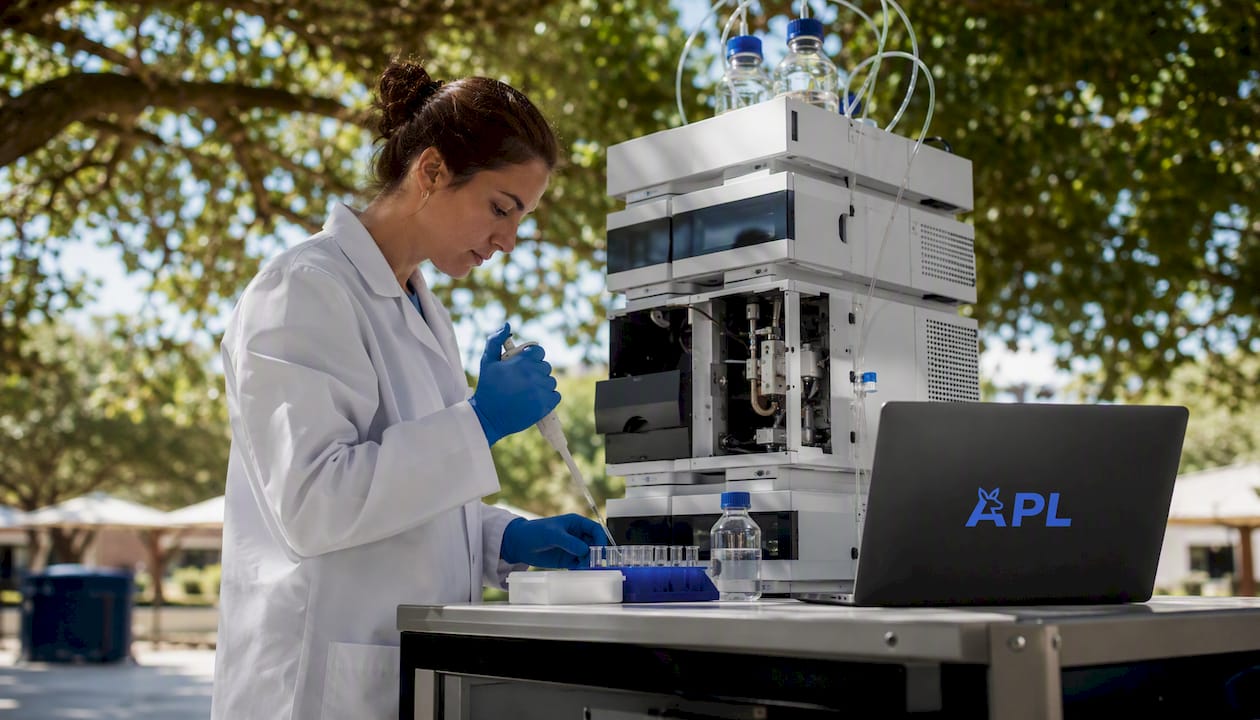
The four essential modules are the pump, injector, column, and detector. Detector choice governs what the system can actually measure:
- UV-Vis detector: detects compounds with a chromophore at a fixed wavelength; simple, robust, and widely used for peptides at 214–220 nm (peptide bond absorbance).
- Photodiode array (PDA): captures a full UV spectrum at each time point, allowing peak purity assessment and spectral matching across the chromatogram.
- Evaporative light scattering detector (ELSD): responds to any non-volatile compound regardless of UV absorbance; useful for lipids, carbohydrates, and compounds lacking a chromophore.
- Refractive index (RI) detector: universal but low-sensitivity; suited to isocratic methods and polymer analysis.
What an HPLC purity number actually means
The purity figure reported from HPLC is a relative peak area percentage: the area of the target peak divided by the sum of all detected peak areas. This is not an absolute mass measurement. Two compounds with different molar absorptivities at the detection wavelength will produce different signal intensities per unit mass, so relative peak area is an approximation of mass purity rather than a direct measurement of it. For peptides detected at 214 nm, where peptide bond absorbance dominates, this approximation is generally acceptable for QC purposes.
Modern HPLC remains the workhorse for quantitative and regulated testing because of its reproducibility and long history in pharmacopoeial methods. UHPLC and 2D-LC extend peak capacity, but the precision and regulatory acceptance of conventional HPLC keep it central to QC workflows. Typical relative standard deviation (RSD) for well-optimised HPLC methods is under 0.5%, which is difficult to match with MS-based quantitation without rigorous internal standard calibration.
Common failure modes
Co-elution is the principal risk: two compounds with similar retention times produce a single merged peak, inflating the apparent purity of the target compound. Matrix interference from excipients, buffers, or degradation products can obscure low-level impurities. Irreversible adsorption of hydrophobic peptides onto column packing is also a recognised limitation, particularly with C18 phases at low organic modifier concentrations.
Pro Tip: Fit a guard column (typically 5–10 mm, same stationary phase as the analytical column) upstream of the analytical column. It acts as a sacrificial barrier, trapping particulates and strongly binding solutes before they reach the more expensive analytical column, extending its working life considerably.
How does mass spectrometry identify molecules?
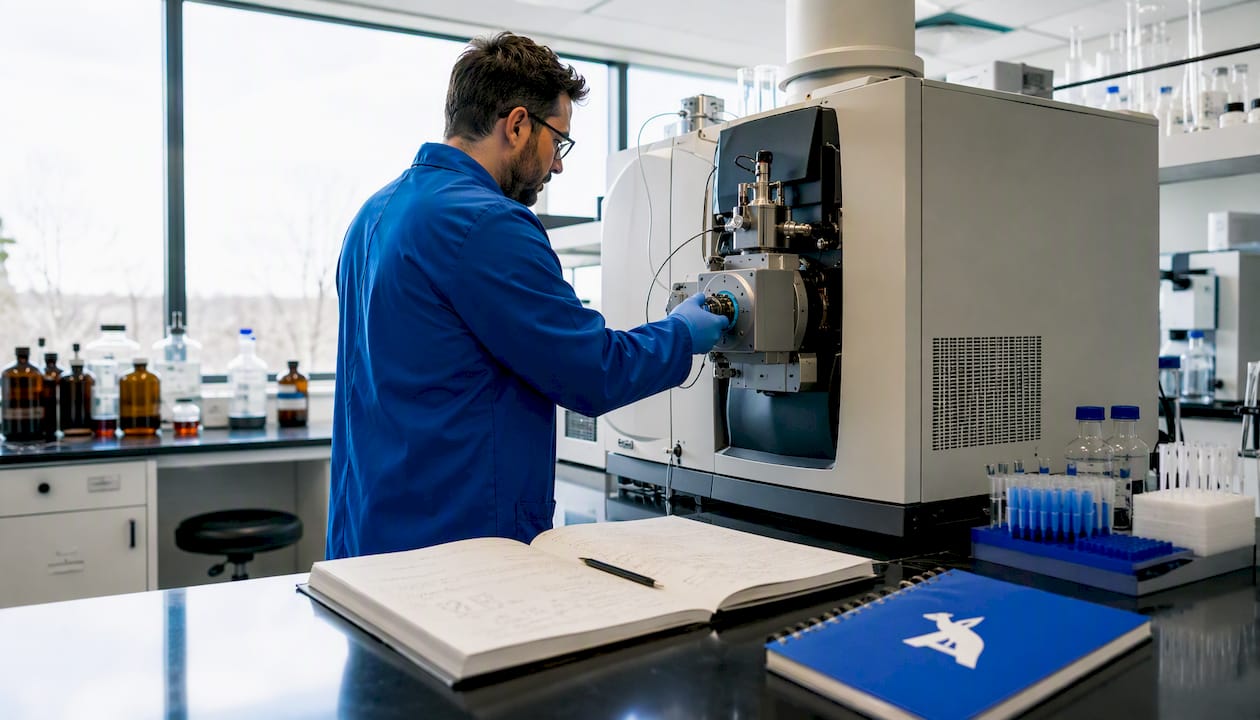
Mass spectrometry measures the mass-to-charge ratio (m/z) of gas-phase ions derived from the analyte. The three sequential steps are ionisation, mass analysis, and detection. The resulting mass spectrum, a plot of ion abundance versus m/z, is compared against theoretical masses or fragmentation libraries to confirm or determine molecular identity.
Ionisation methods
Ionisation method selection depends on analyte polarity, molecular weight, and matrix:
- Electrospray ionisation (ESI): the dominant method for peptides and proteins; produces multiply charged ions from solution, making it directly compatible with LC effluent. Soft ionisation preserves intact molecular ions.
- Matrix-assisted laser desorption/ionisation (MALDI): co-crystallises analyte with a UV-absorbing matrix; produces singly charged ions; well-suited to peptide mapping and polymer characterisation; less compatible with online LC coupling.
- Atmospheric pressure chemical ionisation (APCI): suited to small, non-polar molecules; less effective for large peptides or thermally labile compounds.
Mass analysers
The choice of mass analyser determines resolution, mass accuracy, and sensitivity:
- Single quadrupole: low resolution; adequate for molecular weight confirmation of known compounds; cost-effective entry point.
- Triple quadrupole (QqQ): two mass-selecting quadrupoles with a collision cell between them; the standard for targeted quantitation via selected reaction monitoring (SRM); reaches ppt sensitivity for targeted analytes.
- Time-of-flight (TOF): high resolution and mass accuracy; useful for intact protein and peptide mass measurement.
- Orbitrap: very high resolution (>100,000 FWHM) and sub-ppm mass accuracy; the current standard for high-resolution MS (HRMS) in metabolomics, proteomics, and impurity profiling.
Quantitation limits and practical pitfalls
Detection capability scales with instrument type: HPLC-UV reaches ppm sensitivity; single-quadrupole LC-MS reaches ppb; triple-quad LC-MS/MS can reach ppt for targeted assays. That sensitivity advantage comes with a critical caveat: MS signal intensity does not map directly to relative quantity. Different molecules ionise with different efficiencies, and ion suppression from co-eluting matrix components can dramatically reduce signal for the target analyte without any visible indication in the spectrum. Reliable MS quantitation requires appropriate internal standards and calibration curves rather than reliance on raw peak intensity.
Why couple LC to MS, and when is LC–MS/MS needed?
LC–MS combines chromatographic separation with mass detection, producing a purity figure and an identity confirmation for each chromatographic peak in a single analytical run. The LC column reduces matrix complexity before the analyte reaches the ion source, which substantially reduces ion suppression compared with direct infusion MS. The interface between the LC and MS removes most of the mobile phase before ionisation, resolving the fundamental incompatibility between a liquid mobile phase and the high-vacuum environment of the mass spectrometer.
When MS/MS fragmentation adds value
Tandem MS (MS/MS) selects a precursor ion of interest in the first mass analyser, fragments it in a collision cell using inert gas (typically nitrogen or argon), and analyses the resulting daughter ions in the second mass analyser. The daughter ion pattern is structurally diagnostic: for peptides, b- and y-ion series from backbone fragmentation allow sequence verification residue by residue. For small molecules, characteristic fragment losses confirm functional groups and connectivity. LC–MS/MS is the method of choice for:
- Trace impurity profiling in complex matrices (environmental residues, drug metabolites)
- Metabolite identification in biological fluids
- Sequence confirmation for synthetic peptides, particularly when a single amino acid substitution must be excluded
- Targeted quantitation at ppt concentrations via SRM or multiple reaction monitoring (MRM)
Operational trade-offs
LC–MS imposes stricter requirements than standalone HPLC. Mobile phases must be LC–MS grade (low background, volatile buffers only — ammonium formate or ammonium acetate rather than phosphate). Sample vials must be certified low-background borosilicate. Non-volatile additives such as trifluoroacetic acid (TFA) suppress ionisation and must be minimised or substituted with formic acid. Instrument maintenance is more demanding: ion sources require regular cleaning, and mass calibration must be verified before each analytical sequence.
Pro Tip: When coupling LC to MS, substitute TFA in the mobile phase with 0.1% formic acid where chromatographic resolution permits. TFA forms ion pairs with basic analytes that suppress ESI signal; formic acid provides comparable pH control with far less ionisation suppression.
Which technique should you use for your research question?
The decision follows directly from the analytical question, not from instrument availability. Choose the technique to answer the question: purity and potency require HPLC; identity and unknowns require MS; both axes together require LC–MS.
Decision framework by research task
Routine purity testing (QC release): HPLC with UV or PDA detection. Well-validated, high throughput, cost-effective, and accepted by TGA and ICH Q2(R1). A triple-quad system adds no value here and increases cost per sample substantially.
Identity confirmation for a known compound: Single-quadrupole LC–MS or direct infusion ESI-MS. Confirm that the measured molecular ion matches the theoretical mass within instrument tolerance. For peptides, a certificate of analysis (COA) should show the measured mass alongside the theoretical mass.
New supplier onboarding or critical batch release: HPLC purity plus LC–MS identity as a minimum. If sequence fidelity must be confirmed (e.g., a peptide with a single amino acid modification), LC–MS/MS sequence verification is warranted. Guidance on commissioning third-party testing in Australia covers what to specify on a test request form.
Trace impurity profiling or metabolite identification: LC–MS/MS with a triple quad (targeted, known impurities) or Orbitrap (untargeted, unknown structures). HPLC alone cannot provide the sensitivity or structural information required.
Formulation stability testing: HPLC for quantitation of degradation products as a percentage of the parent peak; LC–MS for identity assignment of degradants when structural information is needed to understand the degradation pathway.
High-throughput QC in a contract lab: HPLC remains the practical default for throughput and cost. LC–MS adds turnaround time and cost per sample; reserve it for identity checks on a subset of batches rather than every sample.
When specifying analyses to a contract lab, request: HPLC purity (report peak area percentages and RSD across replicates) plus MS identity (measured mass vs theoretical mass, charge state, and adduct assignment). For peptides above approximately 2,000 Da, request multiply charged ion confirmation via ESI.
Practical considerations for Australian research labs
Australian researchers face specific operational realities: LC–MS-grade solvents (acetonitrile, methanol, water) are available through local distributors such as Merck and Thermo Fisher Scientific Australia, but lead times for speciality reagents can extend to several weeks. Planning solvent inventory ahead of a method development campaign avoids the common problem of mid-project supply gaps.
Recommended peptide QA workflow
The standard workflow for peptide quality assurance in an Australian laboratory context pairs HPLC purity with MS identity:
- HPLC purity: reverse-phase C18 column, gradient elution with 0.1% TFA or formic acid in water/acetonitrile, UV detection at 214 nm. Report peak area percentage for the main peak and all peaks above 0.1%. Calculate RSD across a minimum of three injections.
- MS identity: ESI-MS (single quad or higher) on the same or a separate LC–MS system. Confirm the measured [M+H]⁺ or multiply charged ions match the theoretical mass within instrument specification. For peptides, confirm the charge state distribution is consistent with the expected sequence length.
- MS/MS sequence verification (when required): select the dominant charge state as precursor; confirm b- and y-ion series cover the sequence. Required for novel sequences, modified peptides, or any batch where a substitution error must be excluded.
When evaluating suppliers, request a COA that includes both an HPLC purity trace and a mass confirmation line showing measured mass against theoretical mass.
Consumables and filtration
Filter samples through 0.22 µm PVDF or nylon membranes before injection to protect column frits; 0.45 µm is acceptable for clean matrices but 0.22 µm is the safer default for biological or formulation samples. Use certified low-background vials for LC–MS work to avoid plasticiser contamination at trace levels.
Pro Tip: Replace guard columns on a scheduled basis (typically every 50–100 injections for complex matrices) rather than waiting for column pressure to rise or peak shape to deteriorate. The cost of a guard column cartridge is a fraction of the cost of replacing a fouled analytical column.
Typical HPLC reproducibility vs MS detection sensitivity: HPLC methods routinely achieve RSD under 0.5% for well-optimised assays, making them the preferred tool for validated quantitative work. Triple-quad LC–MS/MS extends detection to ppt concentrations for targeted analytes, a sensitivity range that UV-based HPLC cannot approach.
Turnaround for routine HPLC purity testing at Australian contract laboratories is typically 2–5 business days for standard peptide samples. LC–MS/MS sequence confirmation adds 3–7 days depending on instrument availability and method development requirements. Local dispatch of well-characterised peptide standards with existing COAs avoids the sample shipping delays and customs clearance times associated with overseas procurement.
The case for treating purity and identity as separate analytical axes
Most researchers understand that HPLC and MS answer different questions. The practical gap is in how often those questions get conflated at the point of procurement or experimental design. A peptide that passes a 98% HPLC purity threshold has been shown to contain very little material that absorbs at 214 nm other than the main peak. It has not been shown to be the correct peptide. Retention time is weak evidence of identity: different compounds can co-elute under one gradient method and separate under another, and a retention time match to a reference standard is only as reliable as the reference standard itself.
The inverse error also occurs. Researchers who rely on MS identity confirmation without an accompanying HPLC purity trace are working with an incomplete picture. A mass spectrum confirming the correct molecular ion says nothing about the proportion of that ion relative to co-eluting impurities that may not ionise efficiently or may be suppressed entirely. The two techniques are genuinely complementary, not redundant.
For Australian labs procuring research peptides, the practical implication is straightforward: a COA that includes both an HPLC purity trace and a mass confirmation line is the minimum acceptable documentation for any peptide used in a controlled experiment. Anything less leaves one analytical axis unverified.
Research peptides with HPLC and MS documentation, dispatched from Australia
Researchers who need peptides with verified purity and confirmed molecular identity do not have to choose between documentation quality and supply speed.
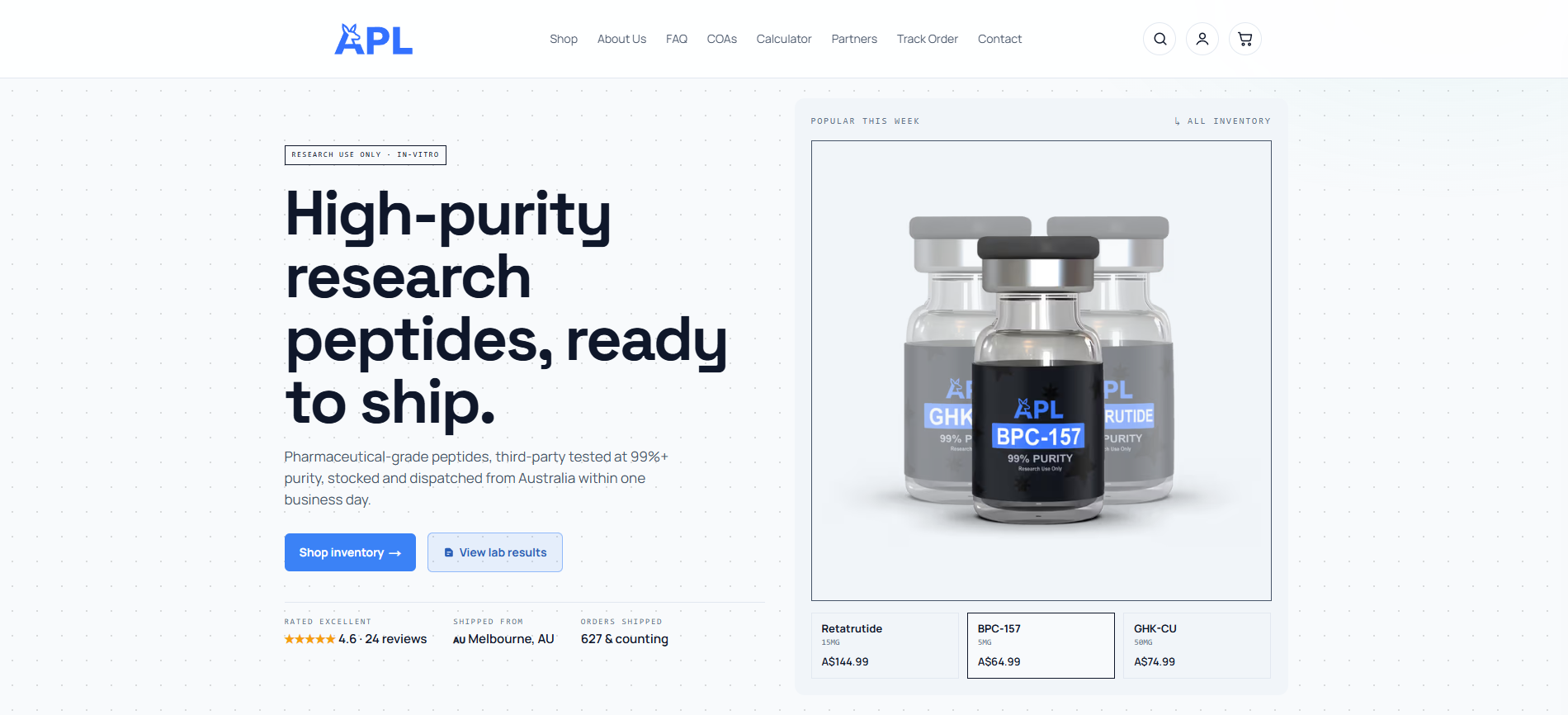
Aupeptidelabs supplies pharmaceutical-grade research peptides with purity exceeding 99%, verified by third-party HPLC and MS testing, with certificates of analysis available for every batch. All orders are dispatched from Australia within one business day, eliminating the customs delays and extended lead times associated with overseas suppliers. Products are strictly for laboratory research use. Whether you are onboarding a new peptide, running a stability study, or setting up a quantitative assay, the analytical documentation is already in place. Browse the full inventory and review available COAs at Aupeptidelabs, or go directly to specific product pages for LL-37 and SS-31 to confirm availability and dispatch timelines.
Useful sources and further reading
The references below are organised by primary use case to help researchers locate the most relevant material quickly.
Method development and analytical principles:
- High-Performance Liquid Chromatography — Chemistry LibreTexts: Foundational coverage of HPLC instrumentation, detector types, and LC–MS coupling; suitable for method development grounding.
- Lab 2: High Performance Liquid Chromatography — Chemistry LibreTexts (UC Davis): Practical laboratory-level introduction to HPLC operation and data interpretation; useful for researchers new to chromatographic methods.
- The essence of modern HPLC — Chromatography Online: Peer-reviewed overview of HPLC advantages, limitations, and current developments including UHPLC and 2D-LC.
- Liquid chromatography–mass spectrometry — Wikipedia: Accessible overview of LC–MS principles, interface types, and applications; a reliable starting point for understanding the coupled technique.
Technique comparison and decision guidance:
Peptide-specific validation and procurement:
- Third-party testing peptides: a researcher's guide for Australia — Aupeptidelabs Blog: Practical guidance for Australian researchers on commissioning HPLC and MS analyses from contract laboratories, including what to specify on a test request form.